

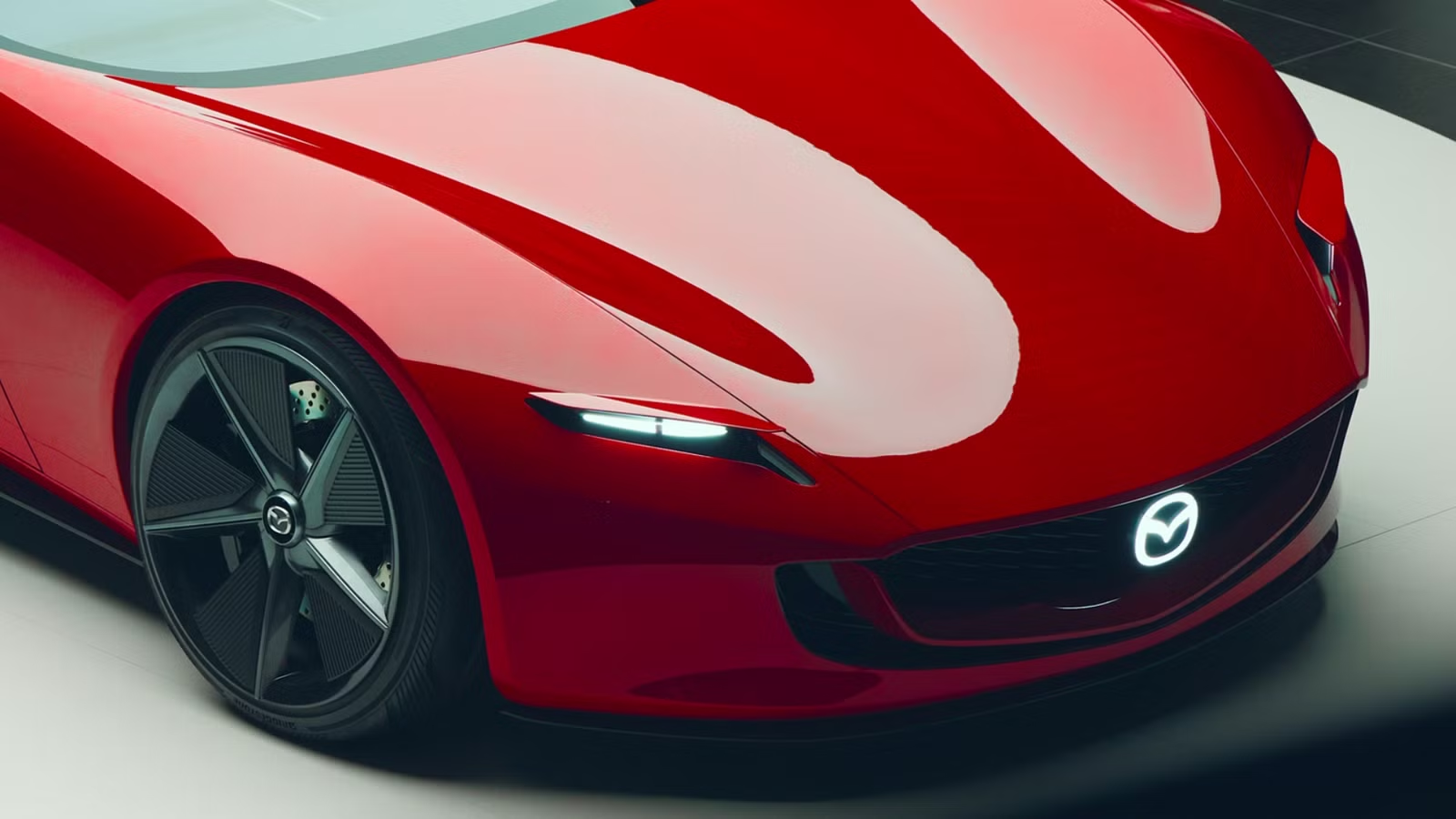
The very first Mazda with a Wankel rotary engine went on sale in 1967, but the Japanese automaker hasn’t stopped talking about the design since. Sure, it has made some great cars, like the RX-7, with one of the engines, but hasn’t it finally given up on making the spinning Dorito happen? It has not. CarBuzz has just found a new patent from the company for emissions tech that shows the rotary is still on the minds of engineers.
Its newest invention would send air from each of the exhaust ports on a very different trip, and one of those will involve a turbocharger….
Mazda Brings Rotary Up To Modern Emissions Standards
The Mazda RX-8 is a dime a dozen on Japanese export companies’ inventory lists. And they are as cheap as chips too.Mazda
Nearly every modern engine needs exhaust gas recirculation for emissions purposes. An EGR system puts exhaust air back into the intake manifold in certain situations to feed the engine’s cylinders. Putting this low-oxygen air into the intake reduces the maximum temperature when the cylinder goes boom, and slashes harmful oxides of nitrogen emissions. It also lets the engine burn less fuel with every combustion cycle.
We say nearly, because the rotary has (almost) never needed it. Aside from two years in the early 1990s, Mazda’s rotaries have relied on the strange quirks of the engine’s design to give it the same effect. It’s no longer enough, so the company needs a modern solution.
This Is What Mazda Calls Simple?
Mazda Rotary PatentMazda
Instead of valves, the rotary engine uses ports in the side of the rotor housing and circumference of the housing to exhaust the combustion air. Most of the exhaust gases come out of the side port, but the some exit out of the peripheral. That peripheral exhaust air is also cooler than the side port.
So Mazda would split the two into completely different routings. The high-volume, high-temperature side port exhaust would go directly to the turbocharger. So, unlike the RX-8’s rotary, this new engine has one of those for more power.
The peripheral port flow would travel inside the engine block via passages that would take it to an EGR cooler. The cooler would use the engine’s coolant system to lower air temperatures even more. Because the flow is inside the engine, it doesn’t need external tubes that take up space. Because it uses cooler peripheral port air in the first place, a smaller EGR cooler is up to the task.
When the engine doesn’t need EGR, for example during high power outputs, the system dumps the air into the secondary catalytic converter. The patent doesn’t explain why it bypasses the first cat.
CarBuzz Insight – Why This Matters:
2003 Mazda RX-8 rotary engine close-upMazda
The point of the invention is to let Mazda boost power (via the turbo) and lower emissions with increased EGR flow. It seems like a great idea, but that’s quite often the problem with the rotary engine.
It always sounds like a great idea, and in the right circumstances it can be. But then the need to drive it like a rotary instead of a piston engine, the threat of burning oil and wearing apex seals, and the massive fuel consumption and emissions issues show up to spoil the party. Mazda has pulled it off more times than any other automaker, but it’s still hard to call any of them a success.
Yet, we remain optimistic. Because Mazda keeps trying, and, like Lucy with the football, the payoff keeps getting pulled away.
Patent filings do not guarantee the use of such technology in future vehicles and are often used exclusively as a means of protecting intellectual property. Such a filing cannot be construed as confirmation of production intent.
Source: US Patent & Trademark Office
