

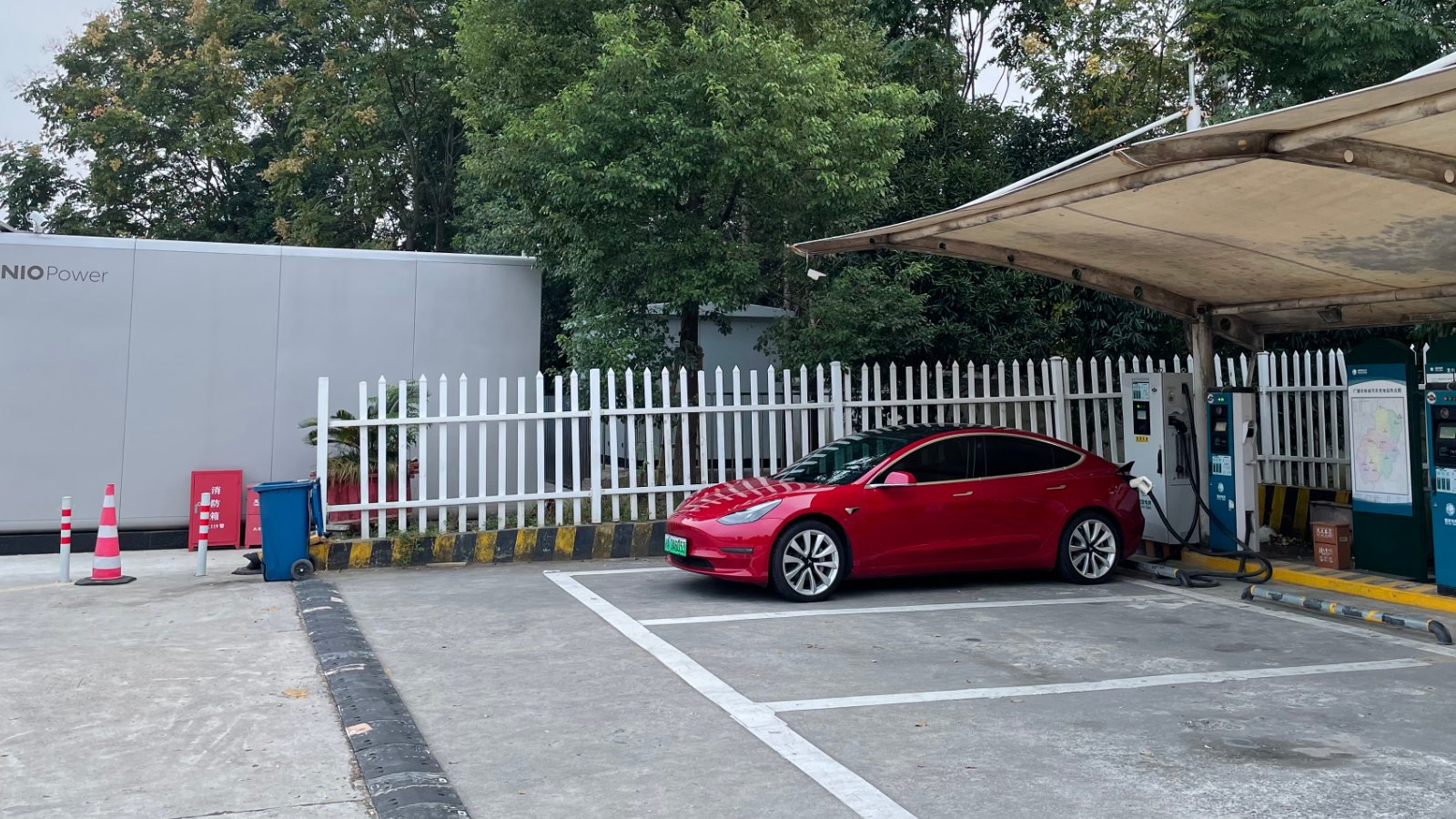
A Tesla Model 3 at a highway charging station in a file photo. Credit: CnEVPost
- NEVs used 163 million kWh of electricity at highway charging facilities across China from October 1 to 7, averaging 23.26 million kWh a day.
- Charging volume reached 28.05 million kWh on the first day of the holiday, up 60.40% year-on-year and setting a single-day record for a holiday period.
Charging demand on China’s highways surged during this year’s National Day holiday as the country’s new energy vehicle (NEV) fleet continued to expand, with electricity consumption on the first day setting a holiday record.
NEVs logged 6.711 million charging sessions on highways nationwide from October 1 to 7, according to data released Thursday, by the National Energy Administration (NEA).
Electricity consumption during the period reached 163 million kWh (163 GWh), with the daily average rising 51.42% year-on-year to 23.26 million kWh.
The figures cover 62,700 highway charging facilities tracked by China’s national charging infrastructure monitoring platform, up from 48,400 during the same period last year.
The holiday opened with a record. Highway charging volume reached 28.05 million kWh on October 1, up 60.40% from the first day of last year’s National Day holiday and the highest daily total recorded during any holiday period.
During the first 3 days, charging sessions totaled 2.9686 million, averaging 989,500 a day, up 48.41% year-on-year. Electricity consumption reached 71.62 million kWh, with the daily average rising 49.39% to 23.87 million kWh.
By comparison, highway NEV charging volume totaled 123 million kWh during the 2025 National Day and Mid-Autumn Festival holiday from October 1 to 8, averaging 15.36 million kWh a day.
The NEA said charging demand intensified during the holiday, while charging facilities at highway service areas operated smoothly overall, supporting long-distance NEV travel.
Ahead of the holiday, the NEA directed local authorities to complete equipment inspections and maintenance, deploy additional mobile charging equipment and improve traffic management for vehicles seeking to charge.
The increase in charging demand has accompanied the expansion of both infrastructure and China’s NEV fleet.
By the end of June 2026, highway service areas in China had installed 85,400 charging connectors, providing near-complete coverage except in some extremely cold and high-altitude regions.
The Ministry of Transport previously said China planned to add more than 10,000 charging connectors at highway service areas in 2026, with high-power connectors accounting for at least 25%.
China had 48.97 million NEVs on the road at the end of June 2026, representing 13.19% of its total automobile fleet, according to the Ministry of Public Security. Newly registered NEVs totaled 5.195 million in the first half of the year, accounting for 49.42% of all new automobile registrations.
Guangdong province aims to build over 3 million charging facilities by the end of 2027 to meet the demand of 8 million NEVs.
