

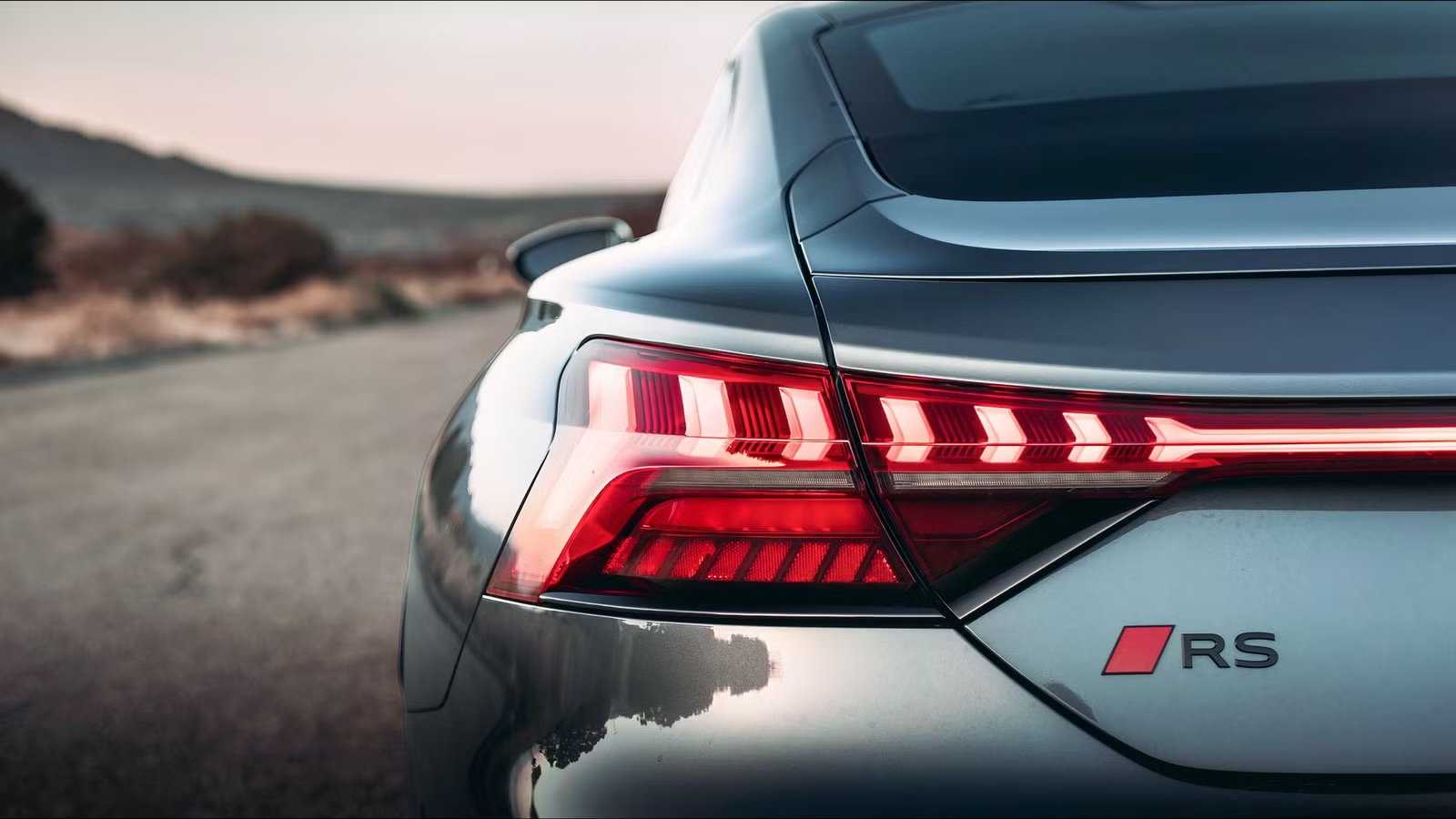
The Audi RS e-tron GT is the kind of car that can rewire a driver’s expectations by bridging the gap between a tech lovers’ dream, an exotic supercar, and a premium luxury sedan. There are two versions available in the US, and in regular S e-tron GT form, it cruises in quiet, cosseted comfort while drawing envious looks as it readies to unleash 670 horsepower. Add the Bang & Olufsen sound system and Audi’s adjustable transparency panoramic roof, and that’s the major luxury sport sedan boxes ticked.
However, if that’s not enough for you, the new Audi RS e-tron GT performance model delivers 912 hp and scorches the tarmac with a zero to 60 mph of a claimed 2.4 seconds. We say claimed, as that’s the number Audi gives, but in our own testing, we measured 0–60 in 2.17 seconds – a time only a handful of production cars in the world can beat.
Base Trim Engine
EV
Base Trim Transmission
2-speed automatic
Base Trim Drivetrain
All-Wheel Drive
Base Trim Fuel Economy Equivalent (city/highway/combined)
85/82/84 mpge
Base Trim Battery Type
Lithium ion (Li-ion)
Infotainment & Features
9 /10
Pros & Cons
- A hypercar fast performance sedan
- A best-in-class level of comfort and ride quality
- Audi’s technology showcase
- An all-round performance monstor
- Interior isn’t as captivating as the rest of the car
- Lack of headroom for rear passengers
The Audi RS e-tron GT has always been more comfortable and less overly sporty than the driver-focused Porsche Taycan with which it shares a platform – and that makes the e-tron GT the better all-round all-electric luxury sports sedan. However, Audi has added a monster trim to the lineup with the RS e-tron GT performance and its sensational power outputs. As that’s the current halo model for Audi, it’s the one it sent out to us to spend a week with.
Exterior Looks: Smooth And Edgy
Strengths
Weaknesses
- Head-turning concept Car Styling
- High-tech lighting signatures and animations
- Truly wicked looking wheels for the Performance model
- Base wheels look plain
- Low roof impacts practicality
- HD Matrix design LED headlights with Audi laser light not standard on S e-tron GT model
The e-tron GT was a stunning car before its 2025 facelift, and while the bodywork has changed slightly, the overall impression hasn’t. The obvious comparison is with the Porsche Taycan, which is more distinctive with its curves, but the e-tron GT manages to stand out with Audi’s timeless design approach, and will still look good in ten or twenty years’ time.
The standard S e-tron GT comes with 20-inch Multispoke-S design wheels that we prefer over the flashy 21-inch 10-spoke trapezoid design wheels, while the performance model arrives with milled-cut 21-inch 6-double-spoke RS design wheels with bi-color finish or can be changed to dark finish with the Forged carbon package. Arkona White is the no-cost paint option, but the metallic options, including the Daytona pearl effect color on our test car, are upgrades.
Also, an upgrade on our tester is the $5,900 Forged carbon package, which includes illuminated Forged carbon door inlays, exterior trim and mirror housing, as well as interior inlays. The carbon fiber pattern is a digital camouflage that won’t appeal to everyone. The big addition is the dark carbon matte roof panel, which removes the option for the brilliant adjustable transparency panoramic roof.
Criminally, the S e-tron GT doesn’t come with Audi’s brilliant HD Matrix design LED headlights with Audi laser light as standard, but they are available as an upgrade package costing almost $10,000.
Interior & On-Board Technology: Distinctly Audi
Strengths
Weaknesses
- Supremely comfortable
- Mature and crisp infotainment system
- Brilliant sound system
- Not a particularly special feeling interior
- Headroom not idea in the back for a sedan
The Audi RS e-tron GT’s sports seats may be Audi’s most comfortable and stylish yet, with 14-way power adjustment as standard and 18-way power front seats in Performance trim. The seat perches now have an inlay with an illuminated logo, and heating is standard. However, ventilation and massage are an optional upgrade. For the trim, the standard anthracite Vanadium appliqués change color depending on the lighting, and wood inlays in natural linear anthracite birch are available.
Our tester came with Daytona Gray pearl paint, which was paired with a black interior and red stitching. However, it also had the RS design package, which added Fine Nappa leather upholstery, Dinamica (an alternative faux suede to Alcantara) covered door panels, steering wheel, and center console, and the red seatbelts.
2026 Audi RS e-tron GT Interior Dimensions
Seating Capacity
5
1st Row
2nd Row
Headroom
38.2 inches
36.5 inches
Legroom
41.9 inches
32.2 inches
Behind 1st Row
Behind 2nd Row
Cargo Volume
9.2 ft³ + 1.8 ft³ frunk
Legroom is not an issue front or back in the Audi RS e-tron GT, but the low roof means headroom isn’t as generous as in a more conventional sports sedan. Think of the rear seats as being a little more snug than generous.
The other interior downside is that it clearly pulls the switchgear and infotainment unit from regular production Audi models, and getting in the car feels normal for a fast Audi – apart from the new steering wheel with a flat top as well as bottom. Audi is clearly thinking this car isn’t going to spend much time reverse or parallel parking.
Infotainment: Also Distinctly Audi
The first thing you look at as the driver in an RS e-tron GT is the Audi Virtual Cockpit Plus digital gauge cluster, which is its usual excellent self and also delivers comprehensive information on the battery preconditioning status, a quick-charging forecast, and a battery temperature view through clear icons and graphs. The performance trim’s configurable digital gauge cluster can now show a white speedometer and power display calling back to the white analog gauges in the very first RS-badged Audi – the 1994 RS2 Avant.
The infotainment system is a standard Audi 10.1-inch touchscreen with navigation, and Wi-Fi and a wireless charging pad are on hand, along with a superb 16-speaker Bang & Olufsen audio system. In fact, the 16-speaker Bang & Olufsen system shows that more speakers doesn’t mean better when the system is tuned right.
Audi’s current system is mature now, with a crisp and clear screen, a logically laid out menu system, and slick graphics that are restrained compared to electric performance vehicles that try too hard and become distracting. Something we don’t give Audi enough credit for with its system is how consistent it is across the infotainment screen and into the driver’s screen.
Performance: A Reminder That Audi Is On Top Of Its Game
Strengths
Weaknesses
- Blisteringly fast
- Even faster in RS performance spec
- Smooth, calm, and quiet luxury ride
- Supercar grip and handling
- The interior isn’t special enough
We were in the performance version of the Audi RS e-tron GT, but with any level of available power, it delivers the relaxing and calming drive of a premium EV – all the way up to Audi’s standard. The lack of vibration and noise from the powertrain just adds to Audi’s ability to deliver a calm, quiet, and compliant ride. Despite the added weight of a big battery, the chassis is always settled and takes the harshness out of a broken road. This is an even bigger feat when you take into account that the Audi RS e-tron GT weighs 5,104 pounds.
2026 Audi e-tron GT Powertrain Options
S e-tron GT
RS e-tron GT performance
Engine
Dual-motor
Transmission
2-speed
Drivetrain
quattro All-Wheel-Drive
Power
670 hp
912 hp
0-60
3.3 seconds
2.4 seconds (2.17-second recorded)
Top Speed
152 mph
155 mph
Performance Impressions
As the RS e-tron GT is an electric performance car, the fact that it’s fast is a given. All the torque is available immediately, and you can go with the standard 670 hp and push from 0-60 in 3.3 seconds and then just keep going. There’s no worrying about revs and changing gear, just power available all the time. The performance version literally amps things up, and even without launch control, it’s silly fast off the line and up to any speed you please. I advise you to use launch control, though – and this is not car journalist hyperbole – it affects body organs.
With those levels of power available, there is just no situation where there’s not enough power on the road. Finding a gap in dense, fast-moving traffic goes from being a bit stressful or annoying to giggle-inducing, with the biggest danger being accelerating into the back of a car that only just flashed by. But, acceleration and outright speed are just ingredients in a performance car.
Ride and Handling
When progressing at normal traffic speeds, the Audi RS e-tron GT makes you forget there’s a road underneath you, but because it’s so quiet and smooth, it reminds you why the speedometer is there. This is a car that needs a head-up display as standard. Even at a strong pace when the city is left behind and the car is winding through the landscape, the RS e-tron GT never feels as heavy as it is or should.
There’s a lot of electrical processing going on to keep the wheels maximizing grip, and there’s a huge amount of grip as a result. Getting the RS e-tron GT turned in for a corner is never an issue, neither is holding a line and control, but its party trick is ejecting from the corner, daring the driver to come on power earlier and earlier, and showing off its supercar level of athleticism.
There used to be an unsettling feeling mid-corner on occasion with the suspension under compression, like the car might not handle the next second exactly how it should, but the new air suspension with a two-chamber, two-valve setup seems to have cured that. The Audi RS e-tron GT was accused in the past of not having direct enough steering, but the recent change to a more direct ratio cures that. The result of the two changes gives the RS e-tron GT an even more aggressively confident feel.
The steering might still be a little light for some, but those who prefer a more demanding feel will appreciate the stiffness added in the Audi Dynamic modes and how they don’t feel artificial. And those dynamic modes change everything – but most importantly for a car of the RS e-tron GT’s size and weight, the turn in. It’s perfectly happy picking up the pace in regular mode, but beyond that grand touring mindset, Dynamic mode is the key.
Range and Battery Info
2026 Audi RS e-tron GT PerformanceIan Wright/CarBuzz/Valnet
For the 2025 model year, Audi replaced the 93.4 kWh battery with a 105 kWh capacity. With new cell chemistry and improved thermal management, this larger, more efficient battery delivers greatly improved range while taking up the same physical space and weighing 25 pounds less. As a result, the S e-tron GT can travel 300 miles on a charge (up from 249 miles) with 20-inch wheels, while the 21-inch wheels sacrifice about six miles.
The RS model can now go as much as 278 miles, up from just 232, and both cars can charge at up to 320 kW rather than 270 kW, meaning that taking the battery from a 10% to 80% charge takes just 18 minutes rather than 21.5 minutes. However, driver beware, start going heavy on the throttle pedal and range gets eaten away quickly.
Verdict & Pricing: One Hell Of A Way To Spend A Lot Of Money
2026 Audi RS e-tron GT PerformanceIan Wright/CarBuzz/Valnet
The Audi e-tron GT is the pinnacle of Audi’s high-tech balance between comfort and performance for driver and passenger alike. The back is too snug to use by tall adults regularly, but it’s a clear tradeoff for that low roof. The RS e-tron GT performance is pure overkill in the best possible way, but far from essential to the overall experience.
The S e-tron GT starts at $127,700 while the RS e-tron GT performance comes in at $170,500. However, the S e-tron GT’s price doesn’t include Audi’s HD Matrix design LED headlights with Audi laser light, headlight animations, or the head-up display, which brings the price up to $137,000 for the Prestige quattro package. It feels like Audi should have included all that as this is its technology car, and set the price accordingly. If someone is buying into Audi’s technology car, it should have all the latest and greatest technology onboard.
To call the Audi RS e-tron GT performance fast is an understatement, and all the hyperbole has already been used. It’s simply another level of speed that’s wholly unnecessary and wildly exhilarating when tapped into. We would go with the S e-tron GT in Prestige quattro form and enjoy choosing the options we want.
However, we don’t blame anyone for going all out and occasionally heading to the local drag strip to embarrass people with a stock sedan. Overall, for someone that wants to lean harder on performance driving, the Taycan may be the better option. For anyone else seeking incredibly swift all-electric luxury, the e-tron GT is that very special car you need.
