

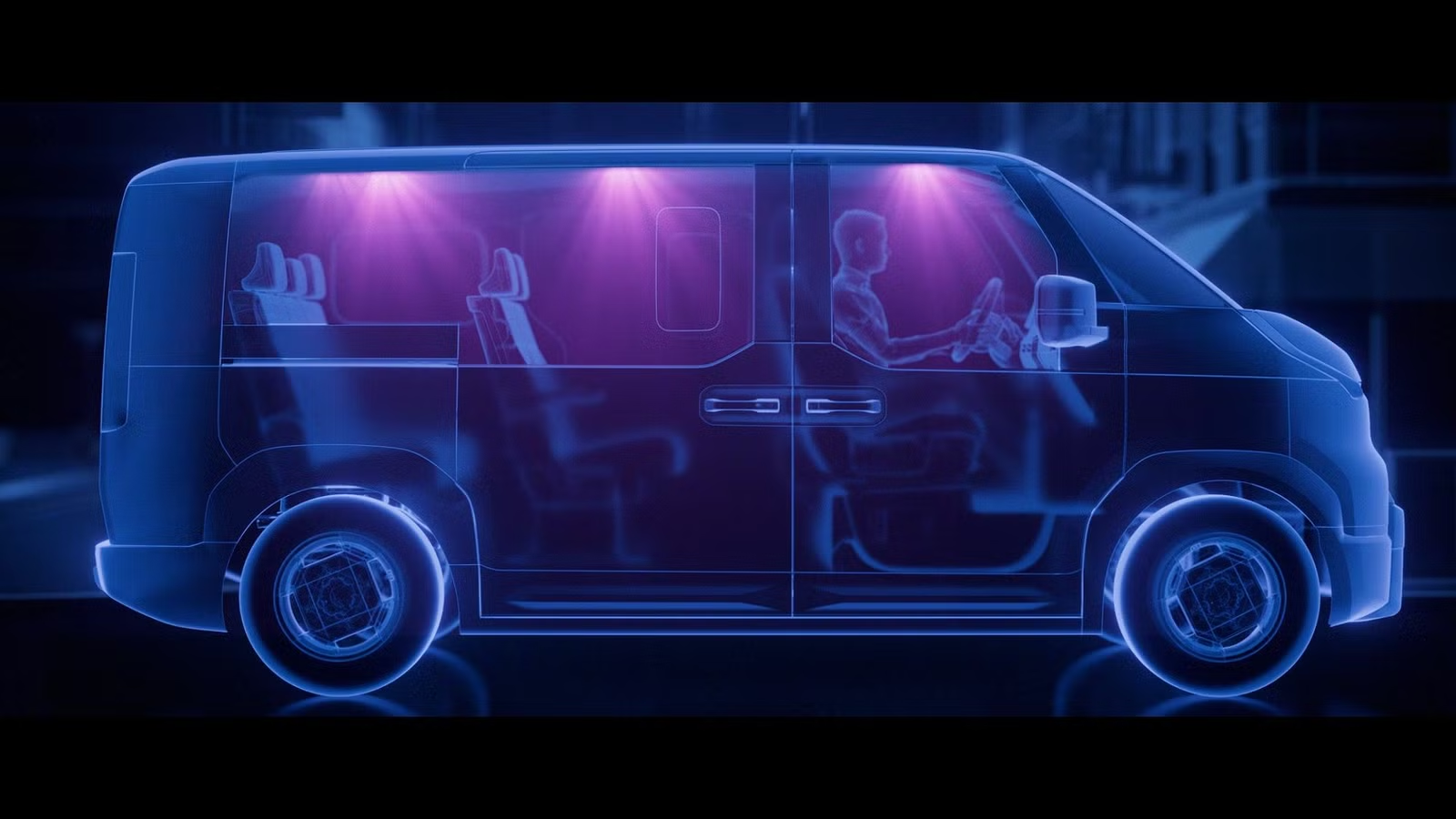
It’s about seven years too late, but what if you could sterilize your entire car in between drives? Hyundai and Kia have just unveiled a new system that could do exactly that. It’s a UVC light system that will kill bacteria and microorganisms in your car, going after not just things that can make you sick, but the things that can make you stink. Well, make your car stink, at least, like food crumbs, wet dog, and more
But, aren’t UV rays kind of bad for you? Turns out there are variations of UV light, and Hyundai pledges this one won’t turn your Palisade into a mobile tanning bed. Here’s how it works.
Plasma Lights Kill The Bad Stuff, Emit Cool Purple Glow
Hyundai Far UVC sterilizationHyundai
The new tech is called Plasma Care UVC, and the companies call it “the world’s first in-vehicle sanitization technology.” Highly effective cabin air filters are nothing new, but this would be the first invention that could actually kill the viruses and bacteria instead of just giving them a cozy place to live and breathe.
Hyundai has already been on the leading edge of UV sterilization, and has installed UV sterilizers in the glove compartments of models like the Santa Fe and Palisade. There are some key differences between that system and this new one, and the larger scale is just the beginning.
Those old UV sterilizers use a wavelength of light that is harmful to humans, the kind that will lead to burns or probably skin cancer. Because of that, it’s limited to being used in small containers like the glove box. This new system uses an even shorter wavelength called Far-UVC that is designed for use where people are. It’s already used in schools and hospitals, for example, so it’s safe for the body.
Hospital Tech Repurposed For In-Car Life
Hyundai Far UVC sterilizationHyundai
Kia, which led development, had to use a special plasma lamp to get the right wavelength of light, instead of the LEDs used by the old system. It had to make those lamps smaller for use in a vehicle, and make them use less electricity because a car doesn’t have a wall plug. It had to be more durable to withstand life in a vehicle, and to work in the small space of a car’s interior.
Related
7 Cutting-Edge Car Technologies To Keep An Eye On
We’re not yet in the realm of Star Trek, but these super-cool tech features are closer than you think.
Plasma Care UVC has been tested in a chamber meant to simulate the inside of a car, where it killed 96.8% of airborne viruses in just 30 minutes. But it was then tested in an actual Kia PV5 by the Korea Automotive Technology Institute, where the researchers found a 99.9 percent reduction in E. coli after 40 minutes.
A video from Kia shows the light reaching common touchpoints like the steering wheel, seats, and the depths of the cupholder. It’s not clear, though, how the light might get anything that has managed to accumulate under the seats. That’s where the things in your car that stink tend to congregate, though at least the system can get them when the smells become airborne.
Kia has installed it in a real PV5 van, but it’s not ready for production. It sounds like the two car companies want to get it there, though, and said that they would keep testing to meet international safety standards to make it ready for a production car.
Related
The Cheap Car Part You’re Probably Neglecting That’ll Let You Breathe Easier
The cabin air filter is often overlooked, yet it plays a crucial role in maintaining clean air quality in a vehicle’s passenger compartment.
It’s ideal for anyone who wants to keep down odors and bacteria in their vehicle, but the two point out the desirability to have the feature in autonomous and ride-hail cars where it can clean the cabin between passengers without needing an attendant.
