

How A 100,000-Unit Cap Puts Luxury Brands In A Bind
A Light Windsor Blue 2025 Bentley Continental GT parked on a gravel lot beside a mountain lake shown in front 3/4 viewBentley
The US-UK trade framework established a preferential tariff rate for British-built vehicles — but only up to the 100,000-unit annual ceiling. Exports above that threshold revert to a 27.5% tariff rate. For someone who can afford a Rolls-Royce Phantom priced above $500,000, such a tariff swing may be an abstraction. For someone shopping for a Range Rover or Mini Cooper, the math becomes more meaningful quickly.
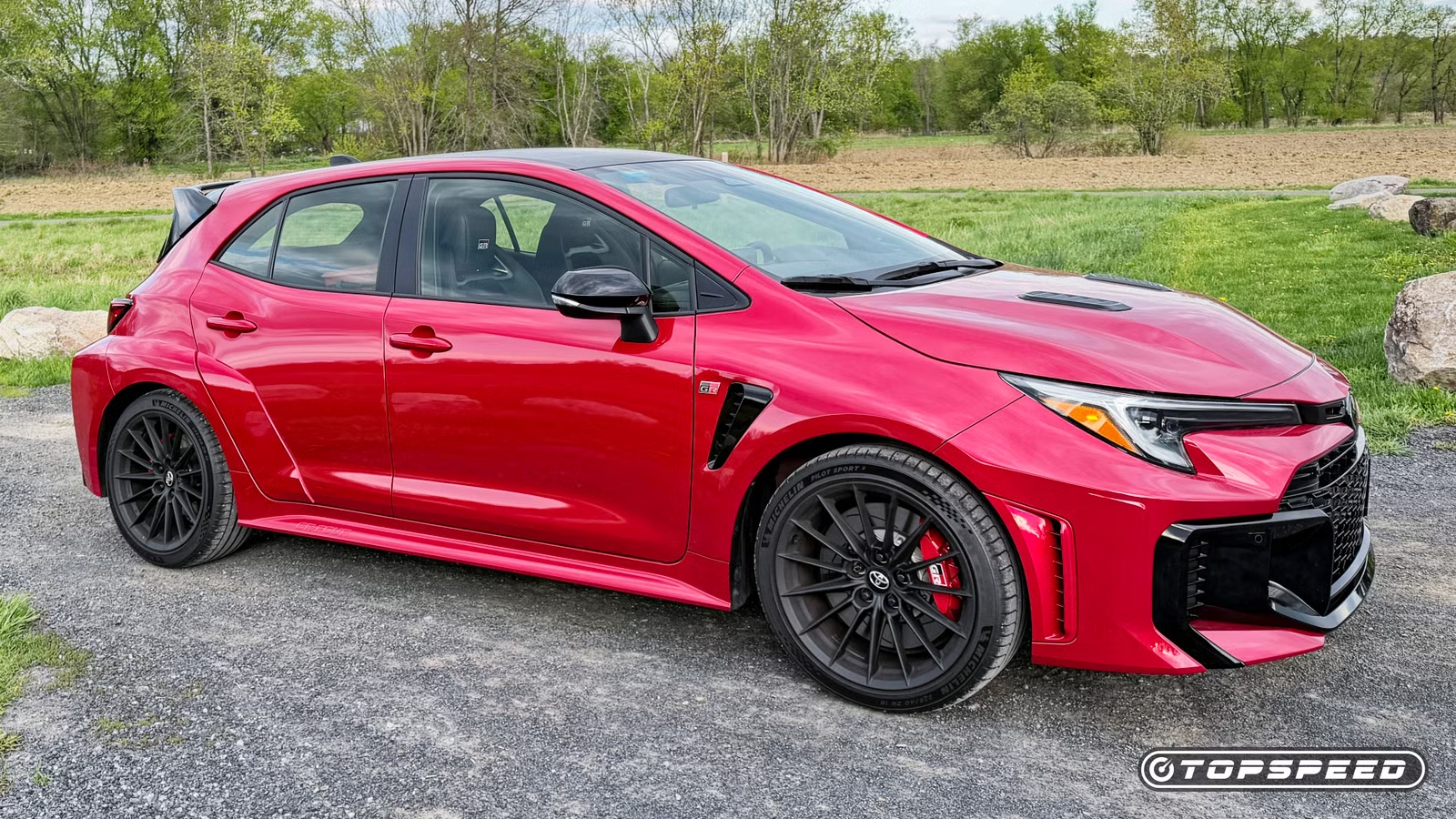
The problem is one of shared headroom. The quota isn’t brand-specific — it’s a national total. Every GR Corolla that Toyota ships from Derbyshire to a US dealership consumes a unit of that 100,000-vehicle allowance that would otherwise be available to Jaguar Land Rover, Mini, Bentley, Rolls-Royce, or Aston Martin. Toyota says it could produce 10,000 examples of the GR Corolla for the US in the UK per year, which is more than enough to push the collective British export count over the cap based on last year’s tally.
The GR Corolla’s UK Production Is No Accident
Toyota began manufacturing the GR Corolla at its Burnaston facility in Derbyshire as part of a broader effort to bring European production of the hot hatch in line with demand — and to sidestep the logistics of shipping every unit from the Motomachi plant in Japan. A 10% tariff also means a cost savings compared to the 15% levied on cars from Japan. That also means the UK plant is producing a volume-oriented consumer car alongside a manufacturing ecosystem historically dominated by low-volume, high-value British nameplates.
The GR Corolla retails in the US for around $40,000 — a fraction of what a Range Rover or Bentley costs. But in trade-quota terms, a $40,000 hot hatch and a $250,000 Flying Spur each count as exactly one unit against the 100,000-car ceiling. That asymmetry is what makes Toyota’s production move consequential for brands with far more revenue at stake per vehicle.
What This Means For Luxury Buyers Ordering Now
2025 Land Rover Discovery off-roadingLand Rover
No price increases have been announced by Jaguar Land Rover, Bentley, or Rolls-Royce in direct response to the quota concern. But the math is tight enough that the industry is paying attention. With only roughly 3,000 units of buffer remaining under last year’s export figures, any meaningful GR Corolla volume destined for the US could trigger the tariff step-up within a single model year.
If that happens, the brands most exposed are those with the highest US sales volumes in the British luxury segment. Jaguar Land Rover, which sells Range Rover, Range Rover Sport, Defender, and Discovery in the US, ships by far the most units of any British premium automaker. A 27.5% tariff on vehicles above the cap would either compress margins or get passed to buyers — and in a segment where transaction prices already run deep into six figures, even a modest percentage increase translates to thousands of dollars per vehicle. Buyers placing orders for 2027 model-year delivery should watch whether JLR or Bentley adjusts US pricing or allocation windows in the months ahead.
The GR Corolla was already a compelling story — a rally-derived hot hatch built to Gazoo Racing standards, now assembled on British soil. The trade-policy subplot was not part of anyone’s marketing plan. But with the UK’s US export quota running close to capacity, Toyota’s Derbyshire ambitions have made a $40,000 performance car a variable in the pricing equation for some of the most expensive vehicles on the road.
Sources: Automotive News, CarBuzz
