

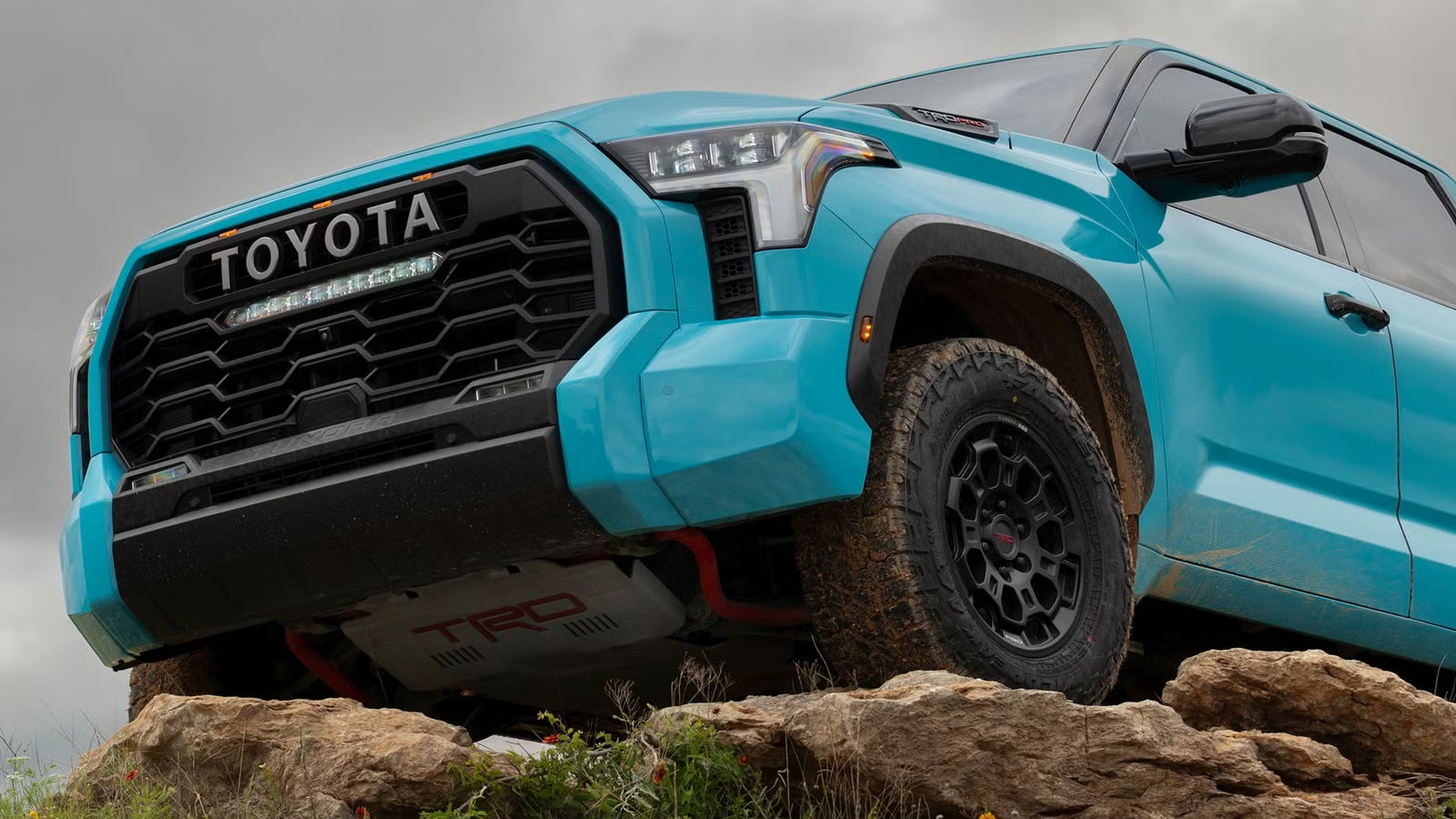
Recalls that snag hundreds of thousands of vehicles barely raise an eyebrow anymore. A recall for exactly one 2026 Toyota Tundra, though? That’s like hitting the lottery, just with considerably worse prizes.
The weirdness of this recall doesn’t stop with the population count, though. The cause is an incorrect warning label – something that at first glance seems laughably minor, but is a stark reminder that even stickers have standards when it comes to federal safety rules.
How One Tundra Ended Up In A Recall Of Its Own
2026 Toyota Tundra front quarteerToyota
The recall comes from Southeast Toyota Distributors, the independent company that handles Toyota vehicle and parts distribution across several Southeastern states. And according to the recall notice (NHTSA campaign number 26V433000) issued on July 6, the truck’s load carrying capacity modification label doesn’t comply with Federal Motor Vehicle Safety Standard No. 110, “Tire Selection and Rims.” That’s right. The offending part is a sticker that’s supposed to tell you how much stuff you can pile into the truck.
Before the Tundra reached a customer, Southeast Toyota Distributors installed an accessories package that increased the truck’s weight, and the company made sure to add a label noting the change. The problem is that the required load carrying capacity modification label wasn’t updated to meet the federal standard requiring it to accurately reflect the truck’s weight – within one percent – after accessories are installed between final certification and first retail sale. It sounds like paperwork, but the rule exists to help prevent owners from unknowingly overloading a vehicle and increasing the risk of a crash that insurance might not cover.
Southeast Toyota Distributors said the issue surfaced in April after a dealer noticed a Tundra wearing an accessories package that wasn’t listed on its build sheet. An investigation found the package had somehow been deleted from the paperwork after installation, leaving the truck with the wrong label. The company says it hasn’t found any other vehicles with the same issue and isn’t aware of any crashes, injuries, or complaints related to the mix-up. In other words, this really does appear to be a party of one.
Recall Remedy Is A Simple Fix
2026 Toyota Tundra rear quarterToyota
To fix the issue, Southeast Toyota Distributors will provide the owner with a new load carrying capacity modification label. A notification letter is scheduled to go out on September 4, although with just one truck involved, you’d hope someone at the company picks up the phone long before then. Anyone looking for more information can contact Southeast Toyota Distributors customer service at 1-866-405-4226.
As unusual as this recall is, it isn’t without precedent. Just last year, Ford recalled exactly one Mustang after a software glitch caused lighting malfunctions and display errors in its digital instrument cluster. Turns out you don’t need hundreds of thousands of vehicles to make recall history – sometimes one is enough.
CarBuzz Insight – Why This Matters:
Even if this latest recall affects just one truck, the last thing the Tundra needs is more recall attention. On sale since the 2022 model year, the current generation of Toyota’s full-size pickup has taken an unusual number of hits to the brand’s hard-earned reputation for reliability, with recalls covering everything from software glitches to much more serious engine problems.
The Tundra’s twin-turbocharged 3.4-liter V6 has been the biggest black eye. Toyota has issued multiple recalls after manufacturing debris inside some engines was found to damage main bearings, potentially leading to knocking, stalling, or complete engine failure. The engine also powers several Toyota and Lexus models, and the recalls are a problem the automaker is still trying to leave in the rearview mirror.
Base Trim Engine
I-FORCE 3.4L ICE
Base Trim Transmission
10-speed automatic
Base Trim Drivetrain
Other
Base Trim Horsepower
358 HP @5200 RPM
Base Trim Torque
406 lb.-ft. @ 2000 RPM
Base Trim Fuel Economy (city/highway/combined)
18/23/20 MPG
Base Trim Battery Type
Lead acid battery
Sources: NHTSA
