

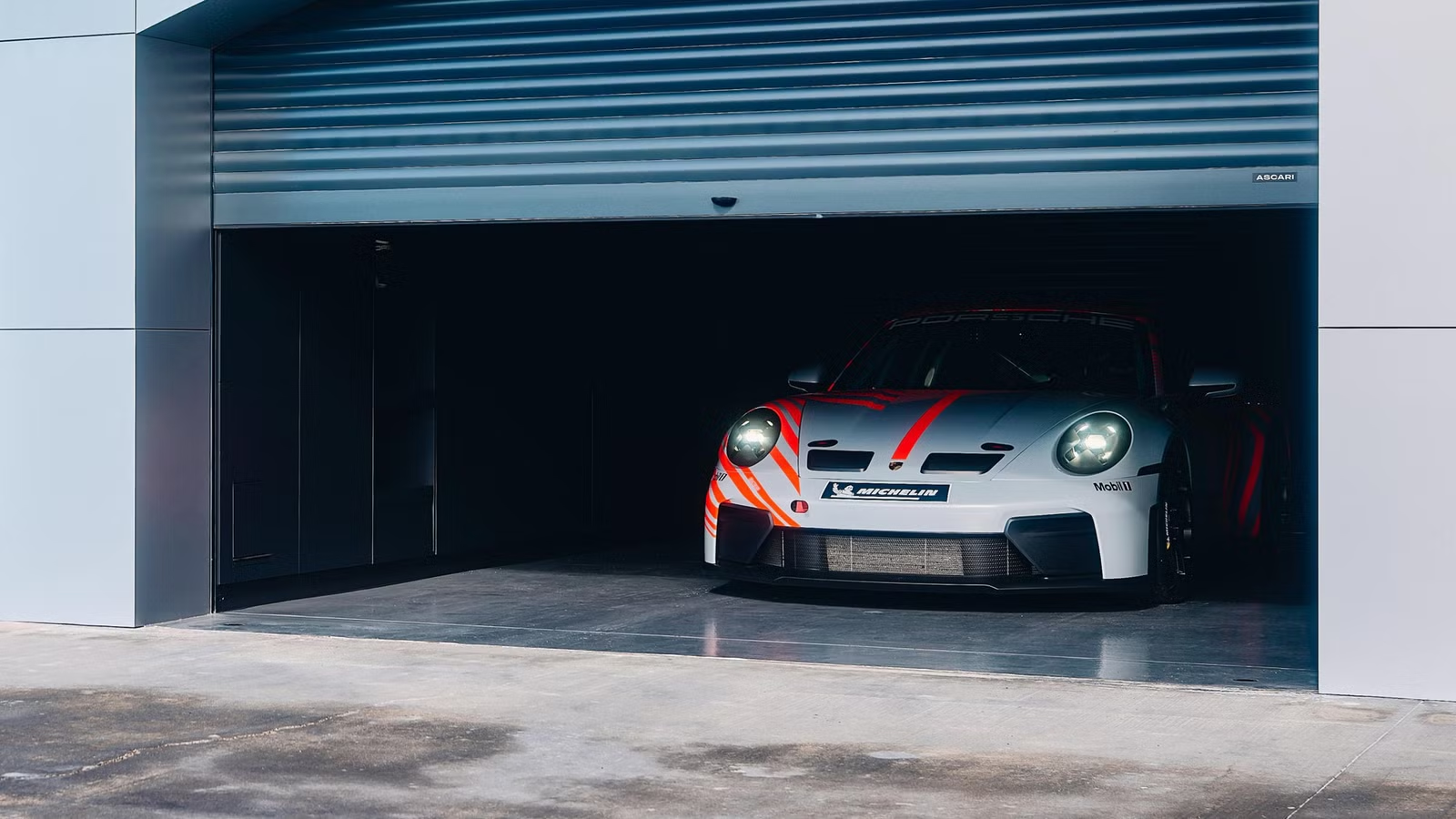
Porsche continues to find new ways to make it easier for performance fans to enjoy the white-hot thrill of racing, by launching new and ever more accessible turnkey race cars. The latest is the Porsche 911 Challenge, which is based on the road-going 911 GT3 and, according to Porsche, developed with lower operating and spare parts costs in mind.
Porsche’s New Gateway To Racing
2027 Porsche 911 Challenge Front 3/4 ViewPorsche
The 911 Challenge sits at the bottom of Porsche’s race-car hierarchy, a position previously filled by the 718 Cayman GT4 Clubsport and its 718 Cayman GT4 RS Clubsport successor. Because 718 production ended last year, the 911 has had to pick up the slack. This has resulted in not only the 911 Challenge but also the 911 GT4 R that we saw back in June, which, as the name suggests, is designed to compete in series that align with FIA GT4 regulations.
The 911 Challenge was developed primarily for one-make racing series, which have grown in popularity globally in recent years. Porsche is already represented in one-make racing with its 911 Cup, though the high cost and level of competition in series designed for the 911 Cup put them well out of reach of most amateur drivers. The 911 Challenge, on the other hand, carries a starting price of $275,000, which is roughly the same as the average transaction price for a 911 GT3 road car today – and close to half the cost of the 911 Cup.
Road Car Ties Keeping A Lid On Costs
2027 Porsche 911 Challenge Rear 3/4 ViewPorsche
It’s not only the lower starting cost that makes 911 Challenge ownership more accessible. Unlike the 911 Cup and other 911-based race cars, which rely on long lists of specialized parts, the 911 Challenge shares a significant number of its parts with the GT3 road car. This includes the naturally aspirated 4.0-liter flat-six engine, which in the Challenge is rated at 508 horsepower versus 502 in the road car. The main difference is the lack of a particulate filter in the race car’s exhaust system.
Other features shared with the GT3 road car include most of the aerodynamic features, the seven-speed PDK dual-clutch automatic transmission, still with paddle shifters, and even most of the interior controls. Some of the controls, while shared with the race car, now control racing-specific functions, though. Features like air conditioning, ABS, stability and traction control have also been retained to make the transition into motorsports easier.
2027 Porsche 911 Challenge Interior ViewPorsche
The biggest departure from the road car has to do with the chassis. In the 911 Challenge, the dampers have been recalibrated for driving exclusively on the track, and are joined by a new anti-roll bar with three adjustable positions. The wheels keep a standard five-bolt mounting pattern instead of a center lock, and now come with racing slick tires. And housed within are steel brake rotors.
CarBuzz Insight – Why This Matters:
As road-car performance continues to outpace what drivers can safely explore on public roads, track driving should only grow in popularity. The 911 Challenge gives Porsche enthusiasts a more accessible way into motorsports, and with demand for affordable track-focused cars growing, other automakers will likely follow suit.
Porsche aims to start deliveries in time for the 2027 motorsports season, with entrants in the new Porsche Motorsport North America-backed Porsche Sprint Trophy Porsche Owners Club to be given priority. Other US series where the 911 Challenge is anticipated to be eligible include the Porsche Sprint and Endurance Challenge North America by Yokohama and the Porsche Sprint Trophy Porsche Club of America.
