

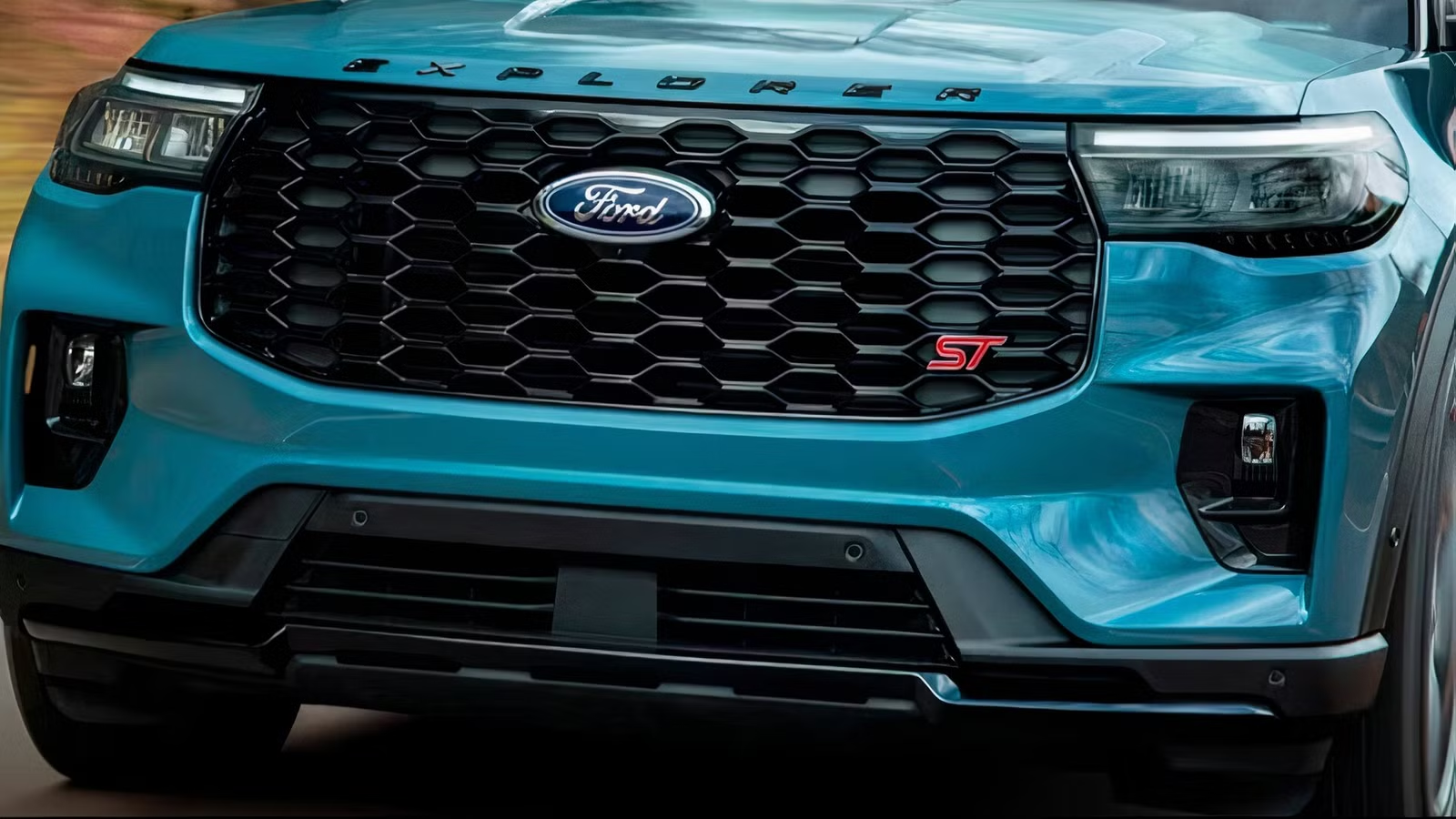
Ford insists that its steady pace of recalls is proof that its newfound emphasis on quality is working, but we’re not so sure if we agree when the subjects of its latest campaign have only been on the market for a few months. That’s the case for the 2020–2026 Ford Explorer and 2020–2027 Lincoln Aviator, both of which have been recalled for a potential safety issue with the rear seat latching mechanism. A total of 387,911 units are affected.
A Risk-Taking Convenience Feature
The front seats in the 2025 Ford Explorer ST.Nicole Wakelin/CarBuzz/Valnet
The issue is found in the easy-slide second-row outboard seats with which both the Explorer and Aviator are equipped. That said, not every example with that feature is affected by the recall, as it can be traced back to a particular supplier. The problem stems from a switch bezel for the tip-and-slide seat release, which can become misaligned through regular use. If that happens, the switch may not return to its fullly latched position, which could cause the seat to come loose, slide, or tip forward in a collision.
The automaker is unaware of any injuries associated with the problem, but the potential for a seat to move unexpectedly is still a safety concern, since it could alter the position of the seat relative to the crash structure or safety belts. Ford itself identified the issue about a year ago when reviewing its logistics practices. The automaker thought its tier-one seat supplier had remedied the issue by altering the way it installed the seat switch, but real-time customer reports revealed that unrequested seat movement was still happening.
Blue 2023 Ford Explorer Hybrid frontFord
As a result, the automaker expanded its previous Field Service Action into a full safety recall, a move that gave the automaker authority to bring back any affected Explorer and Aviator SUVs assembled between October 19, 2018, and June 24, 2026. The vehicles do not correspond to a specific VIN sequence, and as a result, the Blue Oval will be sending particular owners recall notifications in the mail.
Quality Issues Continue At Ford
2026 Lincoln Aviator Front Angle View in grayLincoln
The automaker continues to lead the industry in sheer volume of vehicle recalls. Through the first half of 2026, Ford has issued campaigns for millions of vehicles, many for a flawed rear camera display that needed merely a software reflash or an over-the-air update. However, many other millions of cars have been recalled for specific reliability concerns, including EGR failures, fire-causing short circuits, and detachable shift bushings that could lead to vehicle rollaway.
A handful of Explorers were recalled in February for a rear seat belt fastening bolt that may not have been tightened completely. Still others were brought back in for a passenger-side headlight that turns the wrong way when equipped with adaptive, corner-bending lighting. And several hundred thousand previous-generation models were recalled – first in 2021, then again last week – for roof cargo rail trims that may detach at high speed, increasing the risk of crash for following vehicles.
CarBuzz Insight – Why This Matters:
Ford’s quality problems extend back to the beginning of the previous decade, but the automaker swears that in spite of the rapid pace of recalls on those and other models, it is focusing more on quality and reliability than ever before. That could be true; despite cars that weren’t built to a high standard years ago, the quality team is indeed working on making today’s Fords more reliable than those of its past. The newness of the Explorer and Aviator recall notwithstanding, the fact that most of its recalled products have already been discontinued means the automaker is trying to solve problems its predecessors created.
Base Trim Engine
2.3L EcoBoost I4 ICE
Base Trim Transmission
10-speed automatic
Base Trim Drivetrain
Rear-Wheel Drive
Base Trim Horsepower
300 HP @5500 RPM
Base Trim Torque
310 lb.-ft. @ 3500 RPM
Base Trim Fuel Economy (city/highway/combined)
20/29/24 MPG
Infotainment & Features
9 /10
Source: Ford
