

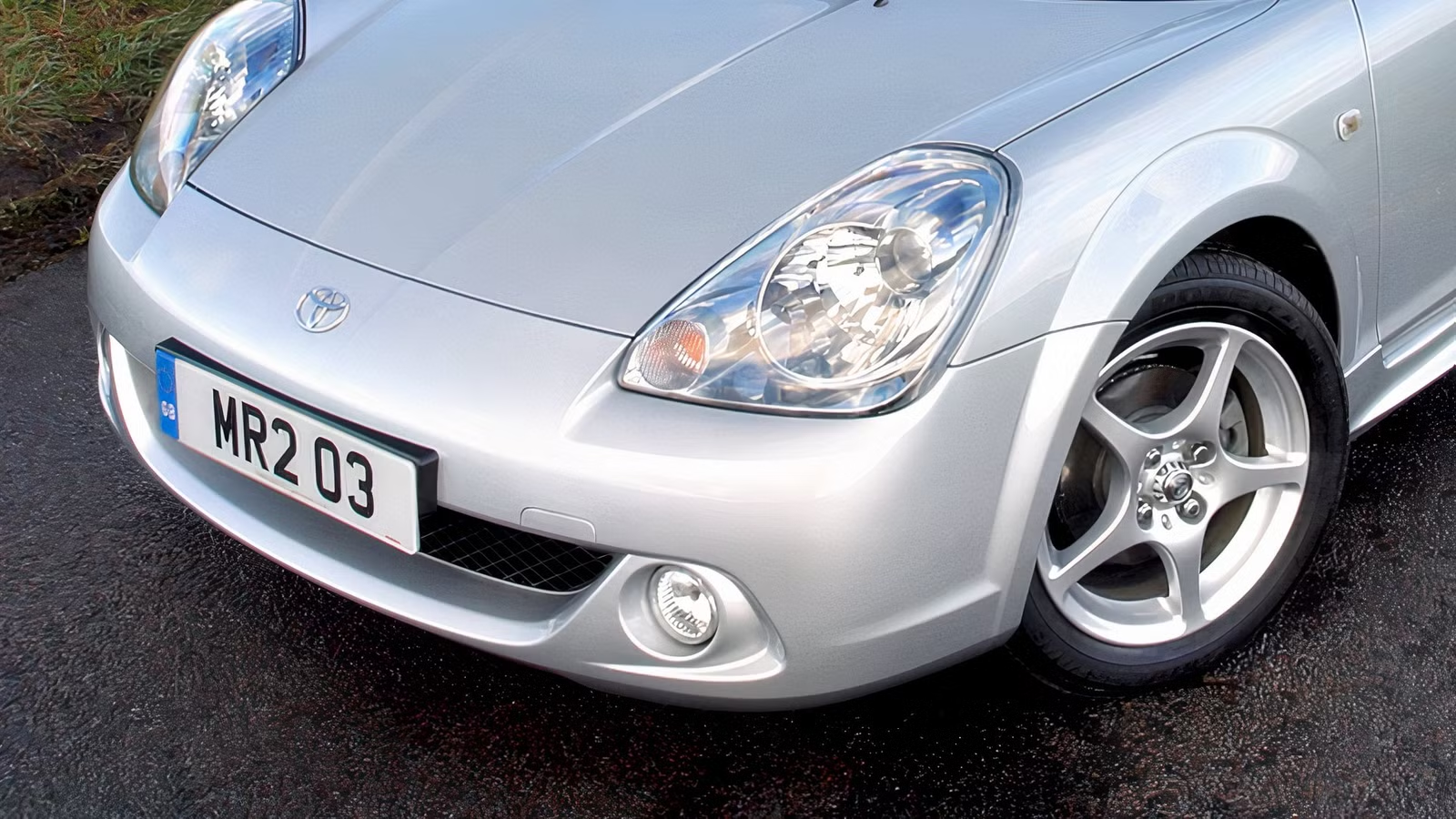
The idea of a weekend car is a coveted one. The vehicle you keep stowed away for when the mood strikes, knowing it disconnects you from the complications of your daily car and is focused on one thing: driving. Even basic cars today, such as the Toyota Corolla, have so much tech on board that they’re great for getting you to work and back, but you won’t feel your blood pumping when you drive them hard.
Toyota’s third-generation mid-engined sports car, the MR2 Spyder, brings driving back to basics. Plus, its small size and low power mean you can have oodles of fun before worrying about if you’re driving over the speed limit. Instead of getting a sporty SUV that tries to do everything and isn’t as efficient as a family car as it should be, why not get two cars for cheaper that do their thing really well?
A Mid-Engine Sports Car Is The Right Combo
You might not realize just how much of a difference weight transfer makes to how a car drives. A front-engined car is great for keeping the weight over the front axle, increasing steering grip and giving you trunk capacity, but if it’s your second car, you won’t be worrying so much about having oodles of space to carry your things. That’s why the MR2 has such a driving focus – a mid-engined layout is compromised in some ways, but what it gives back is more than enough.
With the engine in the center, the weight can be perfectly positioned, creating a more stable feeling during spirited driving. A front-engined car may give you a grippier from end, but with rear-drive cars, especially something as light as an MR2, you want some weight over the rear axle to help increase grip on the gas. Without a heavy engine weighing you down at the front, the front end should also feel more direct as there’s less to throw around.
Mid-Engine Cars Have A Certain Charm
2004 Toyota MR2 Spyder SMTMecum Auctions
Think of your favorite poster cars. Most of them probably have the engine in the middle, as it’s what we’ve come to expect from sports car manufacturers. The Mazda MX-5 Miata, the MR2’s closest rival, is similar in weight and proportions. Some argue that the MR2 simply feels more special because it’s a blue-collar machine that tries to imitate more expensive supercars.
Compared to previous generations of the MR2, this one, produced from 2000 to 2005, even did away with the rear luggage compartment to highlight that the focus here was on performance rather than practicality. The side vents and overall shape of the MR2 also make it look sportier than the MX-5 from the same era.
You Don’t Need Power With Such Small Weight
2000-2005 Toyota MR2 Spyder Rear Angle ViewToyota
Weight has become a big problem in modern sports cars, and the MR2 is the antidote to bloated performance cars. Overall heft comes in at a lightweight 2,200 pounds, meaning the 1.8-liter inline-four is easily powerful enough to take you and a friend to 60 miles per hour in around seven seconds. The output of 140 horsepower and 126 lb-ft of torque is plenty to let drivers have fun on a twisty country pass without checking the speedometer all the time.
The engine is also made entirely from aluminum to save weight and has the exhaust manifold towards the rear, unlike previous generations of this sports car. Still, the 43/57 front/rear weight balance means there’s a bit of play in the back end — something these cars are famous for. They are known to bite. A short wheelbase and usually inexperienced drivers looking for a cheap sports car mean these MR2s have a reputation for the rear sliding if the driver gets too rambunctious.
The cockpit of the 2000 Toyota MR2 SpyderToyota
If you do overcook it, though, you’ll be happy that there are ventilated disc brakes on all four corners. You can choose either a five-speed manual (other markets got a six-speed) or a five- or six-speed automated manual (depending on model year). If you’re into spirited driving, we’d always go for the manual. The simulated manual gearbox means the onboard computers prioritize clutch life over outright speed, making acceleration sluggish. It tops out at around 129 mph.
You’ll certainly feel like you’re going fast thanks to a super low-slung driving position and a slightly longer cabin than a similar MX-5, meaning six-foot drivers can easily fit into the seats. The MR2 makes do with a sparse interior, but it has all the important bits right. The white dials with orange needles are big and easy to read. It has standard air conditioning, and the shifter sits in a comfortable position. Unlike the previous generations of MR2, this car offers a true convertible driving experience instead of a removable roof panel.
How Much Does A Decent Example Cost?
2004 Toyota MR2 Spyder SMTMecum Auctions
You might expect an affordable sports car like this to come with miles closer to the distance to the moon, but that’s not the case. You can pick up a cared-for low-mileage option for half the price of a new Corolla, in fact. While it might not have the running costs or efficiency of a new model, its light mass and frugal engine still return a decent 26 combined miles per gallon fuel economy.
Toyota MR2 Price List
- A 22,000-mile manual 2003 Toyota MR2 sold for $13,900 in September 2025.
- A 63,000-mile manual 2000 Toyota MR2 sold for $9,500 in July 2026.
- A 30,000-mile manual 2001 Toyota MR2 sold for $19,500 in July 2026.
The market is all over the place, but you’re looking at around $15,000 in 2026 to find a decent one. That’s still significantly less than the price of an entry-level Corolla. Prices have been creeping up slowly, and the final car in our price list commands a higher price simply because of its dark green/tan color combination. A total of around 27,000 were sold in the USA during its short production run, but a high rate of crashing and bad maintenance means these cars aren’t as popular on the roads as they used to be.
Being A Toyota, It’s Pretty Reliable
2004 Toyota MR2 Spyder SMTMecum Auctions
There are a few things to consider when buying a used sports car like this. First, check the soft-top roof for tears or water damage, as with any cabriolet. The MR2’s low starting price also comes with a reputation for inexperienced drivers losing control and bending the vehicle around a tree trunk. So check for mismatched panels or bent bodywork before negotiating a price. Also, check the wheels because some designs can be prone to rust, which can seriously weaken them long-term.
Early MR2s suffer from something called “pre-cat” breakdown. This is when the catalytic converter breaks down, sending debris into the engine and potentially causing catastrophic damage, such as loss of compression or damaged pistons. A compression test is recommended when buying the car, but otherwise check the history to see whether this issue has been remedied. Later cars (2004MY onwards) have modifications to prevent this.
2004 Toyota MR2 Spyder SMTMecum Auctions
Check modified examples to see how well the work has been done, as many higher-mileage cars may have had a tricky life. The engine uses a timing chain, so rattles when the engine is cold are a reason to get some dollars knocked off the asking price for a replacement. Overall, though, the Toyota reliability record continues with this car, and you shouldn’t be worried about big bills coming your way, especially if there’s no pre-cat damage.
Sources: Toyota, BringATrailer, PistonHeads, Autocar
