

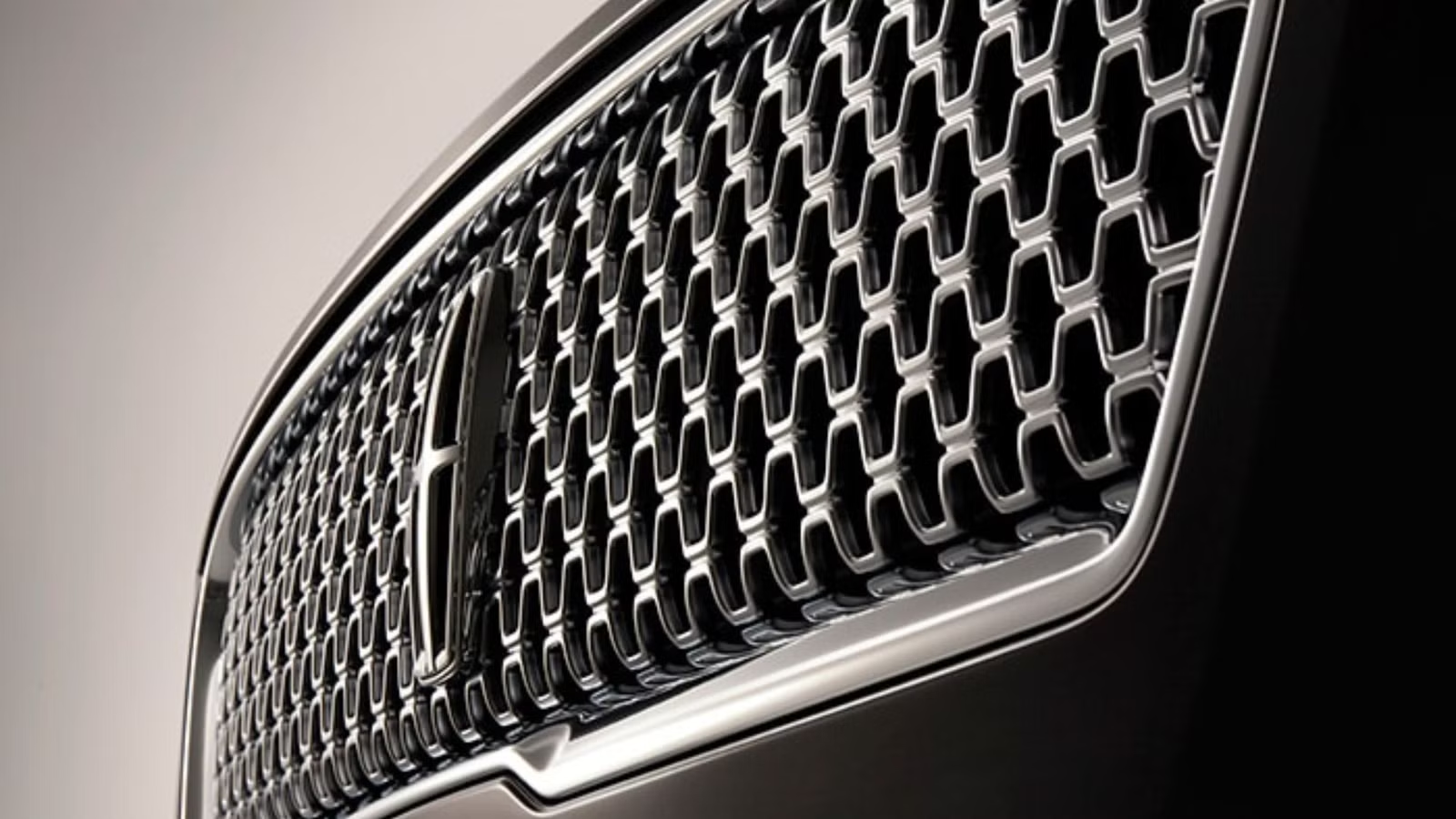
The 2017 Lincoln MKZ 3.0T AWD is one of those cars that looks like a potential performer from the outside but may still leave people guessing. In many respects, it was an understated mid-size luxury sedan with an engine that was indeed capable of springing a surprise.
But even more interestingly, properly equipped versions had some specific torque vectoring hardware that gave this car a rather unusual connection to Ford’s Focus RS. And due to the relentless effects of depreciation, there are now some interesting prices in the used car market.
Lincoln Hid 400 hp In Plain Sight
2017 Lincoln MKZ 3.0T front 3/4 angle in gray while drivingLincoln
The Lincoln MKZ 3.0T AWD had plenty of secrets beneath its unassuming exterior. Lincoln had carried out a major refresh for the 2017 model year, offering a 3.0-liter twin-turbocharged direct-injected V6, representing a significant change from the predecessor, Ford’s naturally aspirated 3.7-liter unit.
The new engine aboard this AWD produced 400 hp at 5,500 rpm and 400 lb-ft at 2,750 rpm. The front-wheel-drive version was a little tamer, offering 350 hp and 400 lb-ft, and both vehicles came with a six-speed Select Shift automatic. But if buyers wanted to sample that 400 hp output specifically, they’d need to select all-wheel drive.
Independent testing showed that the new turbocharged car was approximately 1.5 seconds faster to 60 mph than the earlier naturally aspirated V6 MKZ. But still, Lincoln wanted to keep any excitement in check and focused on luxury and refinement in its advertising rather than pushing the MKZ as a hardcore performance sedan. But the real secret wasn’t just what was under the hood – it was what Lincoln hid in the rear axle.
The Focus RS Connection Hiding In The Back
2017 Ford Focus RS front 3/4Ford
The Ford Focus RS is one of the company’s most serious modern performance cars, and one of its more notable attributes is its GKN Twinster Torque Vectoring AWD system. Twinster features independently controlled clutch packs instead of a conventional rear differential arrangement, and the torque varies across the rear axle instead of being simply split evenly. Lincoln liked the idea of this technology and decided to apply it to the MKZ, renaming it Dynamic Torque Vectoring. Up to 100% of the available rear axle torque could be transmitted to the outside rear wheel during cornering.
While the MKZ application belonged to the same GKN mechanical Twinster family as the system on the Focus RS, there were nevertheless some big differences. The system on the Focus RS was far more aggressive and used different gearing and calibration, including rear-wheel overspeed. The RS also featured Drift mode, and the vehicle had a much more performance-focused chassis setup anyway. Meanwhile, the system on the MKZ was carefully calibrated with stability, traction, and cornering assistance in mind. But differences aside, the Twinster system was an unusually sophisticated technology for this kind of discreet luxury sedan.
Drivers who wanted to take advantage of Lincoln’s dynamic torque vectoring approach during 2017 or 2018 would need to opt for the Driver’s Package. If they did so, they’d get sport-tuned suspension, 19-inch wheels, painted brake calipers, carbon fiber interior trim, aluminum pedals, and multi-contour front seats. From 2019, Lincoln added AWD directly to the 3.0-liter V6 car, and this also brought Dynamic Torque Vectoring and sport-tuned suspension.
It Could Hit 60 mph In 4.8 Seconds Without Looking Fast
2017 Lincoln MKZ front quarter parkedLincoln
The Lincoln MKZ was quite a heavy vehicle (featuring more than two tons of curb weight), but it was still genuinely quick. One independent test showed that it could get to 60 mph in 4.8 seconds, reaching the quarter mile in 13.4 seconds at 105 mph. Its acceleration was undoubtedly helped by a hefty amount of torque, which came in quite early, giving it strong low- and mid-range response.
Not every driver was happy with the Lincoln’s performance, however. Some complained about leisurely six-speed shifts, the steering feel, and body movement. They felt that the car’s performance was strongest in straight-line acceleration or real-world overtaking, rather than on track or on a twisty back road.The good news is that the six-speed’s biggest weakness – the one complaint that showed up in nearly every review – has a surprisingly cheap fix.
Essentially, the Lincoln was still a luxury car that remained quiet, comfortable, and refined. It had all the demeanor that people had come to expect from an executive Lincoln, and while it had genuinely rapid acceleration, there was very little in the way of external drama.
A $600 Tune Gives The Twin-Turbo V6 Even More To Work With
2017-2020 Lincoln MKZ Facelift White Rear 3/4 AngleLincoln
Those who wanted the Lincoln MKZ to give them a bit more performance could always opt for a relatively inexpensive tuning boost. The Livernois MyCalibrator Touch features 93-octane performance calibration and can be applied to either the 2017 to 2020 Lincoln MKZ or the Continental 3.0L.
This calibration apparently adds more than 53 additional horsepower at the wheels, along with an additional 26 lb-ft. It also alters the boost, ignition, fueling, throttle response, and torque management, and – according to the vendor – can lead to firmer shifts. Many feel that this add-on, retailing for about $600, is especially relevant as the factory car’s standard six-speed transmission was one of its weaker points.
A $60,000 Lincoln Can Now Cost Less Than $17,000
2017 Lincoln MKZ interior view of the front cabinLincoln
Buyers who like the idea of one of these Lincolns may be pleased by the effects of depreciation. One recent listing shows a 2017 MKZ Reserve with a 3.0T AWD system selling for $17,745, with 75,598 miles on the clock. Another example of a 3.0T AWD car is going for $12,160, although that car has more than 130,000 miles on its odometer.
And these are quite interesting prices compared to the cost of the MKZ when new. A heavily optioned 2017 version could sell for around $53,000, with the Black Label version more than $63,000, so the current market values are dramatically below original pricing. CarBuzz Marketplace also shows that the average value of a 2017 Lincoln MKZ Reserve AWD should be about $13,877.
Buyers looking for the Twinster dynamic torque vectoring system should verify that a 2017 or 2018 example has the Driver’s Package. They should also look at the vehicle’s specification in general to see what’s on offer, rather than simply choosing the cheapest 3.0T.
Certainly, high-mileage bargains could be attractive, but shoppers should do their due diligence carefully, paying particular attention to the twin-turbo V6, the AWD hardware, the adaptive suspension, and the luxury electronics. Importantly, they should always remember that potential repair costs remain those of a complex luxury car, no matter what they pay to acquire the vehicle in the first place.
There’s very little on the outside of a 2017 Lincoln MKZ 3.0T AWD to give away its performance or to suggest that it can produce 400 hp. And there’s even less to show that it may feature GKN Twinster family torque vectoring technology, of the type that worked so well on the Focus RS. So taking everything into consideration, the MKZ may well be one of the biggest sleepers in the used car marketplace today.
Base Trim Engine
2.0L Turbo Inline-4 Gas
Base Trim Transmission
6-Speed Automatic
Base Trim Drivetrain
Front-Wheel Drive
Base Trim Horsepower
240 hp
Base Trim Torque
270 lb-ft @ 3000 rpm
Fuel Economy
21/31 MPG
Infotainment & Features
8 /10
Sources: Lincoln, Ford, Livernois, GKN.
