

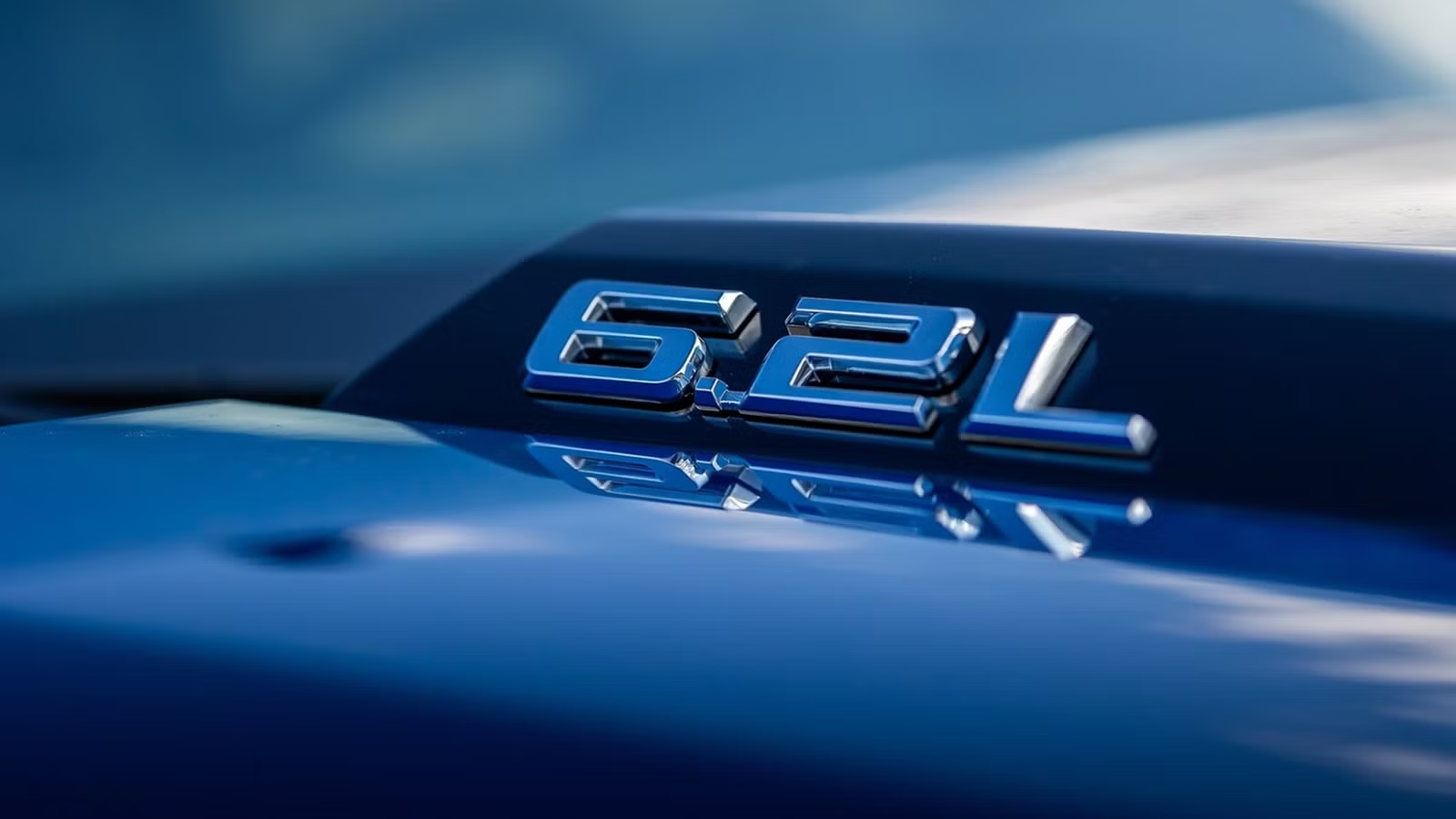
The 6.2-liter V8 found in certain Chevrolet Tahoe, GMC Yukon, and Cadillac Escalade models has been recalled for more than a year now, but the remedy may not be to the government’s satisfaction. The National Highway Traffic Safety Administration (NHTSA) announced it would investigate the recall after receiving complaints from owners who had experienced engine failures even after their trucks and SUVs had been repaired according to GM’s standards.
Problematic Machining And Lubrication
Close
The original recall of the 6.2-liter V8, codenamed L87 and also found under the hoods of some Silverado 1500 and Sierra 1500 pickups, pertained to machining flaws to the crankshaft and connecting rods, as well as foreign material that would clog oil passages and contaminate rod bearings. In extreme cases, affected vehicles would exhibit rod knock, losses of power, and complete engine failure.
GM traced the problem back to a supplier and worked out a solution to build the engine components to tighter standards, then issued NHTSA Safety Recall 25V-274 in 2025 for 597,000 examples of the company’s full-size, body-on-frame SUVs and half-ton trucks. The recall inspection involved inspecting for excessive wear on the bearings and rods, with passing vehicles getting a higher-viscosity oil for better lubrication and failing units receiving entirely new engines.
Fixing A Fix Till It’s Fixed
However, NHTSA’s Office of Defects Investigation (ODI) has received nearly 500 complaints from 6.2-liter V8 owners who alleged their vehicles suffered from engine failure even after successfully carrying out the manufacturer recall. Furthermore, ODI says that GM itself has received 6,900 such reports, although consolidating duplicates brought the total number of claims down to 6,050. As a result, the office opened an engineering analysis and recall query into GM’s supposed remedy.
Making matters worse for Chevrolet, Cadillac, and GMC, the complaints don’t just apply to the 2021–2024 models that the companies initially recalled. Newer SUVs and trucks not subject to the initial 2025 campaign (and theoretically built with the new component design) have also reported engine failures, meaning the solution might be more complicated than GM and its suppliers initially thought. The total number of vehicles covered by ODI’s investigation totals 997,743 trucks and SUVs from the 2021 to 2026 model years, 400,000 units more than the company recalled last year.
The engineering analysis is still under way, so it’s possible that the post-recall engine failures are related to something else entirely, whether that’s driver error or some other mechanical issue. We’ll reserve final judgment for when we hear more from either ODI or GM.
Base Trim Engine
4.3L V6 Gas
Base Trim Transmission
6-Speed Automatic
Base Trim Drivetrain
Rear-Wheel Drive
Base Trim Horsepower
285 hp
Base Trim Torque
305 lb-ft @ 3900 rpm
Fuel Economy
16/21 MPG
Infotainment & Features
9 /10
CarBuzz Insight – Why This Matters:
Long known for its steadfast reliability and flexibility, GM’s small-block V8 has suffered a bit of a black eye as a result of these pesky 6.2-liter engines. And it’s all the worse that many of the six-two’s current customers are driving around in some of GM’s most expensive vehicles, like the Escalade and Yukon Denali. Although the automaker wouldn’t admit to anything, we suspect that the new 5.7-liter L76 and 6.6-liter L78 engines found in the 2027 Silverado 1500 and Sierra 1500 are an attempt to distract customers from the unfortunate reputation of the current engine (while also boasting improved power and capability over their predecessor). Here’s hoping for a speedy solution for all current 6.2-liter V8 owners.
Source: NHTSA via Car and Driver
