
Close Menu
Car Candy Crush – Satisfy Your Sweet Tooth for Cars

    Subscribe to Updates

    Get the latest creative news from FooBar about art, design and business.

    What's Hot

    In a first, wind and solar generated more power than gas globally in April 2026

    May 21, 2026

    Wild Mercedes-AMG CLE 63 Mythos heralds return to V8s

    May 21, 2026

    Stellantis Just Decided The Future Of Its 14 Car Brands

    May 21, 2026
    Facebook X (Twitter) Instagram
    Trending
    • In a first, wind and solar generated more power than gas globally in April 2026
    • Wild Mercedes-AMG CLE 63 Mythos heralds return to V8s
    • Stellantis Just Decided The Future Of Its 14 Car Brands
    • How to handle labour rate in an EV environment
    • Audi Hit With Class-Action Lawsuit Over Alleged EA839 V6 Water Pump Failures : Automotive Addicts
    • The Vivaldi 8.0 update makes it harder than ever to go back to Chrome
    • The Track-Focused Muscle Truck Returns In 2026
    • The Range Rover Depreciation Trap Luxury Buyers Keep Walking Into
    Car Candy Crush – Satisfy Your Sweet Tooth for Cars
    Thursday, May 21
    Facebook X (Twitter) Instagram
    • Home
    • Car Reviews
    • Auto News
    • Maintenance
    • Electric Vehicles
    • Car Tech
    • Classic Cars
    • Buying Guide
    • More
      • Parts & Upgrades
    Car Candy Crush – Satisfy Your Sweet Tooth for Cars
    Home»Car Reviews»Your Plug-In Hybrid Is Polluting More If You Aren’t Charging It Up
    Car Reviews

    Your Plug-In Hybrid Is Polluting More If You Aren’t Charging It Up

    kirklandc008@gmail.comBy kirklandc008@gmail.comJanuary 12, 2026No Comments4 Mins Read
    Facebook Twitter Pinterest LinkedIn Tumblr Email
    Your Plug-In Hybrid Is Polluting More If You Aren't Charging It Up
    Share
    Facebook Twitter LinkedIn Pinterest Email

    The biggest car news and reviews, no BS

    Our free daily newsletter sends the stories that really matter directly to you, every weekday.

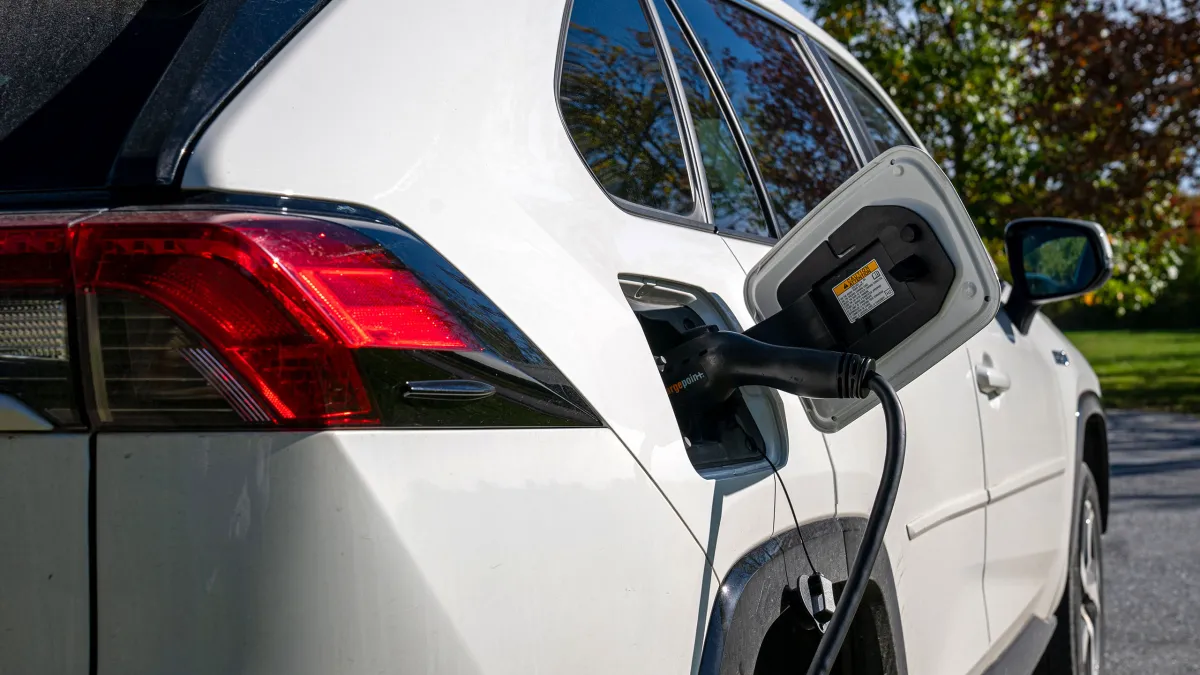
    Plug-in hybrids, or PHEVs, are often hailed as a more feasible half-measure between purely gasoline-powered and battery-powered vehicles for the majority of Americans, while leveraging more advanced technology than conventional hybrids for better efficiency and performance. But that really depends on how you use them, and a new study out of China reiterates the point that if you never plan on plugging in your plug-in, it’s probably best to just buy an old-fashioned hybrid.

    The study, featured in an upcoming issue of the science journal Transport Policy, surveyed 500 daily-driven plug-in hybrid vehicles in Shanghai, factoring in different charging regimens. Early on, the researchers stipulate that you can simplify how PHEVs operate into two behaviors: Charge-Depleting (CD) mode and Charge-Sustaining (CS) mode.

    CD is where you want to be as much as possible, because it means that the vehicle’s battery is being depleted through use. Here, you’re getting the full benefit of electric power, whether it be through all-electric range or instant torque. Once the vehicle switches over to CS mode, the combustion engine is being fully tapped pretty much all the time, diverting a small amount of energy toward the pack to maintain what little juice it does have, which is also supported via regenerative braking.

    This Kia Niro PHEV is in a decidedly charge-sustaining mode. Adam Ismail

    The efficiency gains of a PHEV operating in optimal CD mode versus a conventional hybrid can be significant—at least in a lab. Researchers have found evidence to suggest that PHEVs with batteries at a high state-of-charge may emit 40% to 60% less nitrogen oxide than traditional gas-burning vehicles in an urban use cycle. However, those numbers seem to pale significantly in the real world, looking more like a 20% reduction. And they go in entirely the wrong direction once that battery is spent, and it’s time to plug in again.

    “Infrequent charging leads to a significant increase in nitrogen oxide, hydrocarbons, and carbon dioxide emissions,” the Transport Policy study explains. “In the worst-case scenario, where users never charge their PHEVs, emissions rise by 62% for nitrogen oxide, 70% for hydrocarbons, and 46% for carbon dioxide, respectively.” That’s relative to their output in a CD state, by the way.

    In CS mode, the PHEV in question is operating with reduced performance and worse efficiency than a conventional hybrid. It’s lugging a heavy battery pack around, with no energy from that battery to help the cause. Consider that an ICE-only, all-wheel-drive Mitsubishi Outlander weighs 3,900 pounds, while its plug-in hybrid counterpart weighs 4,600 pounds. Meanwhile, a Kia Niro PHEV is 250 pounds heavier than a base, conventional hybrid version.

    With an empty battery, the combustion engine in a PHEV is working harder and more of the time. That’s an inevitable recipe for worse fuel economy and, as the researchers explain, more pollution.

    Plug-in hybrids indeed have their benefits, but, sort of like with pure battery-electric vehicles, they’ve got to fit your routine if you plan to actually get something out of them. The big difference is, if you’re not good about charging your EV, you won’t go anywhere; the owner has pretty much no choice but to adapt their usage habits. If you’re not good about charging your PHEV, you can still get around, but it’s going to cost you more than if you had never bothered to buy one in the first place.

    Got a tip? Let us know at tips@thedrive.com

    Backed by a decade of covering cars and consumer tech, Adam Ismail is a Senior Editor at The Drive, focused on curating and producing the site’s slate of daily stories.

    Arent Charging Hybrid Plugin Polluting
    Share. Facebook Twitter Pinterest LinkedIn Tumblr Email
    kirklandc008@gmail.com
    • Website

    Related Posts

    The Range Rover Depreciation Trap Luxury Buyers Keep Walking Into

    May 21, 2026

    BYD expands Indonesia lineup with DM hybrid technology

    May 21, 2026

    Game Over. Ram Brought a Hellcat Street Truck and Ford Brought a Lowering Kit

    May 21, 2026
    Leave A Reply Cancel Reply

    Our Picks
    Stay In Touch
    • Facebook
    • Twitter
    • Pinterest
    • Instagram
    • YouTube
    • Vimeo
    Don't Miss
    Electric Vehicles

    In a first, wind and solar generated more power than gas globally in April 2026

    By kirklandc008@gmail.comMay 21, 20260

    Photo: Vestas Wind and solar just hit a major global milestone: For the first time…

    Wild Mercedes-AMG CLE 63 Mythos heralds return to V8s

    May 21, 2026

    Stellantis Just Decided The Future Of Its 14 Car Brands

    May 21, 2026

    How to handle labour rate in an EV environment

    May 21, 2026

    Subscribe to Updates

    Get the latest creative news from SmartMag about art & design.

    About Us

    Welcome to Car Candy Crush, where passion for cars meets creativity and style!
    We’re here to celebrate the beauty, power, and excitement of the automotive world — from classic rides to the latest high-tech supercars that make your heart race.

    Latest Post

    In a first, wind and solar generated more power than gas globally in April 2026

    May 21, 2026

    Wild Mercedes-AMG CLE 63 Mythos heralds return to V8s

    May 21, 2026

    Stellantis Just Decided The Future Of Its 14 Car Brands

    May 21, 2026
    Recent Posts
    • In a first, wind and solar generated more power than gas globally in April 2026
    • Wild Mercedes-AMG CLE 63 Mythos heralds return to V8s
    • Stellantis Just Decided The Future Of Its 14 Car Brands
    • How to handle labour rate in an EV environment
    • Audi Hit With Class-Action Lawsuit Over Alleged EA839 V6 Water Pump Failures : Automotive Addicts
    Facebook X (Twitter) Instagram Pinterest
    • About Us
    • Contact Us
    • Privacy Policy
    • Terms and Conditions
    • Disclaimer
    © 2026 CarCandyCrush. Designed by By Pro.

    Type above and press Enter to search. Press Esc to cancel.