

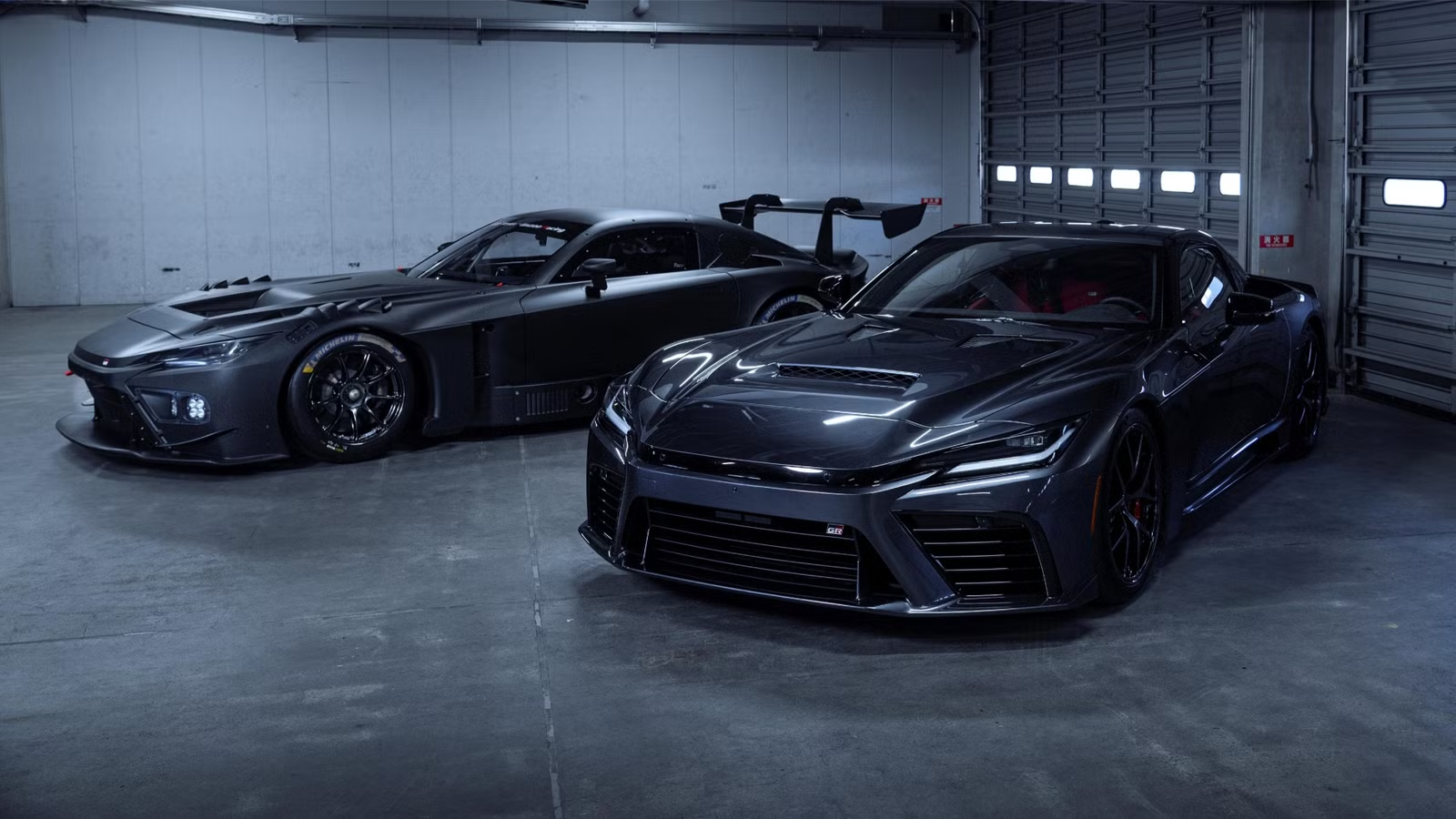
Toyota is no stranger to building sports cars, nor is it to building race cars. Its GR GT program, though, is odd because the road car will exist in minuscule numbers, which isn’t how one of the largest mainstream automakers in the world makes money. Toyota has previously made it clear that the GR GT exists to give Toyota a good GT3 race car, and comments from a Toyota executive confirm that seems to be one of the main priorities.
Apparently, It Doesn’t Make “Financial Sense”
The above description comes from Andrew Gilleland, the vice president of automotive operations for Toyota’s North American branch. He said this about the GR GT while talking to a reporter from The Drive. He didn’t seem to elaborate on whether that just means the sports car won’t make much money, or if it might actually lose Toyota some money. Either way, it’s clear that profit wasn’t the key focus of the GR GT. Of course, how could it when Toyota only plans on selling a couple hundred of them in the US this year?
He went on to explain that the car still matters for Toyota as both a halo product to give Toyota and GR road cars extra credibility, and as a race car. In particular, he noted that the race car should be much more comfortable and easy to drive than its spiritual predecessor, the Lexus RC F GT3. That latter part really is the big focus for the GR GT, too. He said that the plan is to eventually offer GT3 cars to customer teams and to flesh out a whole racing ecosystem where people can start racing in slower, more accessible classes with things like the GR 86, and move all the way up to GT3 entirely with Toyota race cars.
There Are Other Reasons The GR GT Program Makes Sense
Even beyond helping bolster the image of Toyota and stretch the Toyota racing ladder, we can see other ways the GR GT actually does make financial sense, just not in the traditional way of sheer volume and profits. We suspect that there’s decent money in the GT3 customer car business alone, even without having a whole line of race cars. After all, Genesis has plans to build customer GT3 cars on its upcoming Magma GT sports car, which itself is designed with the race car in mind, just like the GR GT. The class has grown significantly over the past few years, too, with loads of automakers offering vehicles to customers. Those customers will also be purchasing parts and such, too.
Lexus LFA Concept ExteriorLexus
Furthermore, Toyota isn’t the only brand getting a road car out of this project. Lexus is getting a new LFA. Certainly it’s different in many ways. It eschews the twin-turbocharged 4.0-liter V8 for a fully-electric powertrain. However, it still has the same basic chassis. You can even see the commonalities in the shape and proportions of the LFA. The LFA likely won’t sell in big numbers, either, but Toyota has been quite wise in using its development money for these low-volume vehicles. It’s getting two halo road cars, plus a race car, all built on the same platform, rather than creating bespoke vehicles for each purpose. Not only that, but we’ve heard reports that Toyota has variations of the GR GT coming up that will surely help further cover the costs of development. That all seems like “financial sense” to us.
Source: The Drive
