

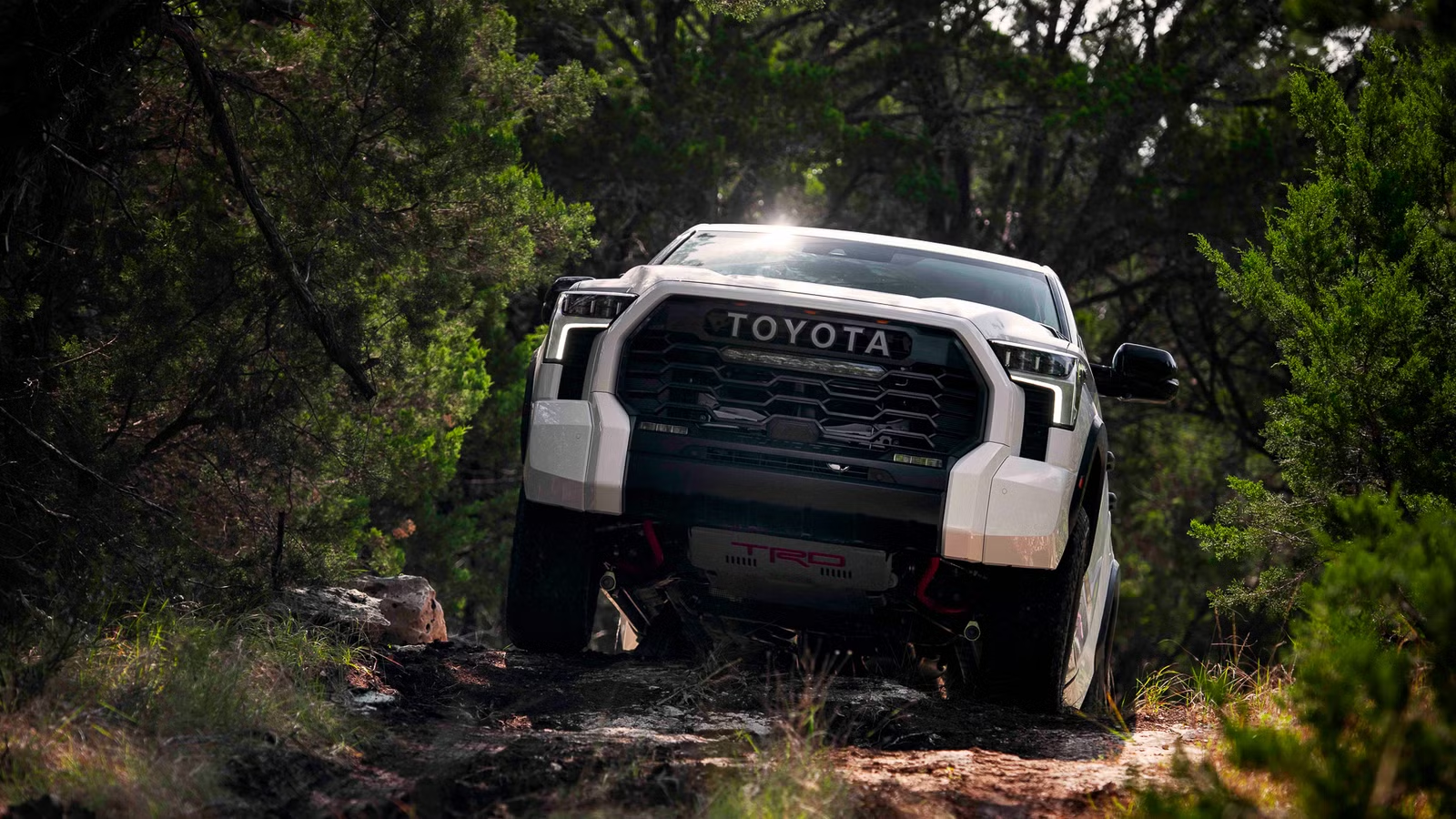
There’s an old adage about expertise wherein a grizzled veteran technician fixes a massive and seemingly unfixable problem in moments with the proper application of a simple tool. The latest update regarding Toyota’s enormous V6 engine recall campaign for Tundra and others just had a similar moment. With the right touch of the right hammer, a Toyota technician can now tell immediately if your engine is on the road to disaster and needs to be replaced.
In the harmonics, Toyota will help you find harmony for your new truck.
Trucks Might Not Need A New Engine Thanks To This One Trick
2022 Toyota Tundra V35A-FTS i-Force Max engineToyota
Toyota’s twin-turbo 3.5-liter V6 engines have a problem. Debris in the oil passages was causing catastrophic failures, leading to recalls of more than 270,000 engines in Tundra pickups and various SUVs. At one point, it seemed that every one of those engines would need to be replaced.
Because Toyota didn’t want to start tossing engines in every truck, it developed a new test. The automaker explained to CarBuzz that it developed a new test to measure the resonant frequency of the front of the crankshaft to determine if an engine was good or bad. A company spokesperson said the brand was very confident in that test, which assessed the engine based on how it rang like a bell.
What Toyota didn’t say was how it would do the test. Now, thanks to Pickup Truck + SUV Talk, we know the fix is… a special hammer.
Just A Little Tap Will Do?
OH industrial hammer similar to Toyota’s partoh industrial
The site found Toyota’s technical instructions for the campaign. To test the engine for bearing failure, a tech changes the oil, brings the engine up to temperature, then removes the accessory belts and turns the crank to the right spot. Then, an accelerometer is connected to the crankshaft bolt and tied into the computer.
Finally, the magic strike. A tap with Toyota’s special hammer (a similar one is shown in the image above) at the 3 o’clock position of the crank pulley puts the test in motion, if you will. The software decides if the hit was too weak, too hard, or just right. It then takes three measurements and analyses the sound. The right sounds are a passing grade. The wrong sounds mean a new engine.
Hitting something to make sure it’s right is one of the oldest tests around. Truckers have done it for a century to check tire pressures. Your home inspector might do it to check floor tiles. And if you haven’t smacked a secured load of cargo to hear that reassuring lack of sound confirming it’s snug, then you haven’t truly secured a load. Every part made the same way should have the same sound. If it doesn’t, then it’s immediately obvious there is a problem.
Toyota previously told CarBuzz that this inspection doesn’t guarantee the engine will never fail, but that it is confident and that the test errs on the side of caution. Plus, it is still monitoring, so if there is a problem later on, owners should reach out to their dealers. “Toyota takes the quality of its products seriously,” we were told.
If you want one of your own, the hammer appears to be an OH Industrial Co 250-gram plastic head model. But the image from the site’s source is too distorted to identify it for certain.
CarBuzz Insight – Why This Matters:
2027 Toyota Sequoia TrailhunterToyota
While every owner would probably be happy to get a new engine, the volume of engines involved would make it a miserable experience for everyone. This quick test uses a simple, time-tested method to determine which affected trucks get a new engine and which ones don’t. And either way, owners get a free oil change.
It’s better to bang your crank than to bang your head if your engine lets go, leaving you without a truck for possibly many months until a replacement engine arrives.
Sources: Toyota, Pickup Truck + SUV Talk
