

For most performance enthusiasts, a Ferrari is still a dream, while a Porsche has traditionally been the more attainable way into the peak performance world. We’re not talking about Porsche’s high-volume models like the Macan and Cayenne, which are pretty much ubiquitous, but its top-end stuff like the 911 and its multitude of variants.
Porsche, however, has been raising prices in recent years, especially for its top-end cars. And if you thought the automaker was done now that its sales are down, you’d be wrong.
Porsche Is Coming For Ferrari’s Customers
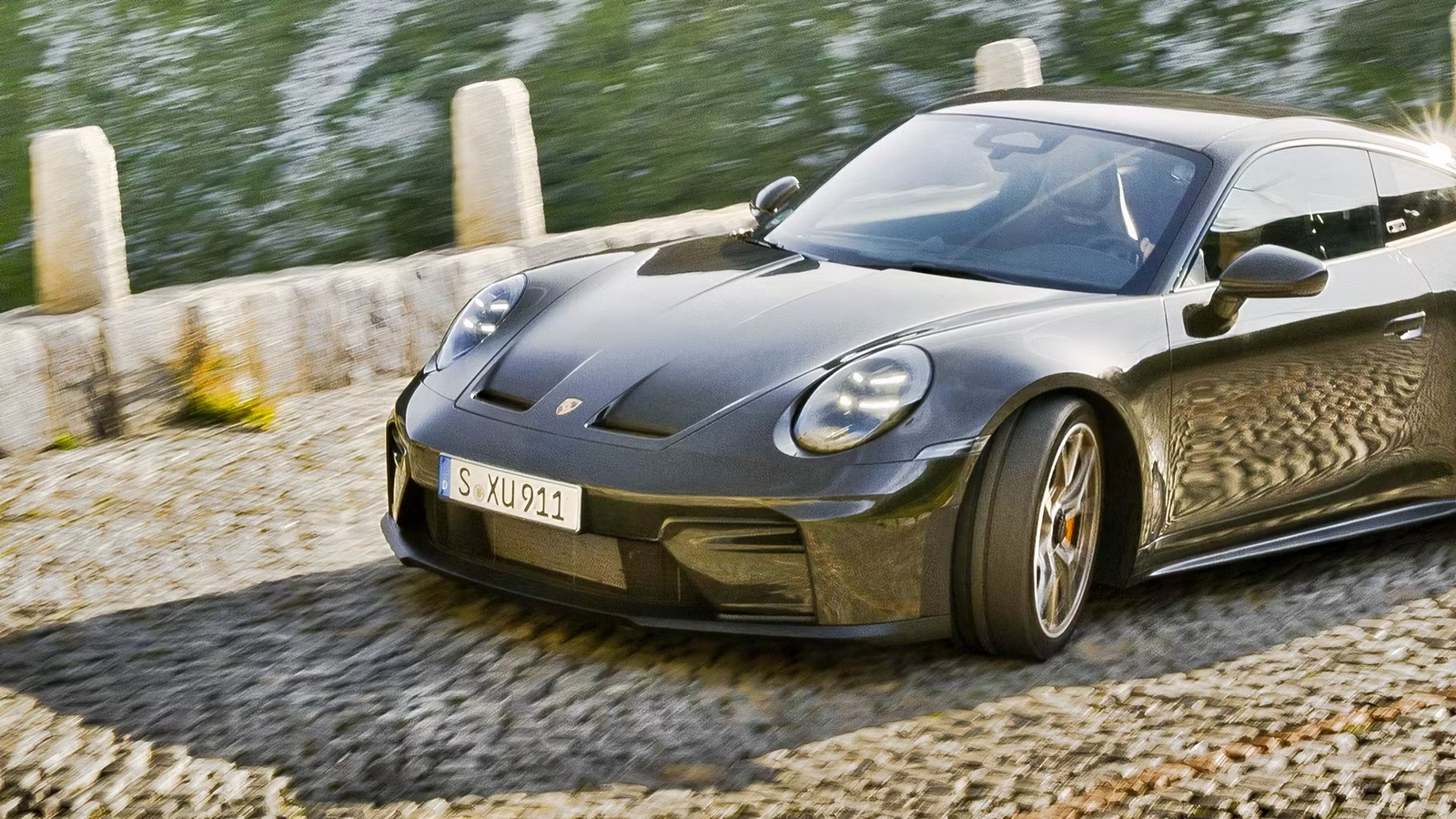
2027 Porsche 911 GT3 SC Streetstyle packagePorsche
The Porsche 911 today starts at $135,500 for the base Carrera. That’s up $45,000 from just a decade ago, and for uber-cool models like the GT3, the situation is even more extreme. The GT3 officially carries an MSRP of $235,800, though strong demand can push transaction prices closer to $300,000. At that point, Porsche is knocking on Ferrari’s door.
Rather than let things cool off, Porsche plans to raise prices further. In its Sportwagenschmiede ’35 mid-term strategy announced this week, Porsche said it plans to increase the average selling price of its top-end models by about 20%. It’s all part of the automaker’s plan to position the brand at a higher level in order to attract higher margins.
Fewer 911 variants positioned lower in the range are expected, but we anticipate more limited series and high-end special models like the 911 GT3 S/C. Porsche has also increased its stake in Manthey Racing to 67% ownership, and will leverage this connection to push even more hardcore racing-derived models that command higher profit margins. The move is part of what Porsche touts as “establishing a ‘Home of Sports Cars’,” split between Performance (GT and Manthey cars), Exclusiveness (Sonderwunsch and Exclusive Manufacture), and Heritage divisions.
2026 Porsche 911 Spirit 70Porsche
Porsche said it wants an operating margin of 15% in the longer term. That’s a lofty target compared with most automakers, even those in the luxury segment, though it would still fall well short of Ferrari’s nearly 30% margin, which is more akin to what you’d expect from something like a luxury watch or handbag brand. Of course, Ferrari only sells about 15,000 cars a year, which limits its ability to grow profits.
But Aren’t Sales Crashing At The Moment?
2025 Porsche Macan driving front 3/4Porsche
Porsche’s sales have been in decline since peaking at 320,221 vehicles in 2023. Deliveries fell 3% in 2024 and another 10% in 2025, while the first half of 2026 brought a further 16% drop, putting Porsche on track for roughly 245,000 sales this year. The declines have been concentrated in the brand’s less profitable volume models, and particularly in China, where sales plunged 32% in the first half of 2026 and dealers have resorted to heavy discounting.
Given the bleak outlook, you might wonder how Porsche plans to raise prices. It turns out Porsche has a lot of pricing power when it comes to its core sports cars, even as the volume models falter. Sales of the 911, for example, were up 19% globally in the first half of the year, even after recent price increases. Porsche now wants to give buyers of its top-end cars even more enticing options, allowing it to push average selling prices further still.
As outlined in Sportwagenschmiede 35, Porsche plans to offer more personalization options while expanding the lineup with more top-end models, including a supercar positioned above the 911 and an SUV larger than the Cayenne. Porsche said it would also add at least one “brand-defining new product” every year. In the mid-term, Porsche expects top-end models to account for as much as 45% of its sales. That would help lower its breakeven point to around 200,000 vehicles, which the automaker says is significantly below current levels.
CarBuzz Insight – Why This Matters
Porsche clearly needs to make some drastic changes to turn its fortunes around, but simply chasing higher volumes with bigger discounts isn’t part of the plan. Instead, the automaker is betting on the opposite approach: selling fewer cars, making them more desirable, and charging more for them. It’s a risky strategy, but one that could help Porsche improve its margins without diluting the brand.
That will undoubtedly mean higher prices for Porsche’s most desirable models, but it will also mean preserving the luster that makes the brand special in the first place.
