

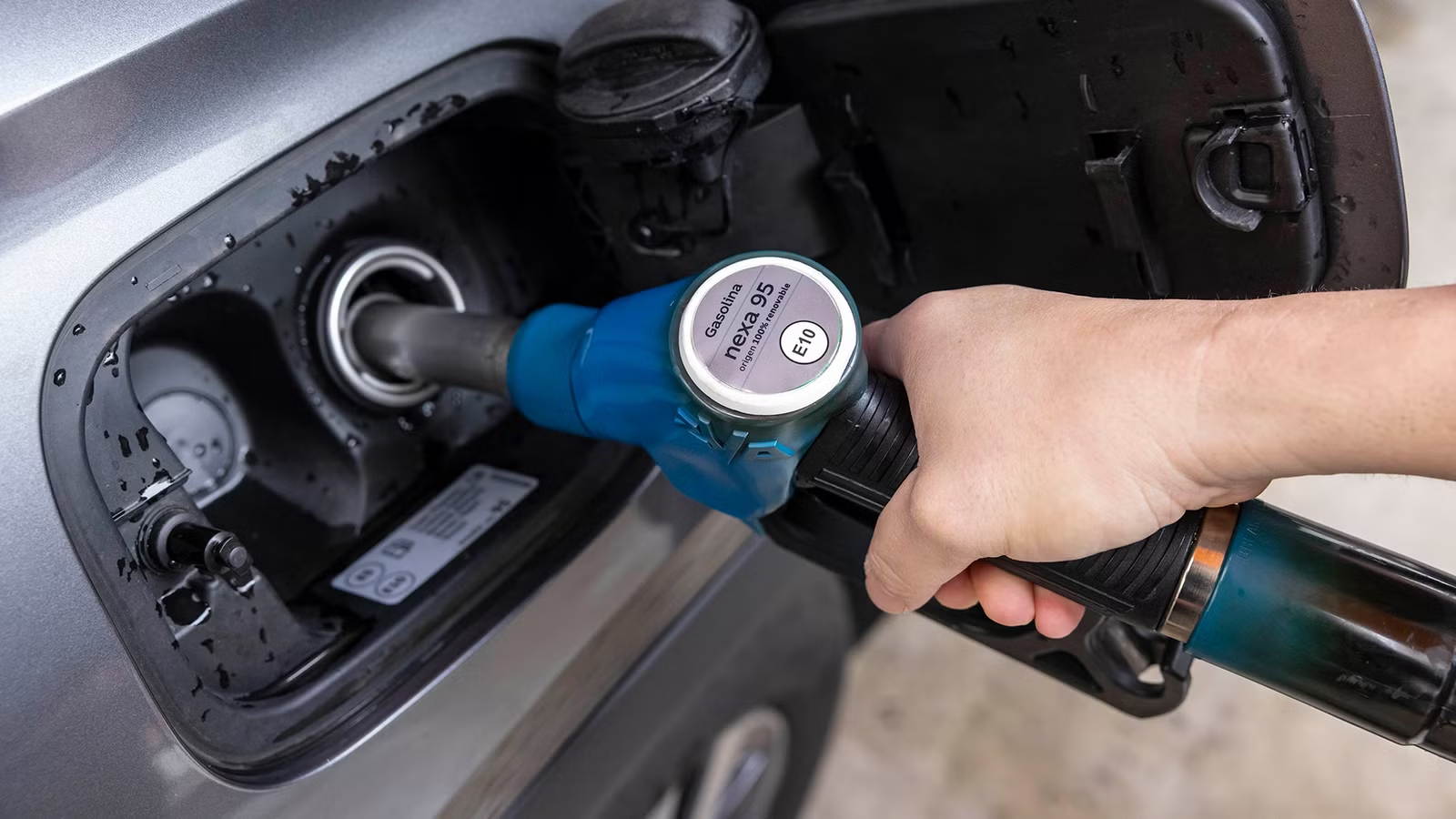
They’re not exactly Captain Planet, and it’s definitely not a new sports car, but BMW and Toyota are combining their powers. This time, it’s to help save the Earth, and the two automakers, along with Bosch and fuel company Repsol, are launching a new pilot program for vehicles running on what they call 100% renewable gasoline.
Six Months Of Carbon-Neutral Gasoline
Porsche eFuelsPorsche
In a six-month program that started this month, a new pilot project in Spain will fill BMW and Toyota vehicles with Repsol’s 100% renewable gasoline. The vehicles will drive on normal roads, and the fuel will be tracked by Bosch, which has a system designed to give the gasoline traceability throughout its cycle as well as monitor consumption and effective emissions.
The goal is to demonstrate what the companies call Vehicles Running Exclusively on Eligible Fuels (VEEF). Toyota and BMW have both long been supporters of alternatives to electric vehicles to clean up the world’s vehicle fleet. The two have worked together and separately on hydrogen fuel cell projects, and both have put a lot of resources into renewable gas and, in the case of BMW, diesel replacements.
There will be 20 vehicles in the fleet to start. Neither company said which vehicles might get the new fuel, but they will be standard production cars taken out of each one’s fleets in the area.
The gasoline is Nexa 95 from petroleum company Repsol. It’s a 95-octane gasoline (91 by US measures) that the companies say can be swapped with normal gasoline without any differences.
Automakers Are Looking To Sell The EU On Renewable Over Electric
BMW Hydrogen Heritage FleetBMW
Repsol says the fuel results in 70% lower net CO2 emissions versus normal gasoline. The company has one plant making the gasoline at industrial scales now, and expects to have another open this year, but the company is secretive about what goes into it. Repsol hints at used cooking oil, and “renewable feedstocks,” but doesn’t elaborate.
According to Repsol, the fuel is already on sale at 30 stations in Spain. It already offers sustainable diesel at hundreds of stations and expects to hit 600 by the end of 2026, and 1,900 by 2027.
If the fuel is already on sale, what are BMW and Toyota looking to accomplish? In short, they want to convince EU officials that it is a valid way to lower carbon emissions without electrification.
“We believe renewable fuels can play a key role alongside electrification in reducing CO₂ emissions. As the transition progresses, it is becoming clear that there is a growing risk that 100% zero-emission vehicles by 2035 may not be fully achieved. In such a scenario, renewable fuels can help bridge the gap to deliver carbon neutrality.”
-Pascal Ruch, Toyota Europe VP for government affairs
Recently, the EU backed down on its proposed 2035 combustion engine ban. The catch is that the new vehicles after that would need to burn low-emission and renewable fuels. In theory, a project like this could also lower carbon emissions from existing gas cars, without taking them off the road.
CarBuzz Insight – Why This Matters:
Flex-Fuel gas stationGreen Car Congress
Even BMW, which is heavily invested in EVs, doesn’t think electric is the only way through the climate crisis. It, Toyota, Porsche, and others have spent a great deal of money to push low-carbon renewable and synthetic gasoline as a way to keep making their flagship products. Testing a product that’s already on sale to the public can feel silly, but it is a great way to try and convince regulators (and the public) that you have a solution that can work.
