

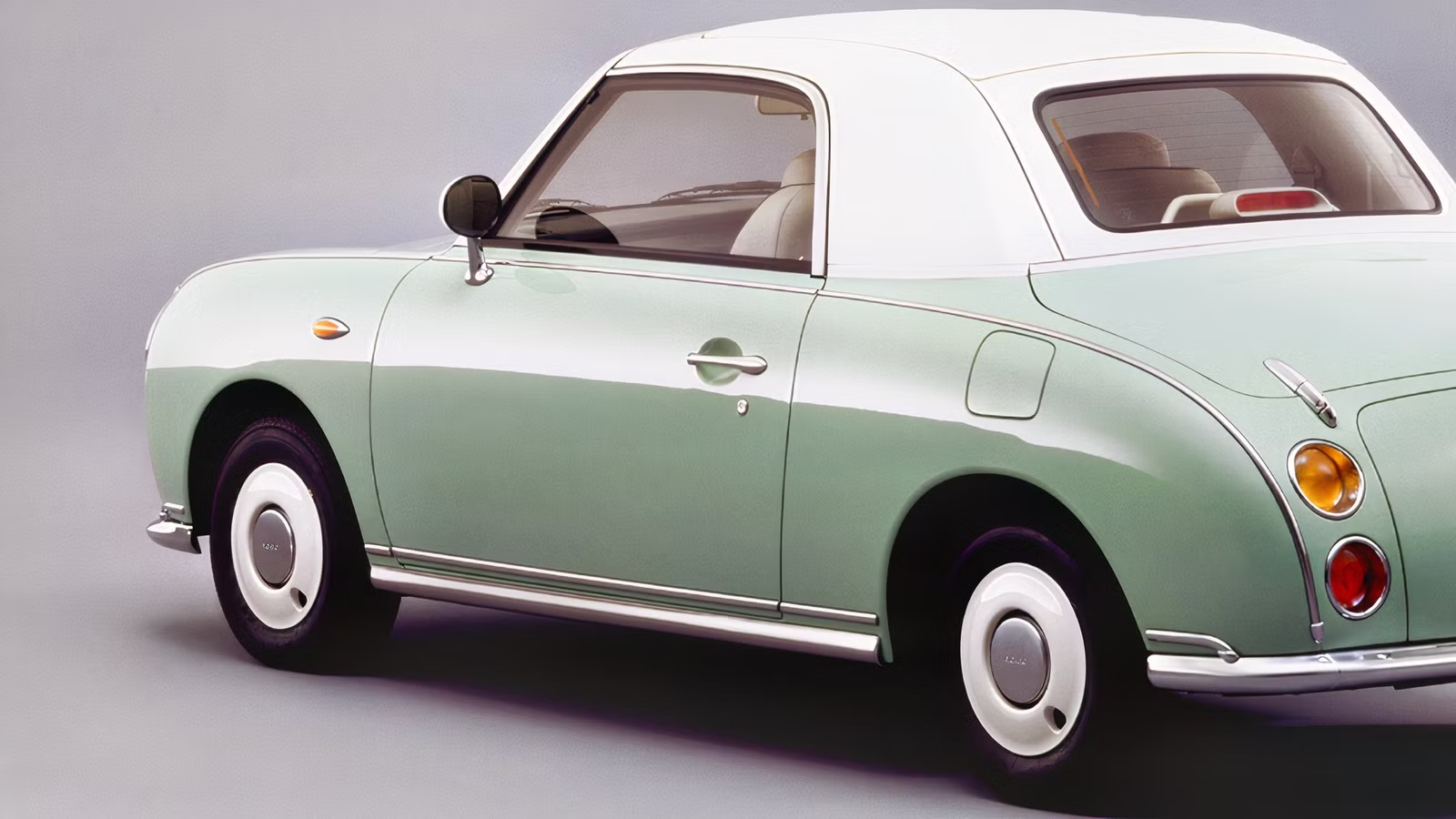
For drivers striving to look stylish on the drive to work, buying a convertible can be a cheeky shortcut to achieving it. Models like the timeless Audi TT or Mazda Miata will fit the bill perfectly, with both being affordable for most gearheads. Both of these cars work from a styling perspective due to being well-proportioned and sleek, as well as looking more modern than their release date suggests.
Nissan decided to go down a different route with its convertible offering in the early 1990s. The Japanese marque opted to use retro styling as its inspiration.
The Figaro Used 1930s Vehicle Design As Inspiration
1991 Nissan Figaro Green/White Front Angled ViewNissan
Nissan first unveiled the Figaro at the 1989 Tokyo Motor Show, with the model designed to be as effortlessly stylish as the 1930s and 1950s vehicles its body drew inspiration from. Nissan’s designers focused on the 1935 Datsun Roadster as a particular source of inspiration, with its round headlights, aero-enhancing wheel covers and chrome grille surround all being borrowed from the vehicle. Like the old Datsun, the Figaro was also a convertible, with the fabric roof able to be stored away in the trunk manually like its ancestor. Only four colors were available for the exterior, all of which featured a retro theme.
1991 Nissan Figaro Green/White Rear Angled ViewNissan
The same eye for retro detail continued in the cabin, too, with the flat dashboard and old-fashioned steering wheel welcoming you in. It also had luscious cream leather seats, which were completed with black piping to give it a touch of class that peppered cars in the early days of motoring.
The Figaro Proved To Be A Smash Hit
1991 Nissan Figaro White Interior DashboardNissan
The Figaro’s eye-catching styling proved popular with buyers, and Nissan quickly sold all 8,000 units it had planned to build. Demand proved so huge that the brand even expanded its total production run to 20,000, an impressive feat given that the Figaro was only sold in its home nation of Japan. Its roughly $13,000 starting price, the equivalent of around $30,500 today, was another key reason for its popularity. All examples were constructed in 1991, and many cars were later exported to Europe and the US, given how appealing it was.
1991 Nissan Figaro interior seats viewNissan
Considering it was based on a Micra, it came with a handy amount of equipment given the period when it hit the road. It came standard with air conditioning, a CD Player, a heated rear window as well as a slick interior design. It was lucky it was well-equipped and looked so good, as its Micra-based underpinnings did little to provide a thrilling driving experience.
The Figaro Was Nothing Special On The Road
1991 Nissan Figaro nose view shotNissan
As the Figaro was built upon the same platform used for the Micra compact car, it also utilized the same 1.0-liter inline-four engine used by the hatchback. Unlike the Micra though, the Figaro had a turbo strapped to it. This provided it with 75 hp, all of which was channeled through the front wheels via a three-speed automatic transmission. Fortunately, as the Figaro tipped the scales at under 1,800 lbs, it could hit 60 mph in around 11 seconds, which isn’t bad given its lack of outright grunt.
Its Suspension Setup Was Fairly Advanced For An Economy Car
1991 Nissan Figaro back end shotNissan
The Figaro even came with an independent suspension setup all round, with MacPherson struts being used at the front and a four-link spring configuration at the rear. It wasn’t exactly a sports car though, as it was set up to soften impacts rather than clip apexes with surgical precision. The Figaro’s lesser value was illustrated to an extent by its braking arrangement as, while modern discs were used on the front, the rear wheels had to make do with less effective drum components.
A sports car the Figaro wasn’t, but its retro styling meant it would turn heads wherever it went.
The Figaro Has Held Its Value Impressively Well
Blue 1991 Nissan Figaro on road from rearBring a Trailer
The Figaro’s style, cool factor and collectibility have ensured that its value has remained decently high, more than 30 years since it went out of production. It has established a steady niche in the United States since becoming legally importable under the 25-year rule.
Values vary based on condition, mileage, and original options:
- Fair / Driver Condition: High-mileage or daily-driven examples with minor cosmetic flaws usually fetch between $10,000 and $13,000.
- Good to Excellent Condition: Well-maintained cars with fresh interior trim, operational air conditioning, and a clean retractable top typically bring $14,000 to $20,000 on platforms like Bring a Trailer and Hagerty.
- Collector Grade: Ultra-low-mileage or meticulously refurbished models in desirable original seasonal colors (such as Emerald Green or Topaz Mist) can command $25,000 to over $45,000.
That’s a lot of money to spend on a car with 75 hp, especially since you can get a 370Z with 50,000 miles on the clock for $15,000. Still, for every 1,000 370Zs you’ll see, you’ll only spot one Figaro, if that. It will make a decent addition to anyone with an appreciation for Japanese kei cars.
Sources: Nissan
