

The German automakers are not perfect, but they sure do know how to screw together a decent performance car. Whether it’s a family hauler with supercar-rivaling performance, like the BMW M5 or Audi RS6, or a sleek sports coupe from the Porsche or Mercedes back catalog, these Germans have all fronts covered.
Naturally, a good number of us enthusiasts appreciate a German performance car, but just because they have all bases covered, it doesn’t mean they are the only choices out there. There is a whole host of rarer – and arguably far more interesting – machines that are capable of rivaling Germany’s best. For those who prefer to get behind the wheel of something a little more left-field, we’ve highlighted six of the best from defunct brands which are more than capable of giving their German rivals a run for their money.
Eagle Talon TSi AWD
Beat BMW And Audi At Half The Price
For anyone seeking out a sporty two-door coupe in the early to mid 1990s, there was plenty of choice. From Audi came the Coupe, which housed a five-cylinder engine and boasted the legendary quattro all-wheel drive system, while BMW offered its silky smooth six-pot 3 Series coupe.
Both great choices, but an all-too-often overlooked American brand by the name of Eagle had a boosted four-pot model dubbed the Talon TSi AWD which looked a rather compelling choice when lined up against the German offerings. It was down on cylinder count, but it did boast all-wheel drive like the Audi, and pop-up headlights — always a welcome touch.
The Audi sported a 2.3-liter inline-five engine with 164 horsepower, and it stickered for around $31,000 when new in 1991. As for the BMW, in flagship 325is trim, it sold for just beneath $30,000 and benefited from a 189-hp, 2.5-liter inline-six. The underrated Eagle had them beat in all areas, delivering 195 horses from its little “four,” while asking just around $17,000 from buyers. Sure, it wasn’t as plush inside, and the badge lacked the prestige of the German brands, but when it came to bang for the buck, the Talon was leagues ahead of what BMW and Audi were delivering in the early 1990s.
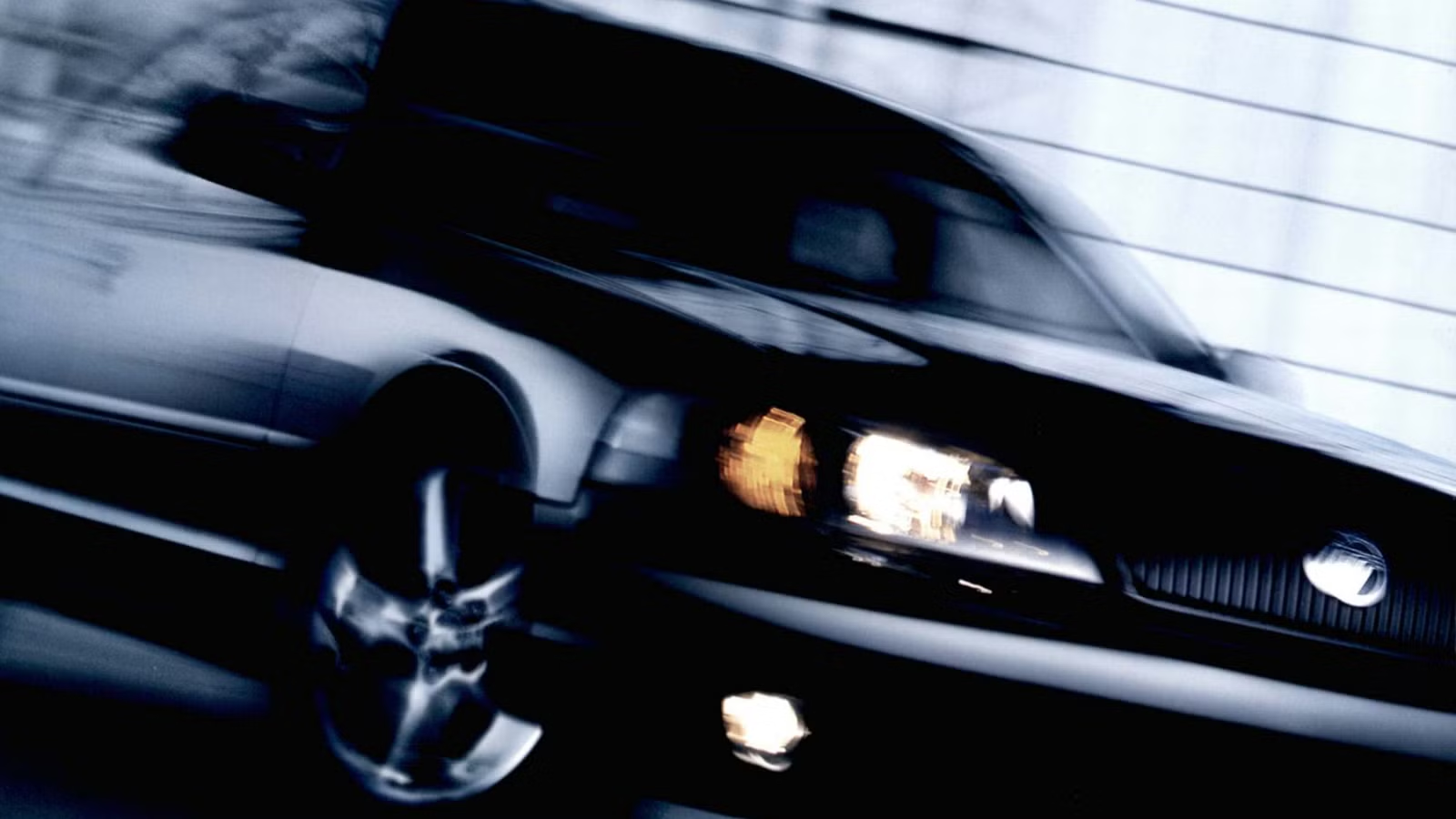
Mercury Marauder
Outgunned Both The BMW 540i And Mercedes E430
Sports sedans in the early 2000s were not especially complex machines, unlike the air-suspension-equipped and hybridized monsters of today. BMW did a marvelous job with the E39 540i, as did Mercedes with its W210 E430. Both were luxury sedans equipped with powerful V8 engines; those with deeper pockets and even heavier right feet could opt for the M5 and E55 AMG, but the Mercury Marauder didn’t quite do battle at this level.
Instead, it used Ford’s 4.6-liter modular V8 to send 302 hp and 318 lb-ft of torque the way of its rear wheels. That’s 20 hp more than the 540i, and 27 more than the Mercedes. The Mercury wasn’t quite as luxurious as the German models, but with plush leather seats, cruise control, and a premium Alpine audio system, it was certainly in the same ballpark.Naturally, it was also miles cheaper, which is a recurring theme here.
Panoz Esperante
The Hand-Built American Roadster That Kept Pace With The Porsche 911
Nothing nails the sports car recipe quite as well as the Porsche 911. Some might disagree with that, but six decades of sales success and a global fanbase is hard to ignore. However, just because the 911 is heralded as the best sports car by so many, it doesn’t make it the most fun, or the most interesting. Every Cars and Coffee meet is littered with them, they aren’t especially rare, and from a design perspective, they don’t exactly look all that special.
Hence why the Panoz Esperante is the perfect antidote to a world fed up with monotonous 911s. It’s not as fast in a straight line, nowhere near as dynamic through the corners, and it certainly isn’t as sharp from a build-quality perspective. But who cares? It sports Ford’s 4.6-liter V8 in a similar state of tune to the aforementioned Marauder, so servicing and maintenance are approachable; it darts to 60 mph in under 5 seconds, looks brilliantly unconventional, and is sure to turn more heads than all but the most special of 911s at the local Cars and Coffee meet.
When new, it would have done battle with the 996 generation of the 911, and the performance on offer from the Esperante was more than enough to keep up with all but the hottest trims. Panoz isn’t necessarily a dead brand, but it certainly isn’t particularly active either, now focusing more on singular bespoke builds rather than “mass-produced” models like the Esperante or race programs.
The automaker’s founder, Dan Panoz, passed away in 2018, and operations have been rather quiet since — but the business still remains just that: in business.
Pontiac G8 GXP
A Serious, No-Excuses Muscle Car
One brand that is definitely dead and buried is Pontiac, unfortunately. Its story ended in 2010 during GM’s Chapter 11 bankruptcy and government-assisted bail-out, while brands like Buick survived, thanks mainly to success in global markets which Pontiac did not enjoy. Still, at least Pontiac went out with a bang with the G8 GXP, which hit the streets in 2009.
It was powered by a 6.2-liter LS3 V8, which produced 415 hp alongside an equal amount of lb-ft of torque. Only 1,829 were ever built, and of those, only 846 were equipped with the Tremec six-speed manual. It was a serious, no-excuses muscle car, delivering enough grunt to stand as a genuine alternative to both the Audi RS 4 and BMW M3, both of which also sported eight-cylinder power plants at the time.
The G8 GXP was sold with an MSRP of $37,610, while the M3 Sedan sat closer to $55,000, as did the RS. Again, there will be areas in which the Germans do things slightly better, but the Pontiac runs rings around them when it comes to ownership experience from a modern-day perspective.
The German mills are genuinely impressive and real jewels of their era, but maintenance is a killer on both; the Audi V8 suffers from high oil consumption, carbon build-up, and timing chain concerns – not helped by the fact that the chains are at the back, requiring engine-out servicing – and the M3’s engine is equally “sensitive.”
Meanwhile, LS3s are known, plentiful, and far easier to work on, making the G8 GXP a no-brainer for those who can look past the allure of a German badge.
Saab 9-3 Turbo X
A Sleeper That’s Almost Impossible To Find Today
We at CarBuzz love a sleeper, especially one with real daily driver potential. This Saab has daily sleeper written all over it, especially in wagon form, making it a brilliant alternative to an Audi A4, C350, or 328i. Power is derived from a turbocharged 2.8-liter V6 and comes in the form of 280 horses and 295 lb-ft of torque; that grunt is delivered to all four wheels. That’s plenty to be getting on with. In fact, it’s 50 horsepower more than the 328xi Touring, 12 more than the sedan-only C 350, and 69 more than Audi’s 2.0T A4 Avant.
It is also remarkably rare, with just 600 sold exclusively in the US during the 2008 model year. Of that 600-odd, just 211 were wagons, and of those, only 39 were equipped with a six-speed manual. How many survive today? It is a real unicorn, and a genuinely compelling alternative to anything BMW, Audi, or Mercedes produced during the same era.
Saturn Sky Red Line
More Power Than Its Rivals’ Base Models – at Just $30k
Most of what Saturn made was, at best, a little uninspired. That’s not a criticism of the automaker; ultimately, it was a brand dedicated to delivering excellent value to consumers — think of it as a home-market alternative to Toyota or Honda. However, around 20 years ago, the firm developed a 260-hp, two-door, two-seat roadster, and on paper it showed its German rivals a clean pair of heels.
Yes, it lacked the premium touches of a Z4, Boxster, or TT, but it still looked smart with leather seats and chrome exterior trim. What really mattered, though, was that it offered more power than the base models of all those aforementioned German models, at a sub-$30,000 price point. The TT Roadster commanded $36,800, the Z4 $37,095, and the Boxster $46,395.
To take home a German sports car with the Red Line’s performance, buyers would have to work through various options, adding many thousands onto those MSRPs in the process. Saturn didn’t last much longer, sadly, with production winding down in 2009 during GM’s financial troubles.
Base Trim Engine
2.4L Inline-4 Gas
Base Trim Transmission
5-Speed Manual
Base Trim Drivetrain
Rear-Wheel Drive
Base Trim Horsepower
173 hp
Base Trim Torque
167 lb-ft @ 4500 rpm
Fuel Economy
19/25 MPG
Segment
Sports Car
Sources: GM, Panoz, Saab, Mercury, Chrysler (Eagle).
