

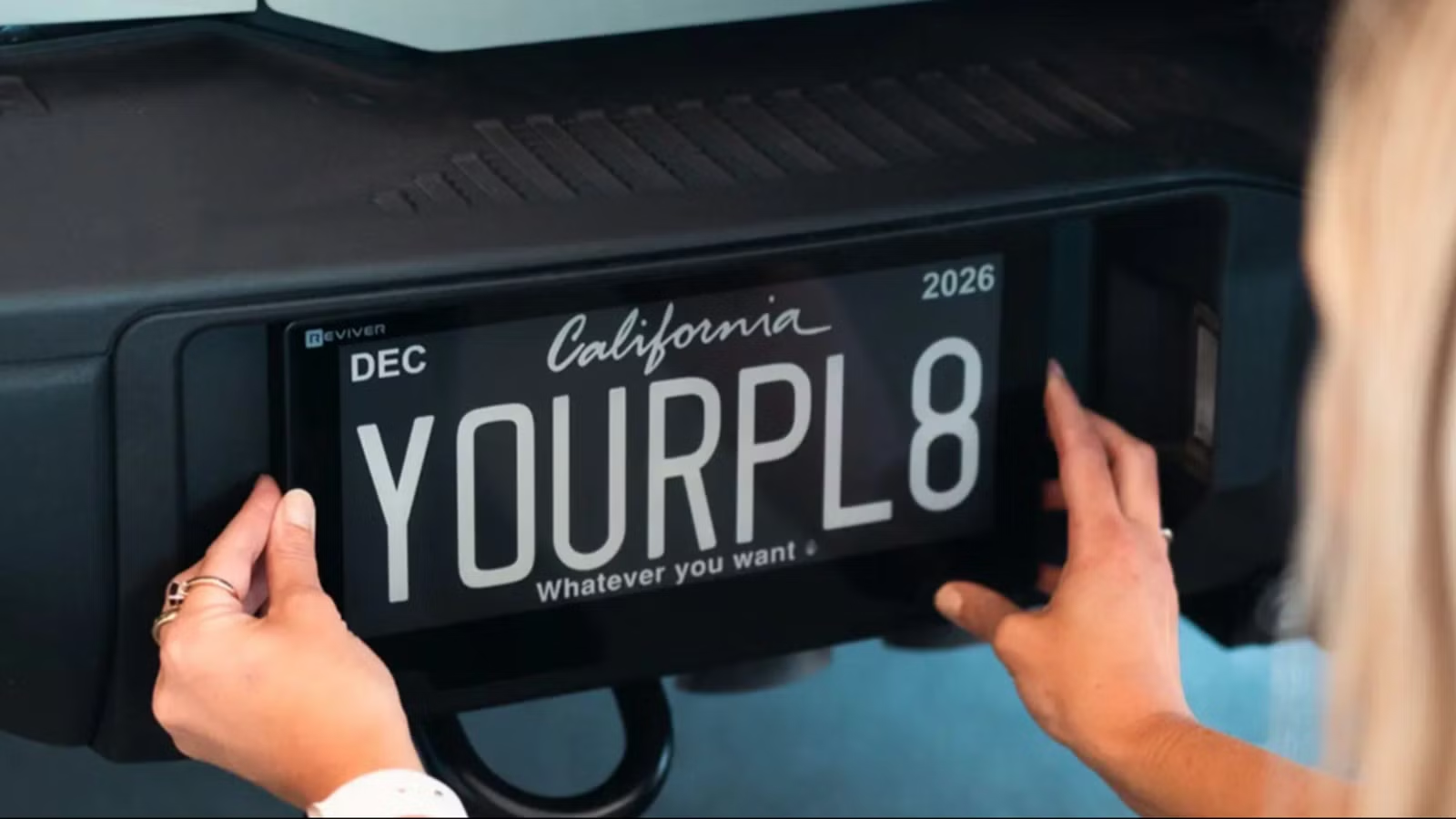
Technology in the automotive industry continues to evolve and find new ways to attempt to “revolutionize” everyday motoring. From efficient EV battery technology to services that connect vehicles to owners’ devices, one part of everyday vehicles that has slowly become influenced by digitalization is the traditional license plate – with digital license plates now available in certain US states for a variety of car types, from the economy-minded Toyota Prius to a hardy off-roader like the Land Rover Defender.
The idea of a license plate becoming digitized sounds appealing and futuristic, but what is the history behind this piece of technology, what is the legality surrounding its use and application, and what positives/negative aspects of adopting it do potential adopters need to take into account? We discuss this in further detail below.
All information has been cited by reputable sources, including relevant companies and government agencies, as well as applicable federal/state government laws. This piece specifically focuses on the availability, use, and regulations surrounding electronic license plates in the United States.
What Is A Digital License Plate?
Digital License Plate by ReviverReviver
A digital, or electronic, license plate is essentially a vehicle’s license plate that is now fully digitized, both in its design and in how it is continually updated. Just like a traditional metal (or plastic) license plate, it identifies registered vehicles on the road.
The key difference is that, unlike a steel plate with text printed on the surface, digital plates display the text (license plate number, annual registration, registered state, etc.) on a high-quality digital LCD display. The display has to meet the typical license plate dimensions (12 x 6 inches) and must be fixed/installed in the same area as a rear-mounted metal license plate would be found on a vehicle.
To continually update its data and any related information about the vehicle’s registration, it maintains a connection with the vehicle’s internal computer system and other databases remotely. These plates also require a constant source of power to remain visible, which can be provided by an internal battery within the display unit or by drawing from the vehicle’s power supply/electronics.
Information that is displayed can be updated or customized through input by the vehicle’s owner, typically done through a mobile app, including updating the annual registration tax, changing the background, and the plate number itself (e.g. when applying a personalized plate number). Procedures to transfer or exchange numbers on these displays remain unchanged from their metal-printed counterparts, following the same state procedures (according to their respective Department of Motor Vehicles).
“Digital license plates can typically be transferred to a new vehicle following your state’s standard procedures (for transfer of a vehicle registration plate).”
Where Do Digital Plates Come From?
Digital License Plate on a BMW M4, RearReviver
The concept of a digital license plate was first registered under a patent, filed by Dean L. Naddeo in June 2002. This envisioned a display on a vehicle that could display the plate number as required by law, but could be changed in certain cases to indicate a vehicle that was no longer registered on the road, or reported stolen (to assist traffic law enforcement in tracking vehicles).
But this product didn’t take off until the 2010s, when entrepreneur Neville Boston founded Reviver, a company that aimed to provide fully digital license plates, which could be updated over the air to change details like registration tags or apply new plate numbers/state backgrounds (e.g. when transferring to a new state), without having to wait at a DMV’s office to process them.
The sole manufacturer of electronic license plates in the United States continues to be Reviver, which currently offers two versions of this setup:
- RPLATE – primarily designed for standard production, consumer vehicles, powered by an integrated battery.
- RFLEET – primarily intended for commercial vehicle fleets (private enterprises, government agencies, etc.), connected directly to the vehicle’s electronics and also features vehicle monitoring services like telematics, GPS, and mileage tracking.
Related
10 Most Expensive License Plates: Automotive Bling And Pricey Vanity
The upside to billionaires dropping big sums on license plates is that most of the money goes to a good cause.
Are Digital License Plates Legal?
Permitted In Certain States (For Now)
Digital License Plate for California on a Toyota FJ Cruiser, RearReviver
As of this writing, electronic license plates are permitted in the following US states:
- California
- Texas (limited to commercial/government fleet vehicles as of June 2026)
- Arizona
It is worth mentioning that while the state of Michigan previously allowed the use and application of digital license plates, the state department ended its agreement with Reviver in August 2024 (following disagreements on certain terms of their working relationship). The company is no longer permitted to sell digital plates to customers in Michigan, nor is it allowed to renew them for current Michigan-based customers.
The Michigan Department of State allowed those who purchased a digital plate after the termination of Reviver’s contract in August 2024 to continue using them. Still, they are required to replace them with standard metal license plates by August 2026.
” As of August 9, 2026, owners of existing digital plates will need to replace them with standard metal license plates.”
– Michigan Department of State
Future states in the pipeline to accept the use of digital plates for registered vehicles currently include Colorado, Illinois, Georgia, Nevada, and Florida, with Reviver leading efforts to legislate this type of license plate for vehicle owners in these areas in the coming years.
Those who currently use digital plates should note that they are not strictly limited to operating their vehicles within their primary state/region, as this type of vehicle registration display is legally recognized across the entire United States (provided they were originally bought and registered in a state that has approved them for use). Users of digital plates can also drive their vehicles across the entire North American continent, including Canada and Mexico, without any limitations.
“Digital license plates (RPLATEs) are legal to drive nationwide across U.S. state borders, as well as North American borders into Canada and Mexico.”
– Reviver Digital License Plates
Related
California Is Running Out Of License Plate Numbers Two Years Early
The current 1ABC123 number sequence will hit its last combination by the end of the year.
Pros And Cons Of Electronic License Plates
If vehicle owners reside in a state that allows the use of digital license plates (or is soon to receive support for them), it is worthwhile to consider the positive and negative aspects of this type of vehicle tech. Below, we discuss just some of the many potential factors these digital plates face.
Advantages Of Digital Plates
Digital License Plate with Mobile AppReviver
- Far more durable and better constructed: While metal plates can experience more visible patina or be prone to surface damage, the displays that house digital plates are built from a higher grade of materials. These units are waterproof, able to withstand high heat/cold temperatures, are covered by scratch-resistant ‘Gorilla Glass,’ and are immune to corrosion.
- Registration plate details can be updated seamlessly: Whereas updating particulars like a vehicle’s registration tag requires a visit to the Department of Motor Vehicles (with infamous, lengthy waits and the chance for clerical errors), the equivalent details on an electronic license plate can be updated immediately through their designated app, saving owners’ time and energy.
“Traditional registration often involves physical stickers and manual updates. RPLATE allows eligible registration information to be displayed digitally, allowing you to renew your registration directly through the RPLATE app without visiting the DMV.”
- Opportunity for customization: owners can add their personal touch to these types of license plates beyond the text/numbers itself, with the further ability to change the background on the display.
- Better security: some digital plate units have integrated GPS modules, allowing their geolocation to be tracked at any given time. This can be useful if the vehicle is stolen, allowing law enforcement to quickly locate the vehicle to recover it.
- Streamlined fleet management: enterprise/corporate customers of digital plates that employ these across their entire fleet of vehicles can track mileage, location, and status far more efficiently.
Disadvantages Of Digital Plates
Digital License Plate for State of CaliforniaReviver
While electronic license plates carry several benefits that make vehicle ownership more efficient, as with any new and emerging technology, there are some potential factors that adopters have to consider if making the switch to this type of vehicle tech.
- Expensive to buy: as these digital license number displays feature more complex hardware to function, their unit prices carry a very expensive price tag. Prices for new Reviver digital plate units, for instance, start from $899 at retail.
- More expenses to upkeep/maintain: Users are expected to pay separate fees that go towards maintaining the databases and other systems that allow these to function. Annual service fees can range from $35–$125 per year (depending on the plan users opt for).
- Potential software exploits and vulnerabilities: while efforts have been made to make digital plates as secure as possible, previous cybersecurity experts have highlighted exploits or loopholes that can be attempted if given enough attention. Software updates can easily patch over these backdoors, but no digital system can be entirely secure.
“IOActive’s Joseph Pi Rodriguez highlighted a technique that he discovered to ‘jailbreak’ [hack] digital license plates sold by Reviver…this could let drivers with these evade any system that depends on license plate numbers for enforcement or surveillance, as well as automatic license plate readers that police use to track criminal suspects.”
- Privacy and tracking concerns: as electronic license plates require a constant cellular data connection to relay GPS/registration information, some have raised concerns over whether this data could be taken advantage of by third parties (advertisers, hackers, government agencies). Motorists who value privacy may be put off by the idea of being constantly monitored.
The application of electronic license plates has its share of positives and negatives, but prospective customers should do their due diligence to see if paying the premium to receive this effort to digitalize vehicle ownership fits their lifestyle and budget.
Sources: Reviver Digital License Plates, Michigan Department of State, IOActive
