

Hiroshi Okuda, who joined Toyota in 1955 at the age of 22 after graduating from university and went on to lead Toyota during a period of massive growth in the US and overseas, has died. He was 93, passing on August 8 of natural causes, the automaker announced this week. And his effect on Toyota – and the entire automotive world – cannot be overstated.
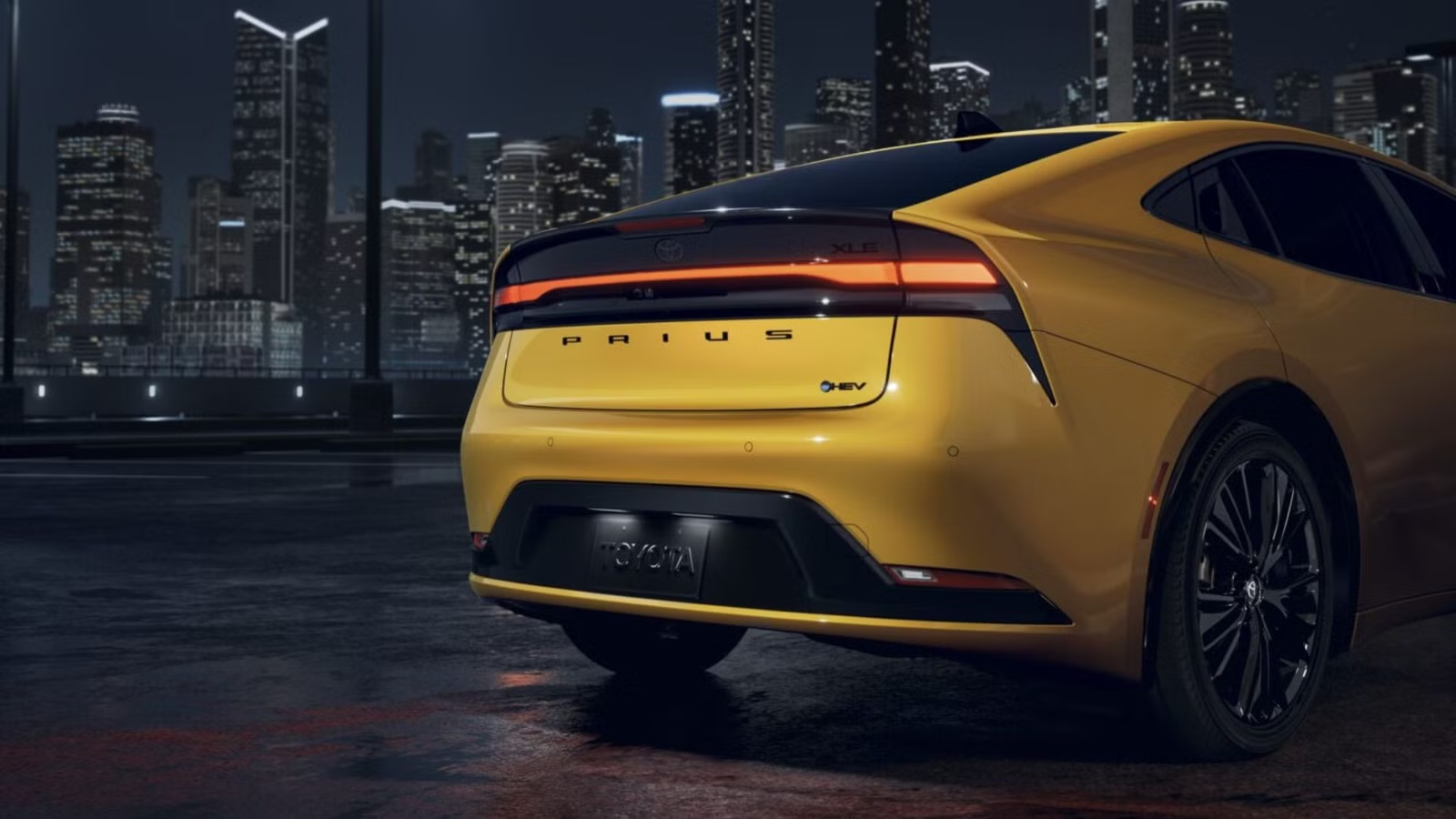
Okuda became president of Toyota in 1995, the same year the Prius debuted as a low-emission gas/electric hybrid concept at the Tokyo Motor Show in October. The first production Prius would launch in Japan two years later, followed by the US launch in 2000. It was not the first hybrid to reach America, following the Honda Insight by seven months.
2000 Toyota Prius and executive Hiroshi OkudaToyota
Pioneering a Segment Toyota Still Owns
But that didn’t matter because the Prius went on to outsell the Insight every single year in the US, and that compact four-door hybrid bubble car pioneered a segment that Toyota continues to dominate — not just in small cars and sedans, but in crossovers, SUVs, luxury cars, sports cars, minivans, and large and small pickups.
After leaving the Toyota presidency in 1999, Okuda continued serving as Toyota’s chairman of the board until 2006, then transitioned to senior advisor and board member until 2009, when he left the board. During his tenure from 1995 to 2006, Toyota significantly grew its operations overseas, and sales globally surged from 4.6 million units to 7.92 million units.
Toyota’s Indiana plant’s 1 millionth hybrid, a Toyota Sienna, rolls down the assembly lineToyota
Placing a Major Bet on US Operations
In North America, Europe, and Asia, that growth was heavily driven by investments in new manufacturing plants and building up local supply chains in each region.
Even before Okuda became company president, Toyota had been growing in a number of regions, including starting the NUMMI joint venture in 1984 with General Motors in the Fremont, California, plant that later made Teslas.
Toyota announced its plans for the Georgetown, Kentucky, plant in 1986, and it was producing vehicles two years later. The company announced another plant for Princeton, Indiana, in 1996, a year after Okuda became president, and it was up and running by 1999. The Huntsville, Alabama, plant came online in 2003, followed by the San Antonio, Texas, plant in 2006, the year he left as board chairman.
Toyota Grew Globally, Not Just In US
2003-2006 Toyota Tundra Front Angle ViewToyota
During Okuda’s 11 years at the top of the company, Toyota also grew its presence in China, India, France, Poland, the Czech Republic, Mexico, and Russia.
He is survived by a son, and a private funeral is being held for close family members. Condolence gifts, monetary offerings, and flowers are respectfully declined. The automaker says a farewell gathering is planned for a later date.
CarBuzz Insight – Why This Matters:
From 1995 to 2006, when Okuda served as president and then board chairman, Toyota grew its US sales from 1.1 million to 2.5 million vehicles, more than doubling deliveries and starting to catch up with General Motors and Ford in the domestic market. Along the way, the hybrid concept that Okuda championed turned out to be a winning idea. And in hindsight, this era of Toyota production has earned a reputation for some of the highest-quality vehicles ever built.
While industry observers were dogging Toyota for slow-rolling battery-electric vehicles, sticking with hybrids turned out to be the right choice, as those US sales have grown exponentially in recent years.
Source: Toyota
