

The biggest car news and reviews, no BS
Our free daily newsletter sends the stories that really matter directly to you, every weekday.
- ‘Freedom Car’ concept criticized. The proposal aims to block mandates for automated and connected vehicles, but lacks substance.
- Historical irony noted. The 2002 ‘FreedomCAR’ pushed hydrogen tech, while the 2026 version opposes tech mandates.
- Automakers hold the power. Without legislation, companies can decide vehicle connectivity, limiting consumer choice.
- Insurance companies’ role. Insurers could make non-tracked vehicles impractical by pushing for data collection.
AI assisted, editor reviewed
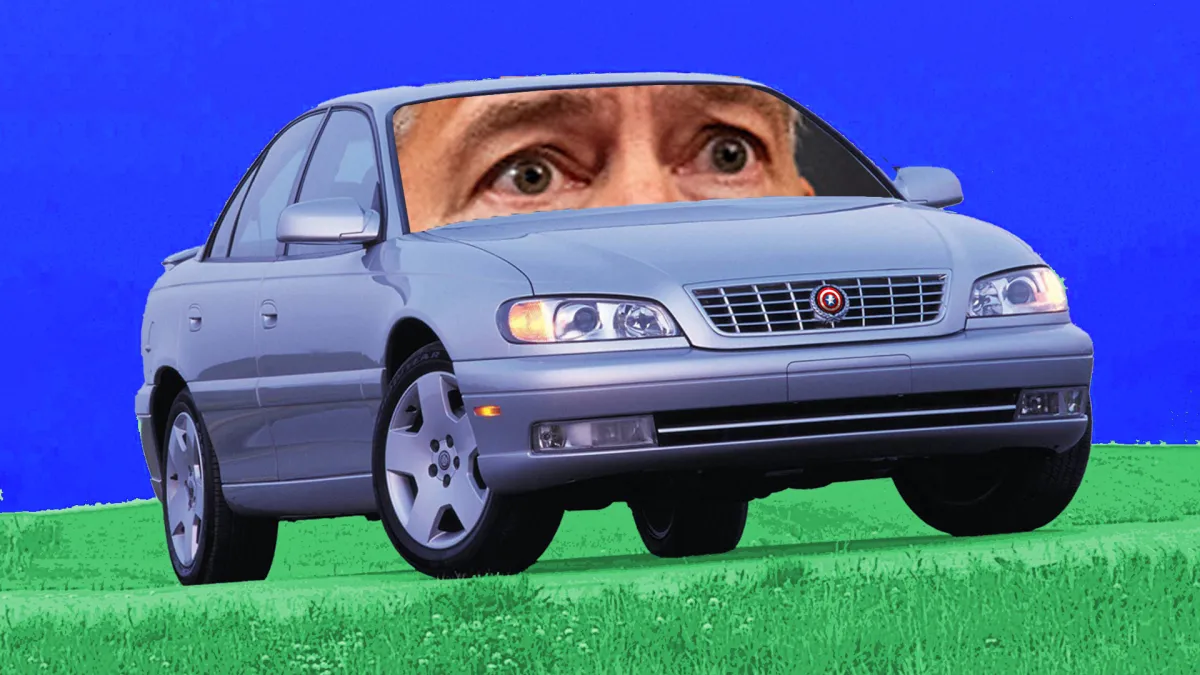
A letter from Transportation Secretary Sean Duffy to the six senators steering the highway bill is ping-ponging around news feeds this week. Buried in it is one phrase we just have to talk about: “Freedom Car.” The Freedom Car concept is broadly a good one, but the way it’s being pitched is short-sighted at best and backwards at worst.
What Is the “Freedom Car”?
This is not a new Dodge trim level or a pitch for a government-subsidized American version of East Germany’s Trabant—though there is still some irony in Secretary Duffy’s presentation.
This is also not a proposed law or specific regulation. It’s a line item in a wish list of ideas. I’ll copy-paste the exact language of what was written right here.
In Appendix A, under the heading Protecting Consumer Choice, Duffy wrote the following:
“Freedom Car – Right to Drive Disconnected and Non-Automated: Prohibit any Federal, State, tribal, or local authority from mandating that vehicles sold or operated on public roads be equipped with automated driving systems or be capable of transmitting data wirelessly.”
Then it’s mentioned again in the body on page three:
“Protecting Consumer Choice: We must protect the right of Americans to purchase and drive traditional vehicles by prohibiting any mandates that would require vehicles to be capable of wireless data transmission or automated driving.”
Republicans Also Pitched ‘FreedomCAR’ in 2002
Here’s the irony I alluded to in the last section. In 2002, then-Energy Secretary Spencer Abraham launched the “FreedomCAR Partnership” idea. (CAR was an acronym for Cooperative Automotive Research.) It was a cost-sharing R&D deal between the Department of Energy and Detroit’s Big Three (Ford, GM, and what was then called DaimlerChrysler) to commercialize hydrogen fuel-cell tech.
Then-President Bush elevated it to the 2003 FreedomCAR and Fuel Initiative with the goal of reducing dependence on foreign oil. Spoiler alert: It didn’t really pan out, and we did not pivot to hydrogen by 2010 as Secretary Abraham had hoped.
Put another way:
- The 2002 FreedomCAR was a Republican-branded program built entirely around a technology mandate push—get the industry to adopt hydrogen/fuel-cell tech, framed around “freedom,” including consumer choice.
- Duffy’s 2026 Freedom Car is a Republican-branded program built around blocking a technology mandate—stopping government from requiring connected/automated tech, also framed as consumer freedom.
Same party, same slogan, same “freedom” whistle—opposite policy. This kind of slogany marketing language is a bipartisan Washington habit, but the “Freedom” + “car” construction specifically is now on its second Republican outing. This time, we’re talking about keeping technology out rather than developing it.
The Hole In The 2026 ‘Freedom Car’ Logic
Duffy wrote about preventing the government from mandating autonomous or connected cars. At first glance, it seems like a good idea. And in the short term, an official policy in that spirit would protect your right to drive pre-Bluetooth cars. But it doesn’t say jack about what automakers will actually build and sell.
Because guess what: There’s a finite amount of non-digitally connected cars, and their population is dwindling. Daily driving a well-maintained 2005 Mazda3 is viable in 2026. What about in 2046?
If the U.S. government actually wanted to protect Americans’ rights to drive disconnected cars, it’d have to create legislation forcing automakers to guarantee their continued existence. The way the “Freedom Car” idea is framed in Duffy’s letter puts all the power in the hands of companies. All they have to do is collectively decide all their vehicles will be connected, and by the time our kids are driving, it’ll be impractical at best and impossible at worst to daily drive something old enough to not actively collect user data.
See also: insurance companies. Right now, a popular car insurance money grab is to get drivers to install their own car trackers with the promise of lowering your rates if your driving profile meets their standards. Insurance is compulsory in most states, so insurers could collectively decide they will no longer underwrite non-tracked vehicles, pitch it as improving road safety, and boom, old cars are effectively illegal.
So, yeah, the new “Freedom Car” idea is a toothless token concept that sounds good but, as-written, would offer no protection to drivers and consumers from the real regulators of American roads: automakers and insurance companies.
The proposal has it backwards. It aims all its restrictions at government without mentioning the real forces that will decide whether a disconnected car exists in 20 years. If protecting the freedom to drive off-grid is the real goal, the lever isn’t stopping government mandates—it’s barring big businesses from collecting the data in the first place. Or at least fortifying lanes for consumers to opt out of it.
Got any government or corporate insight on automotive data collection? Drop me a line at andrew.collins@thedrive.com.
Automotive journalist since 2013, Andrew primarily coordinates features, sponsored content, and multi-departmental initiatives at The Drive.
