

The biggest car news and reviews, no BS
Our free daily newsletter sends the stories that really matter directly to you, every weekday.
OS Giken is Japanese aftermarket royalty. The company has been producing performance parts like clutches and limited-slip differentials in the city of Okayama since 1973. If you’re in need of some chill weekend entertainment, you can now watch one of the company’s greatest creations take shape in excruciating detail.
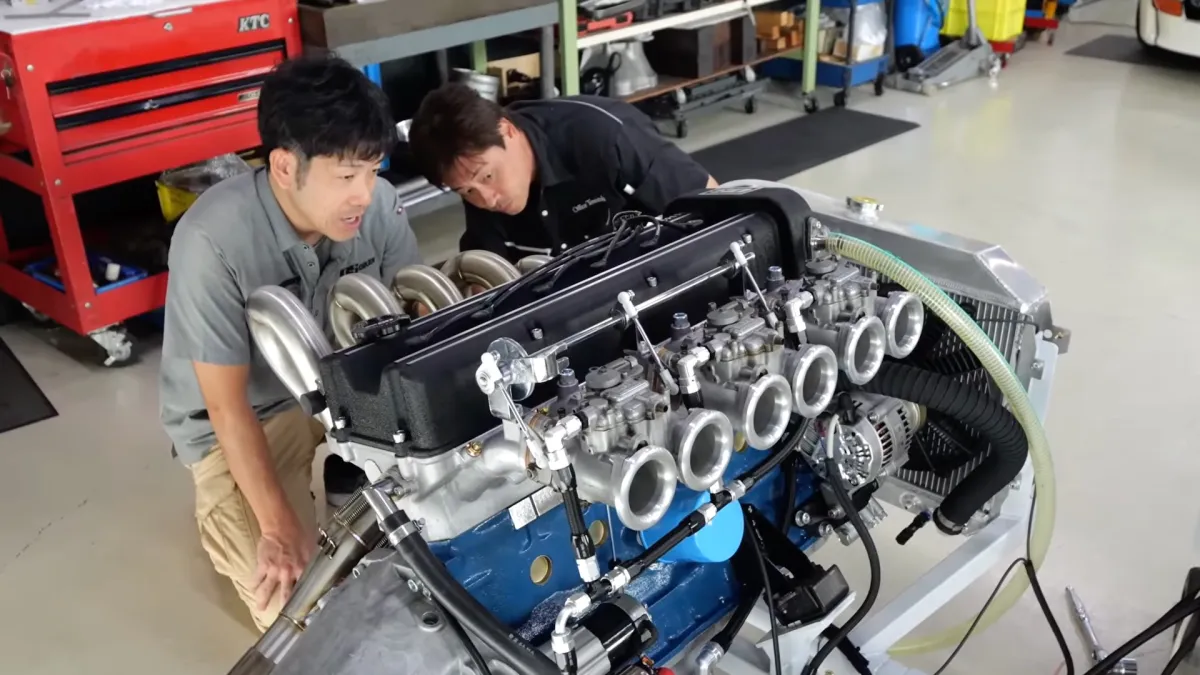
A roughly hour-long video posted on the YouTube channel Inside Japanese Factories shows the build of an engine for OS Giken’s S30 Z project car. The L-Series inline-six is topped by OS Giken’s TC24-B1Z head, a modern reissue of the dual-overhead cam TC24-B1 head designed by company founder Masaharu Okazaki in the 1970s. Only nine of those originals were made, according to a Japanese-language article produced by the company. The part was brought back as the B1Z in 2017 with some updates to take advantage of advancements in manufacturing over the past five decades.
Inside Japanese Factories via YouTube
While there’s plenty of modern technology at the OS Giken factory, including the CNC machines and CAD-equipped computers that are obligatory in any modern manufacturing operation, it’s not exactly the last word in highly automated efficiency. Much like the Watanabe wheel factory, OS Giken is small-scale, with just a handful of employees working essentially by hand. The engine build in particular is done the way a small race shop might do it.
If you’ve got the time, this is a great step-by-step demonstration of how to assemble an engine. The build starts by thoroughly cleaning an original L-Series block and then filling it up with brand-new parts. The video takes you through every part of that process, from the installation of the crankshaft, pistons, and connecting rods, to porting and polishing the head, to testing the finished product on an engine stand before installing it in the Z.
How This Japanese Workshop Builds Racing Engines from Scratch
Because there are no computerized wrenches tracking the torque applied to each bolt like in modern assembly plants, everything for this engine is done slowly and methodically. Before starting, the engine is turned to ensure oil is getting where it needs to go, and two mechanics listen intently through the first few minutes of running for any abnormalities.
The entire build took four months, perhaps in part because it’s a bit of a side project from OS Giken’s main business of making individual parts. But hearing that inline-six sing surely made it worth the time.
Stephen has always been passionate about cars, and managed to turn that passion into a career as a freelance automotive journalist. When he’s not handling weekend coverage for The Drive, you can find him looking for a new book to read.
