

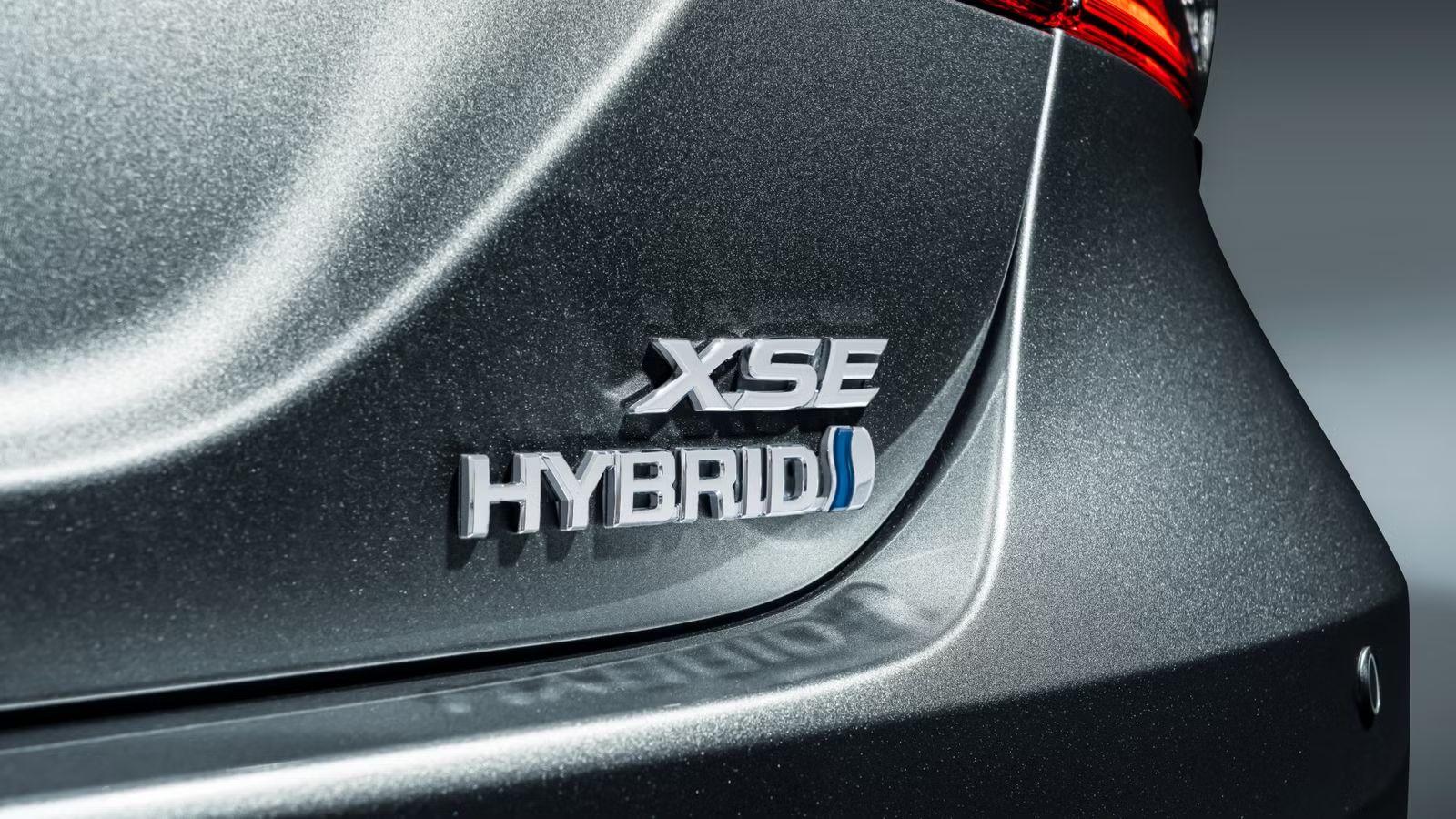
One of the best parts of hybrid power on a turbocharged sports car is that it can effectively give you anti-lag. A dose of instant torque from the motor shoves the car forward until the turbo spools, taking away that initial dip in the powerband. Sometimes, though, the hybrid motor can’t deliver enough torque to fill the gap.
CarBuzz has just found a patent that proposes a solution to that problem. It comes from Toyota, because what other automaker would dream up an anti-lag system for a hybrid? Here’s how it works.
Anti-Lag Without The Damage
2025 Toyota Grand HighlanderToyota
Normally, in a parallel hybrid system with two motors, the motors do different things. One actually runs as a generator, turning the motion of the engine into electricity, while the second motor helps the engine drive the car. In this arrangement, the gas engine can shut down while moving, letting the electric motor do all the work.
Every motor is a generator, and the other way around, and in this patent Toyota shows how to take advantage of that. When the gas engine is off, and the car is accelerating, the first motor isn’t doing much of anything. Toyota’s patent proposes using it to spin the engine up before it turns on, to build boost before the gas engine fires.
A quick recap on how turbochargers work: the turbocharger’s turbine wheel is spun by hot exhaust gasses from the engine. That in turn sucks air, which is forced back into the engine for more power. As long as the engine is running, gases come out and the turbo can spin. But here’s the thing: Even if the engine is just turning over and not technically running, air is still circulating through the system.
Motor Spins Your Engine Instead Of Your Wheels
1997 Toyota’s 1.5-liter 1NZ-FXE Atkinson-cycle engine with hybrid systemToyota
So if the engine is spinning, it is pumping air that can spin the turbocharger, which creates more air. Toyota’s patent proposes using the first motor to turn the crankshaft, spinning the engine more quickly, and building boost before combustion happens.
The patent describes some very complex operating parameters. The system would have a hard time anticipating when you’re going to want gas and spinning it up appropriately. It appears that it would try to trap the air in the engine under pressure in some situations, and that there would be a pressure sensor in the intake monitoring the situation. There are different time limits on the system’s activation depending on driving situations, and it will more eagerly anticipate the need to activate in some than others.
It’s a lot of effort to solve a problem that isn’t really noticed by the vast majority of drivers. A high-torque electric motor can easily make up for the torque of a gas engine at low RPM, and the perceived turbocharger lag on modern vehicles is often actually the sensation of waiting for the transmission to complete a shift so that torque can be applied to the wheels. This system would not solve that second problem, and isn’t intended to. But it’s an interesting idea to make every millisecond count when hunting for more power.
CarBuzz Insight – Why This Matters:
2026 Toyota RAV4 Hybrid close-up rearToyota
If you’re driving a hybrid racecar, then a system like this could potentially improve your lap times. For anyone in a real car, it’s a feature that’s more about theory than practice. The idea that your car is incredibly responsive is more appealing than it actually being instantly responsive, as shown by the multitude of sports cars that add a degree of throttle lag in most drive modes.
Patent filings do not guarantee the use of such technology in future vehicles and are often used exclusively as a means of protecting intellectual property. Such a filing cannot be construed as confirmation of production intent.
Source: US Patent & Trademark Office
