

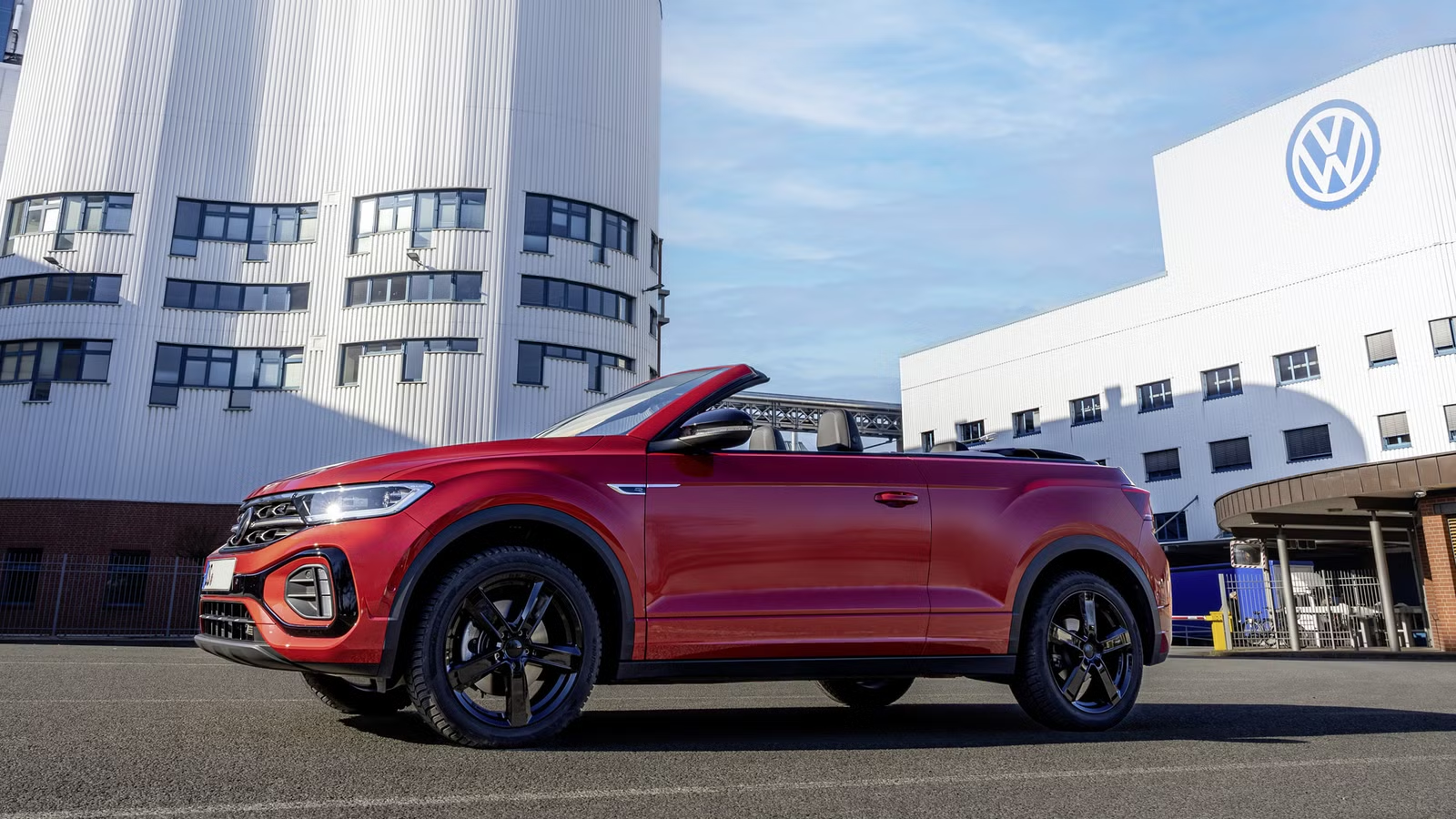
Volkswagen is in the midst of major restructuring to help it deal with strong competition from Chinese brands, the need to continue investing in EVs and software, not to mention US tariffs. And the latest victim of this effort is one of the oldest auto manufacturing plants in the world.
In an announcement this week, VW confirmed that the plant in Osnabrück, Germany, would be sold, though not to another automaker but to Aurelius Capital, an Israeli investment firm that specializes in defense production. Some measure of automobile construction has occurred there for 125 years.
From Convertibles To Combat Systems
Volkswagen Group Plant In Osnabrück, GermanyVolkswagen
The Osnabrück plant has been involved in automotive manufacturing since 1901, when Wilhelm Karmann took it over from its original carriage-building owner and started building bodies for cars. VW came into the picture in 1949, when it struck a partnership with Karmann to build Beetle cabrios at the site, alongside Karmann’s Ghia. VW eventually fully acquired the site when Karmann went under in 2009.
The Osnabrück plant has traditionally served as a site for small-series production and special vehicles, mainly building convertibles for VW, including the former VW T-Roc Cabrio, as well as some overflow production for other brands within the group, like Porsche, which built 718 Boxsters there. However, dwindling demand for open-top cars led VW to look to offload the site several years ago. The automaker had already been phasing out production there since 2024 and said the last cars will be built there in mid-2027.
What Will Happen To The Historic Plant?
Volkswagen Group Plant In Osnabrück, GermanyVolkswagen
Under the terms of the sale, financial details of which haven’t been published, Aurelius will become the majority owner of the site, with Lower Saxony, the German state in which Osnabrück is located, also controlling a stake. Lower Saxony is also one of VW’s biggest shareholders, with a roughly 20 percent holding. The sale is expected to preserve roughly 1,400 of the site’s current 1,800 staff.
Under the new owners, the plant is to become a competence center for security and defense solutions. One of the initial customers will be Israel’s state-owned Rafael Advanced Defense Systems, responsible for the country’s Iron Dome and David’s Sling missile systems, among others. The Osnabrück plant will build components for these systems, potentially including vehicle launchers.
Are Additional Plants Affected by VW’s Restructuring?
2026 VW Tiguan SEL R-Line Turbo grilleTom Murphy / CarBuzz / Valnet
Volkswagen, while announcing the latest steps in its restructuring last week, said its European production capacity currently exceeds demand by more than 500,000 vehicles annually. As a result, more plants are on the line, with VW warning that four more German sites could be affected. These include plants in Emden, Zwickau, and Hanover that mostly build VWs, as well as a plant in Neckarsulm responsible for Audis. An Audi plant in Brussels, Belgium, was already closed in 2025. It last built the Q8 E-Tron.
The four German plants currently have production allocations between 2031 and 2034, but the automaker said alternative uses for these sites are being assessed. This comes in addition to targeted job cuts of 50,000 by 2030, on top of the roughly 50,000 positions already targeted in Germany since December 2024. VW may also ditch SEAT, the mainstream Spanish brand from which Cupra was spun out and which it has since overtaken in sales.
CarBuzz Insight – Why This Matters
The extreme nature of Volkswagen’s cuts shows just how tough the industry has become, but this is about more than Chinese competition or US tariffs. Rising energy costs, high labor costs, regulation and other structural problems are undermining Germany’s industrial competitiveness, with similar pressures felt across Europe. VW’s transformation reflects that wider reckoning.
When it emerges, expect the automaker to be a smaller, leaner outfit built for a very different industry.
