

For decades, tracking US vehicle sales was pretty straightforward. The quarterly numbers were either up, down, or stable, and fluctuations were noted if a typhoon hit Japan and flooded plants, or if a financial crisis or the 2001 terrorist attacks caused consumers to delay purchases.
2027 BMW X5 40 xDriveBMW
It’s much harder to explain today’s US sales swings, which are impacted by consumers feeling an unstable economy, fuel prices gyrating, federal changes in emissions regulations, the elimination of federal tax credits for battery-electric vehicles, and a general feeling of uncertainty in just about everything. These changes are all pegged directly to the actions of the Trump administration.
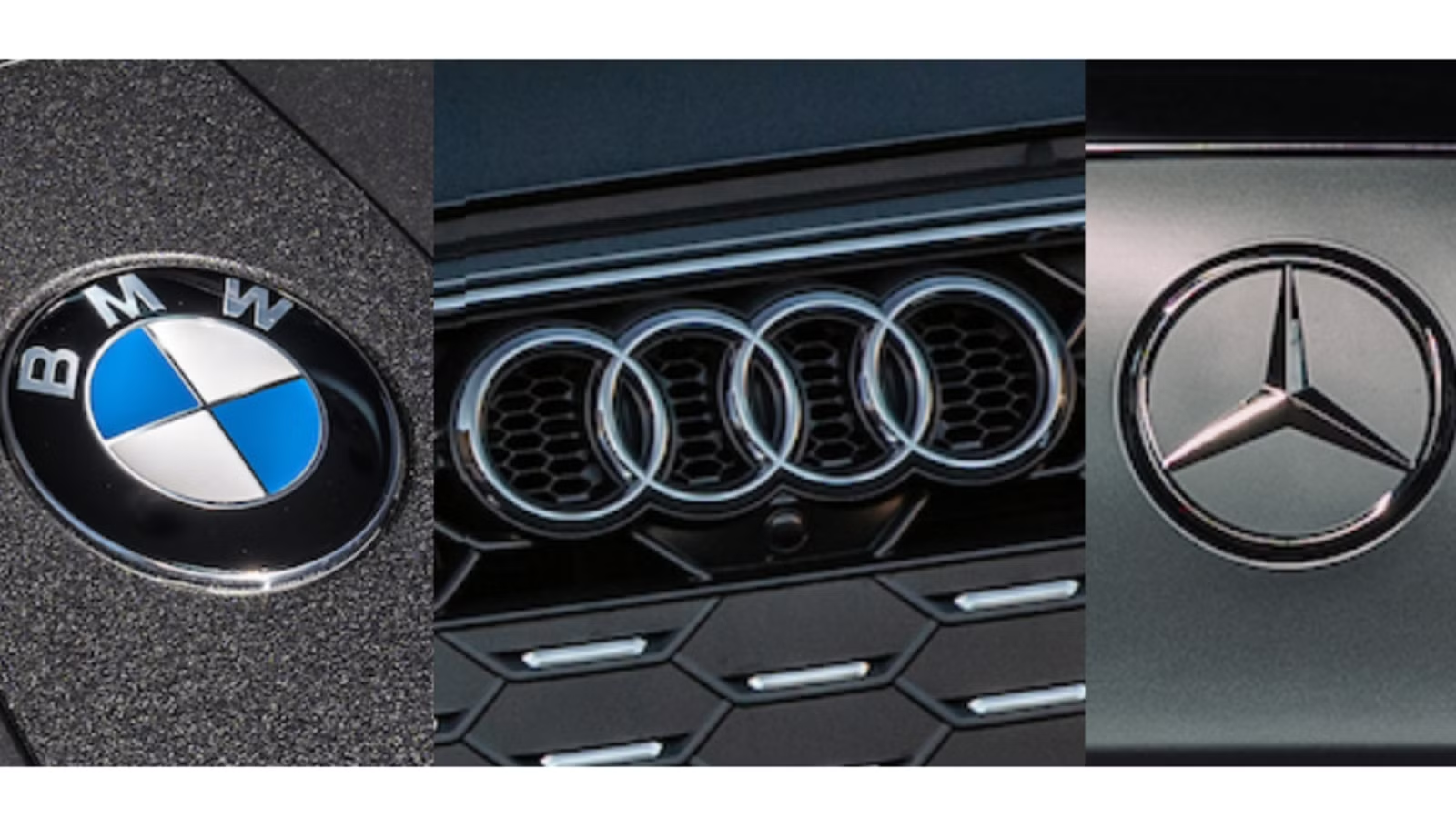
But when the administration began rolling out tariffs more than a year ago, the pain was felt most acutely by German automakers without manufacturing plants in the US, while also sparking trade wars with long-time trading partners. With first-half sales numbers now reported by Germany’s trio of luxury brands – BMW, Audi, and Mercedes-Benz – we have a better view of how all this uncertainty is playing out for those enduring companies.
2027 Mercedes-AMG GLS 63 from the rear three-quarter angleMercedes-Benz
It probably comes as little surprise that first-half 2026 car sales in the US for Audi, which faces a 25% tariff for its vehicles shipped from Germany, fell 17% (to 67,916 units) compared to first-half 2025. Audi has no US vehicle production, while rivals BMW and Mercedes-Benz both have US plants which contributed to better sales and profitability. But it’s still not great for Mercedes-Benz, which also reported a dip in first-half sales, down 3.5% to 145,000 units.
Sure, BMW and Mercedes also face 25% tariffs for lower-volume cars built in Germany, but their SUV plants in South Carolina and Alabama, respectively, proved to be brilliant strategic moves more than 30 years ago.
BMW X6 Sales Up 45.1%
2020 BMW X6 M Competition front quarterBMW
News is better for BMW, which saw sales in the US climb 4.7% (to 186,944 units compared to first-half 2025), earning the brand the luxury sales crown so far this year. More to the point, sales for BMW’s crossover SUVs, from X3 to X7, all produced in the US, were up a brisk 16% over first-half 2025. The top-selling X5, up 23.7%, found more than 41,000 new driveways in the first half, while the smaller X3 was up 29.8% to 37,671 deliveries. Those are some strong numbers.
BMW’s biggest gainer was the coupe-like X6 utility vehicle, up 45.1% to 6,822 units. The battery-electric iX crossover continued struggling, falling 48.9% in the first half to 3,445 deliveries.
US sales of coupes, sedans, roadsters, and compact crossovers (X1 and X2) were down 2.5% for the first half but up 12.8% in the second quarter, compared to Q2 2025. The 3-Series sedan, even before its full redesign is revealed later this year, was up 32.3% in the first half to 18,731 units, while 1,577 shoppers grabbed a Z4 roadster before it departs the lineup.
Some Bright Spots In Audi’s Lineup
2025 Audi A6 e-tron SportbackIan Wright/CarBuzz/Valnet
Audi’s first-half sales report was decidedly less upbeat. The top-selling Audi Q5 was down 3% to 22,138 deliveries, while the second-best selling Q3 was down 14% to 10,906 units. While the Q8 showed 9% growth to 6,344 units, the all-electric e-tron and Sportback e-tron versions have been discontinued, down from more than 800 deliveries in first-half 2025.
But Audi car sales are actually rallying, up 20% for the A6 (to 4,263 units), up 7% for the A5 (to 8,882 units), and up 5% for the A3 (to 5,135 deliveries). The A6 Sportback e-tron, which just arrived as a 2027 model, is the lone EV bright spot, finding 342 new customers.
2028 Audi Q9 interior preview.Audi
Mercedes-Benz does not provide sales results for specific models, but reports second-quarter sales gains of 30% for the GLE SUV, 8% for the GLC, and 40% for the GLB. Sales for the ultra-luxury Mercedes-Maybach brand were up 25% (thanks to the full-size GLS SUV), and Mercedes-AMG performance SUVs also showed 17% growth in the quarter, the automaker said.
2019 BMW Z4 finished in silver with black interiorBMW
CarBuzz Insight – Why This Matters:
When President Trump talked about leveling the global automotive playing field on behalf of domestic US producers, he also affected the cost structure of brands like Audi that lack any US manufacturing presence, for now. So far, that strategy has inspired certain automakers to announce new investments in US facilities, which will take years to bear fruit.
But for now, BMW and Mercedes-Benz are better situated to weather the political upheaval. Meanwhile, Audi can hope for bluer skies as the brand prepares to launch the 2027 Q9, a three-row luxury cruiser well suited for the US. But it will be assembled in Slovakia.
