

If you’re reading this article, then chances are that you’re a motorcycling enthusiast like all of us at Topspeed. We can even bet that your Instagram feed is full of moto exoticas on the track, ADVs out on off-the-grid adventures, and heavyweight tourers mapping the scenic tarmac roads in the Alps. The in-betweens are things that never get posted. And this is an article dedicated to just that.
The in-betweeners are the daily, boring commutes on a naked bike of a workhorse that rarely gets the limelight of an Instagram filter. But they carry on, relentlessly accompanying you on the best and the worst of workdays. Among these are legends that log so many miles over the years that somewhere on a motorcycle forum, a rider who appreciates the daily grind that these motorcycles are put through, posts the exact moment the odometer rolls from five digits into six. And among these are gems like an underrated Suzuki V-twin.
Why Most Motorcycles Never See Six Figures On The Clock
A rider putting on his gloves atop a stationary CFMoto 450CL-C in the city, rear third qurter viewCFMoto
A six-figure reading usually signals a bike that has been ridden hard and is overdue for retirement. But the rider who posted the odo reading, possibly apologizing for the blurry photo snapped one-handed at a stoplight, isn’t greeted with criticism. Instead, curiosity fills up the comments. Someone asks what the original clutch was still doing after a hundred or two hundred thousand miles. Someone else posts a higher odo number and dares the thread to keep going.
Honda NX500 parked off road, rear third quarter cinematic shotHonda Powersports
Most motorcycles like these get traded in long before the odometer is worth a picture, swapped out for something newer while the resale value still has some fight left in it. In the case of the Suzuki, it signals the opposite. The number just keeps climbing, and a reliability thread seems to develop. Fact is, the number itself isn’t the whole truth, but how a motorcycle ages on paper becomes relevant as the years go by. Trade-in values start sliding the moment the warranty clock runs out, and every model year brings a sportier, faster, more electronically loaded version of whatever’s currently in the garage.
Harley-Davidson Iron 883 action shotHarley-Davidson
This makes a perfectly good engine feel outdated even when it can continue doing the same daily grind for a lot more miles. Many engines, including air-cooled big V-twins, can run well past 100,000 miles. It’s when the resale anxiety sets in, and most bikes get moved on under that figure, bypassing any emotional tug simply because their owners got nervous first and weighed in the finances. Nothing wrong with that, but here’s a machine that will make you think again and yet again as the odo keeps climbing.
The Suzuki SV650 Is The V-Twin Commuter Riders Refuse To Trade Away
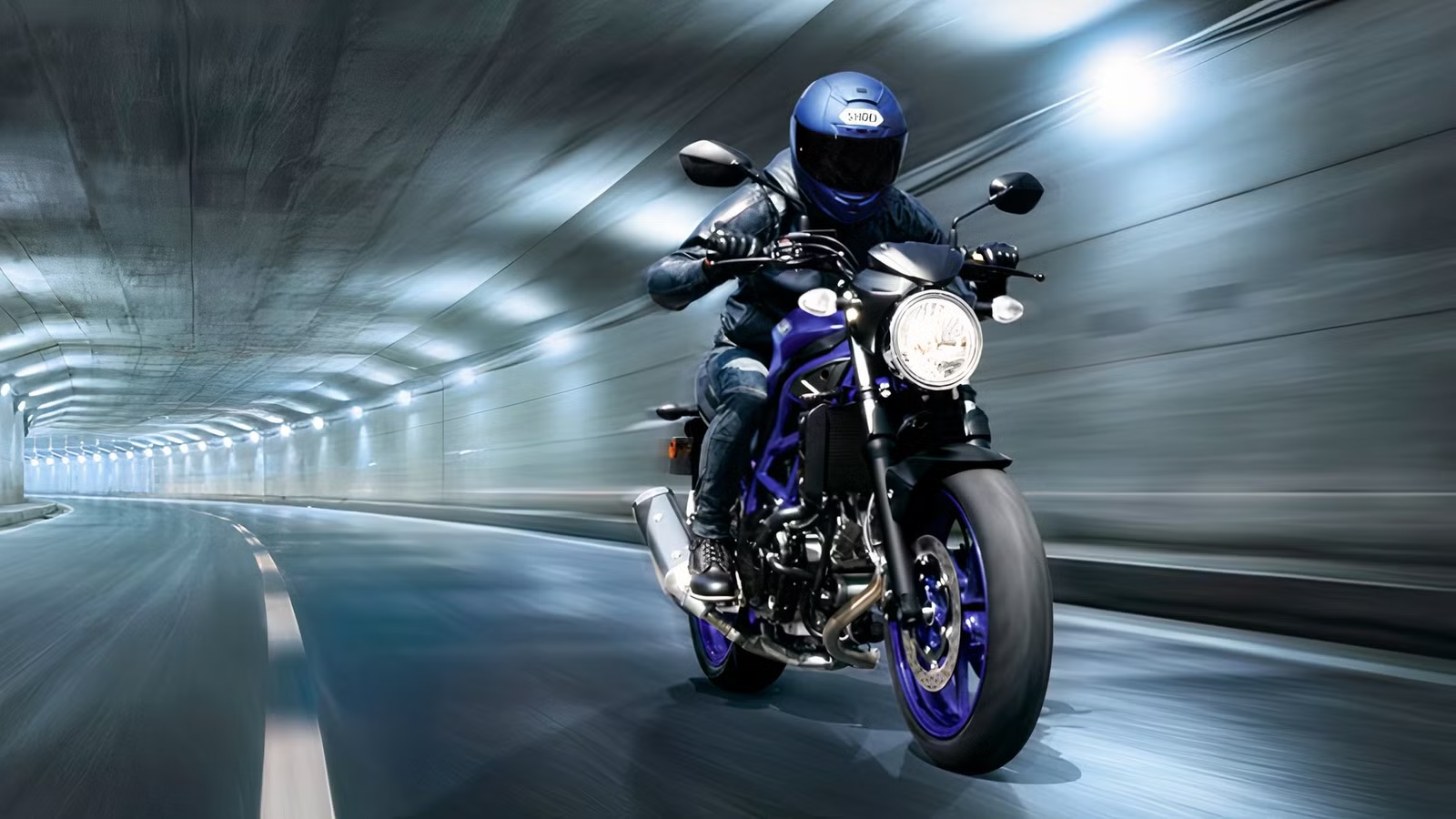
Suzuki SV650 accelerating with a pillion on board along a city road, front third quarter rolling shotSuzuki Cycles
That Suzuki SV650 is a dependable daily bike, but so unassuming that it rarely gets mentioned outside of forums that are built entirely around keeping it running. Suzuki introduced it in 1999; 27 years on and four generations later, the formula hasn’t changed at all. A compact 645cc V-twin wrapped in a steel trellis frame, sold new today for $8,149. There’s no chase for a bigger power number, no yearly reinvention either. The SV650 has spent nearly three decades doing one job, and the riders logging the high mileage odometers are proof it’s still doing that job well past most bikes’ retirement window.
Two Decades Of Solid Reliability From An Unchanged Design
A cutaway image of Suzuki SV650 showing its simple mechanicalsSuzuki Cycles
Suzuki counts four generations of the SV650 since 1999, and across every one of them, the core idea hasn’t moved. It’s a compact, liquid-cooled 90-degree V-twin, with the current engine carried over unchanged since the last 2017 tweaks. It displaces 645cc from an 81.0 x 62.6mm bore and stroke, still fed through the throttle-body based on the SDTV system Suzuki refined over the years.
The 90-degree V-twin does double duty where it’s wide enough for a near-perfect primary balance, so the engine never had to rely on a counterbalancer to smoothen itself out. That meant fewer moving parts to eventually wear or fail and controlled vibrations for the rider to never feel fatigued. The changes made along the way have also been targeted, like the resin-coated piston skirts and L-shaped rings to cut friction. Dual Spark Technology cleaned up the combustion, but none of it touched the core layout.
A Deliberately Low-Stressed State Of Tune
Metallic Matte Black 2023 Suzuki SV650 engine close-upSuzuki Cycles
The SV650’s modest output (75 horsepower and 47 lb-ft of torque) is a number that hasn’t moved since the 2017 redesign despite a 10,000-rpm redline. It’s no slouch, mind you, but Suzuki has never chased the top-end ceiling for the SV. Compression sits at 11.2:1, and aftermarket dyno sheets show the same short-stroke V-twin can be tuned to produce 80-plus rear-wheel horsepower without touching the engine’s bottom end. That says less about the SV650’s potential and more about how little stress Suzuki is building the stock version to handle. An engine running so comfortably has internals that aren’t working hard and don’t wear out fast.
What The 200,000-Mile Owners Actually Report
Suzuki Cycles
Search through SVRider.com or Sv650.org long enough, and a pattern starts to emerge. High-milers check in as they near 100,000 miles, some well past it too, comparing notes on valve clearances that are still in spec and clutches that are still the ones the bike left the factory with. One SVRider.com regular, tracking a small fleet of SVs, put it plainly, “I do have over 200,000k miles on SVs.” Another was closing in fast, reporting 190,000 miles with the next season pegged for the six-figure milestone.
An owner running a mix of conventional and full-synthetic oil across the years wrote in with 128,200 miles, the bike apparently unbothered by the choice of oil. One SVRider.com thread pegs the shared SV/DL650 platform at a routine 120,000 to 140,000 miles with basic upkeep, and owners running both bikes side by side report near-identical mileage on each. Across both forums, the failures that do show up include a fuel pump, a stator, a clutch, but never a bottom-end rebuild.
A Reliability Story Few Rivals Can Match
Graphenesteel Gray 2023 Kawasaki Z650 cruising through townKawasaki
The SV650 isn’t unique at being dependable. The Kawasaki Z650 S ABS runs the same proven parallel-twin layout as the Ninja 650, though the S nameplate is new to Kawasaki’s lineup for 2026, with no mileage history of its own yet. Consumer Reports’ four-year failure-rate data puts Suzuki at 12 percent against Kawasaki’s 15 percent, a fair comparison at the brand level, albeit being a decade-old report.
Rider on a Yamaha MT-07 on a bridge in a city at nightYamaha Motorsports
The Yamaha MT-07 is a tougher competitor with the brand’s figure beating Suzuki’s, at 11 percent. But that describes the badge, not the bike specifically, since the MT-07 was heavily revised for 2025 with a stiffer frame, inverted forks, and radial brakes, changes that reset its own track record. So, all in all, what sets the SV650 apart isn’t a reliability score beating its class. It’s that almost nothing on it needs a score to prove it, because forum threads have been running that experiment live for two decades, with odometer pictures as evidence.
Source: Suzuki
