

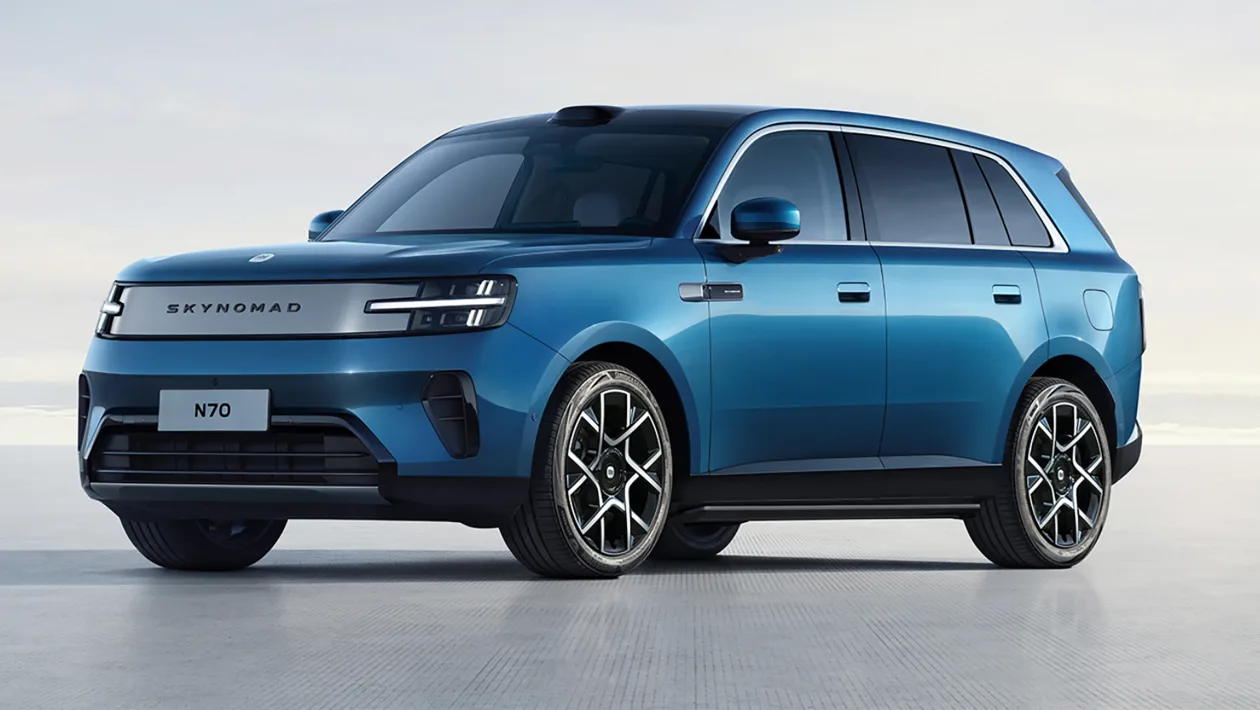
The other major change for this model compared to its range-mates is the hybrid powertrain, which is the first from Xiaomi. There are two main systems available, with single and dual-motor options both aided by a small and efficient 1.5-litre four-cylinder engine.
The precise numbers vary by model, but the twin-motor is capable of producing 415bhp, completing 0-62mph in 5.5 seconds. This is conservative compared to many rivals, but Xiaomi says this car is more about range and efficiency than performance, and on this the N70 and N90 deliver.
With a 76kWh battery pack (a smaller 58kWh unit will also be available), the N70 is capable of running on BEV power alone for up to 313 miles on the CLTC cycle, or roughly around 250 miles on the more stringent WLTP test. With the batteries depleted, the petrol engine will then wake up and act as a generator, where it should average around 45mpg on the Chinese cycle.
Xiaomi still has no specific timeframe for its intended launch into Europe, but insists it’s aiming to be selling cars here by 2028 at the latest. Both of its existing models have proven to be popular in China, with long waiting lists and lots of online interest. But the Skynomads enter a much tougher segment, where established brands such as Li Auto and Aito already have substantial market share.
In Europe, however, the Skynomad could certainly have appeal as a cut-price rival to cars such as the Audi Q7, Volvo XC90 or even fellow Chinese competitors, the Chery Tiggo 9 and forthcoming seven-seat Jaecoo 9.
If you’re in the market for any of these cars, check out the Auto Express Buy a Car service…
