

The Mazda CX-5 has spent a lot of time at the top of the brand’s list of bestsellers, and for good reason. The compact crossover holds an impressive safety report card. Whether you’re going with the IIHS, NHTSA, ANCAP, or Euro NCAP, it’s versatile, it’s practical, all-wheel drive comes standard, and it handles beautifully, especially for something that starts out at under 30 grand.
But, sometimes you need a car, and you just don’t have the budget for something new. If that describes the situation in which you currently find yourself, allow us to suggest – as an alternative – a gently pre-owned Mazda CX-7. The CX-7 ended production in 2012, so you’re looking at a slightly older car here, but the Ford C1-based mid-size offers much of what you expect to find in its successor: it’s reliable, and most importantly, it’s dirt cheap. Here’s why we think a used CX-7 makes a great alternative to a new Mazda CX-5.
A Look At The Mazda CX-7
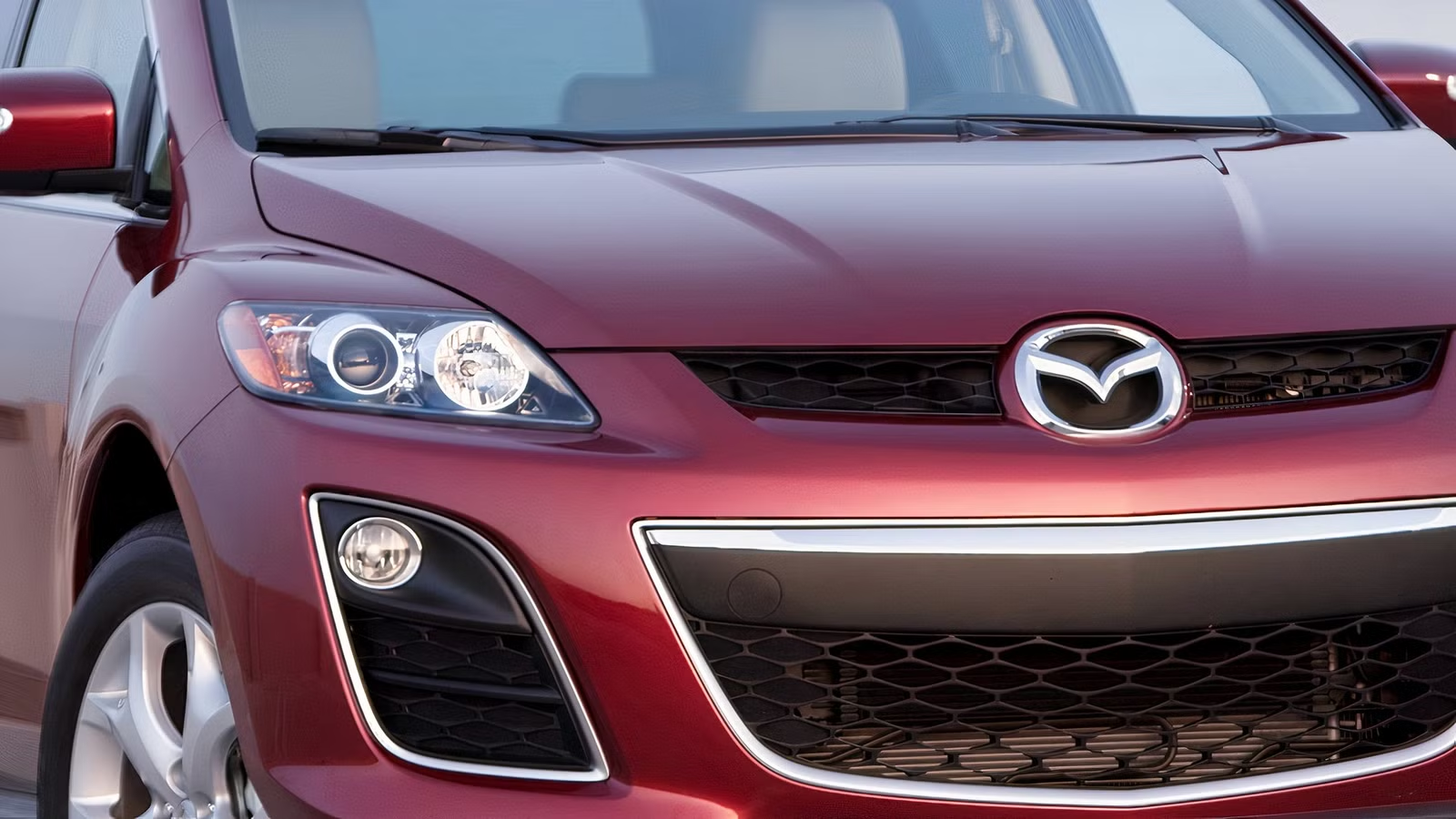
2010 Mazda CX-7 exteriorMazda
The biggest sacrifices you’re making in a CX-7 should be easy to spot: the base model is front-wheel drive, and 161 horsepower is kind of piddly for a mid-size SUV. But, these problems can both be corrected by upgrading to a 244-horse Touring or Grand Touring model with a turbocharged inline-four and all-wheel drive.
You’ve got 8.1 inches of ground clearance, so light-to-moderate off-roading should be easy. It’s not exactly a rock climber, and towing capacity taps out at a single ton, but broken roads and rough weather shouldn’t be a problem. The CX-7 is versatile and capable enough to function as a daily driver in more environments than not.
It’s A Practical Daily Driver, And That’s Why You Buy A Mazda SUV
2007 Mazda CX-7 exteriorMazda
While there were larger SUVs being sold around this time, we remark in our own review on the outgoing 2012 model that the CX-7 offered more than enough leg- and headroom for up to five typical adults, and you’ve got around 30 cubic feet of cargo space with the seats up, or 58.6 cubic feet with the seats folded down.
The Mazda CX-7 won a handful of awards in its lifetime, including the 2007 International Car of the Year Award for crossovers. It never took home a Top Safety Pick from the IIHS, but it did score Good ratings in the front and side tests, and five stars from the NHTSA in every category except for rollover, where it scored four out of a possible five.
We won’t deny that there are more exciting, more stylish, and more fun used SUVs out there, but Mazda is hard to beat when it comes to practical all-rounders, and that’s just as true of the CX-5 as it was of its predecessor.
What Are They Selling For These Days?
2010 Mazda CX-7 exteriorMazda
Mazda’s first attempt at building a crossover is not without flaws. The naturally aspirated 2.5-liter is robust, but the 2.3-liter turbocharged four-cylinder had a few reliability issues. It burned a lot of oil, suffered from variable valve timing actuator failures, and it stretched its timing chain.
As a result, the most you’re ever going to spend on a used CX-7 is roughly $10,000. Finding a low-mileage example is difficult given the age of the car, but there are some nice examples with 60,000 to 70,000 miles on the clock. A full-service history and pre-inspection by an expert are a must.
Is A Used Mazda CX-7 Worth The Price In 2026?
2007 Mazda CX-7 exteriorMazda
RepairPal estimates that you should be spending around $470 each year to maintain a CX-7. CarEdge suggests $7,414 for 10-year maintenance costs. CarComplaints only shows the first model year, the 2007, to be really problematic, with a long list of potential engine issues we mentioned earlier.
But there’s another elephant in the room… The CX-7 loves to decimate fuel, no matter what engine you go for. The 2.3 is the biggest offender, with an inner-city rating of 16 mpg. Owners say that it can do between 18 to 22 mpg combined when driven carefully, but that’s still a lot of money you’ll be spending on fuel.
If we had to spend money on a Mazda SUV, we’d save a bit longer until the budget was $15,000. For that, you can get a neat CX-30 with semi-high mileage, but nothing serious to worry about.
Sources: Mazda, Fueleconomy.gov
