

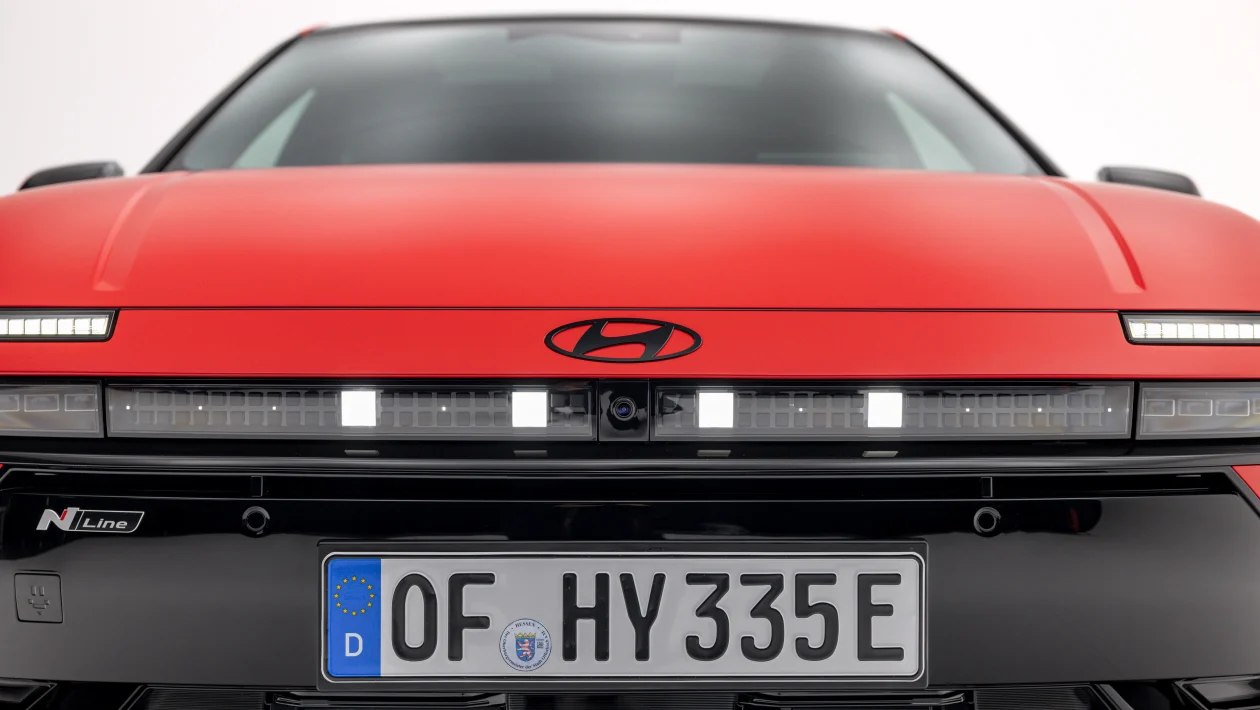
The pair will share a similar interior design, with a relaxed ‘living room’-like cabin and another use of the Pleos infotainment system. Space inside is where the true differences will lie, though, because the Ioniq 4 should have more rear head and legroom, as well as a larger and more versatile boot.
The powertrains will also draw from the same toolkit, so expect a similar range of battery options in 42kWh and 61kWh specifications, running a single front-mounted e-motor. Given its placement above the Ioniq 3, and a potential for a hot Ioniq 4 N variant, we’d suggest it’ll also be available at some point with a dual-motor option.
While this might sound like it would get in the way of a new Kona Electric, it’s expected that the new generation of Kona will lose its all-electric powertrain option, sticking with a purely hybrid range of engines. Pricing for the Ioniq 4 will also need to remain competitive with a new glut of similarly sized EVs from the VW Group and Renault, suggesting a starting price of around £25,000 – some £2,500 more than the entry-level Ioniq 3.
If you’re in the market for a new Hyundai with any powertrain, check out the Auto Express Buy a Car service now for all the latest deals…
