

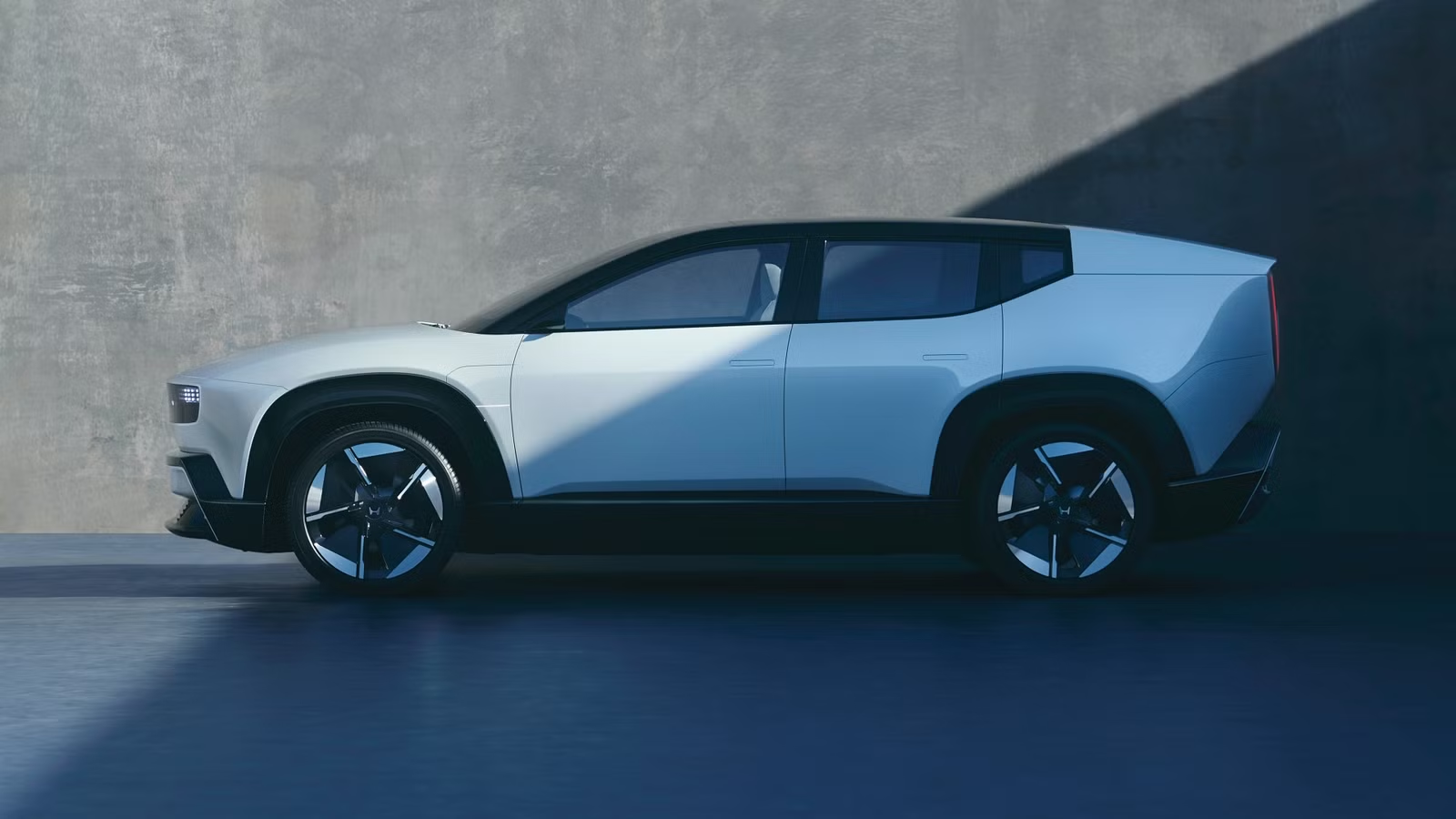
The future of electric Hondas in North America has looked pretty bleak this year. The company had three EVs on target for production, two for Honda, and one for Acura, and all three were cancelled earlier this year with no successors announced. Honda has since made it clear that its near-term plans will be focused on hybrids. Apparently it’s not done with EVs, though, it’s just that they won’t be arriving for some time.
The Earliest They’ll Arrive Is Next Decade
During a press event, some Honda and Acura executives spoke with members of the media about the status of the automaker and what it has planned. According to Motor Trend, they revealed that Honda still intends to bring EVs to market in order to reach its carbon emission targets. Unfortunately, we’ll be waiting quite a while for those vehicles to show up. Apparently, the company will start launching its next-generation hybrids starting around 2030, and it won’t be until after that full EVs start launching.
Acura Hybrid SUV Prototype (2)Honda
We’re expecting those next-generation hybrids to be the production versions of the Honda Hybrid Sedan Prototype and the Acura Hybrid SUV Prototype. Acura said that the SUV Prototype previews a model coming in just two years, and we believe it will be the next-generation RDX. It will also use a new hybrid V6 powertrain designed for larger vehicles similar to the Honda Odyssey and Pilot. As for the sedan, it may be showing up in 2029 or 2030, either as a next-generation Civic or Accord. Either way, they’ll be using a four-cylinder hybrid powertrain, rather than the V6.
Interestingly, Honda won’t be introducing any plug-in hybrids during this time. According to Motor Trend, American Honda’s Vice President of Auto Strategy Gary Robinson said that customers either don’t understand plug-ins or simply want either a non-plug-in car or a full EV. While we can see the thinking, it’s interesting that Honda would rule out the options entirely since it technically still offers a plug-in hybrid of sorts. The Honda CR-V e:FCEV is a hydrogen fuel-cell version of the compact SUV that features a large enough battery that it can be plugged in and driven on battery power alone before having to activate the fuel cell. Honda also offered its Clarity as a plug-in hybrid with a powertrain very similar to those used in its conventional hybrids.
Honda Hybrid Sedan Prototype (2)Honda
How Honda Got Here And What The Future Has In Store
Even before Honda cancelled its 0 Series EVs and the Acura RSX, company representatives were sounding alarm bells about its EV program. An executive said last November that he felt the EV market had been set back by five years due to the end of America’s federal EV tax credit, rising tariffs, and slowing EV adoption rates. Those are all factors that executives at the press event Motor Trend attended cited as factors leading to the program’s cancellation.
The projects were also so expensive that Honda posted its first-ever financial loss last year. Honda even said that it decided that its EVs were not “competitive” with products from other automakers. That’s about as brutal an indictment of the vehicles as you could get.
Honda’s new V6 hybrid system has been developed with America in mind.Roger Biermann/CarBuzz/Valnet
In the meantime, Honda is betting big on hybrids. Its completely new generation of hybrids may not arrive until the end of the decade, but the automaker already announced that 15 other hybrids will be arriving before then. The company also announced that it will be partnering with a company called QuantumScape to hopefully develop solid-state batteries, a further indication that the company hasn’t bailed on the idea entirely.
CarBuzz Insight – Why This Matters:
Everything about how Honda cancelled its EV plans was deeply worrying. It was extremely sudden and late in development, as seemingly production-ready prototypes had been seen. Honda publicly stating that they weren’t good enough was also a shocking admission. Plus, despite a slowing rate of adoption, the EV market continues to grow, and other automakers are at least getting experience and building reputations by having offerings. It all seemed like Honda might be falling behind the rest of the industry.
Hearing that the company hasn’t given up on EVs is a bit reassuring. We just hope that the company doesn’t play too conservatively in making sure its EV investments don’t result in any sort of loss. If Honda doesn’t do enough to bring competitive EVs to market, it may lose its whole future just to make sure it had a good fiscal year.
Source: Motor Trend
