

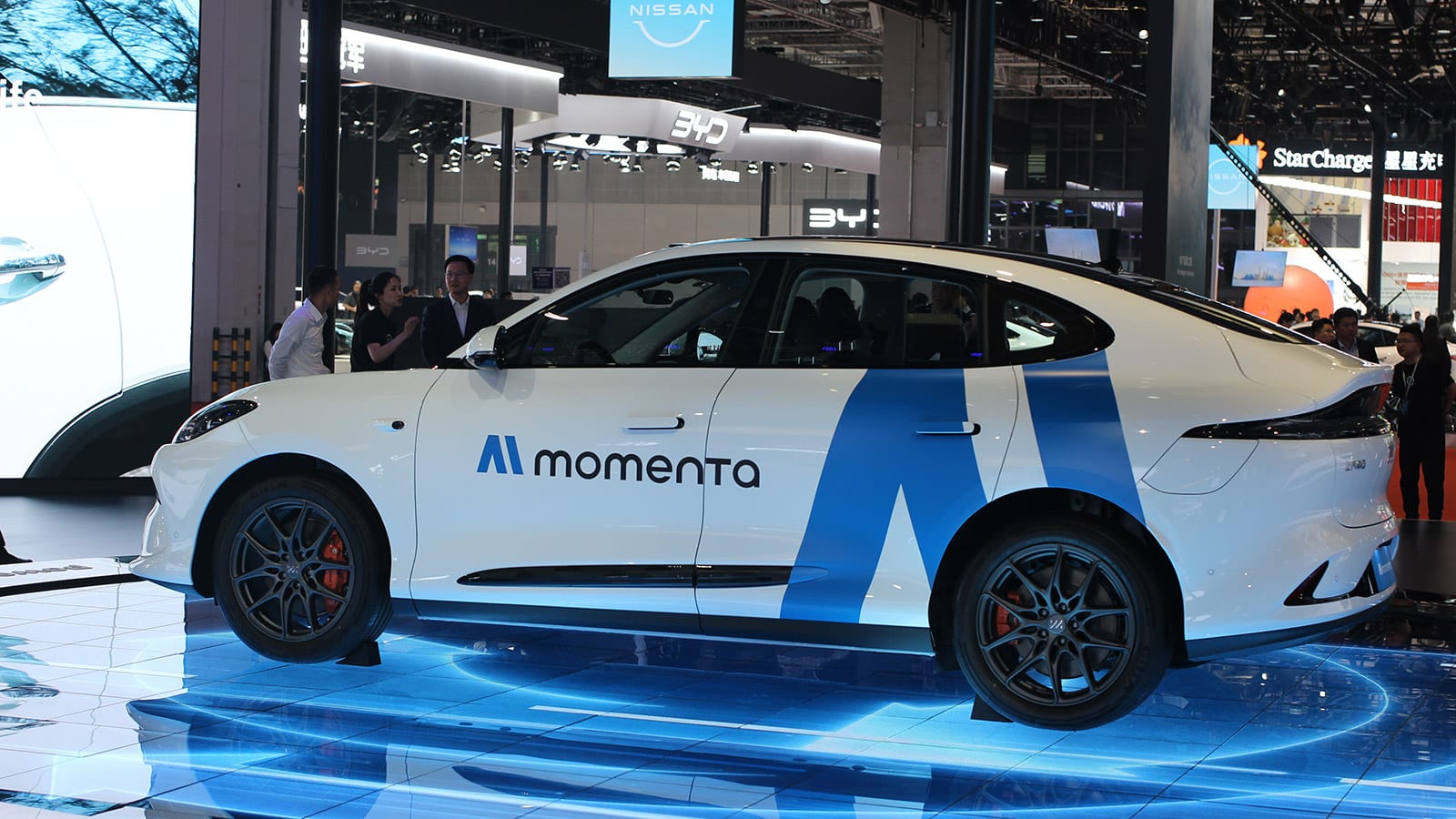
A Momenta robotaxi on display at the Shanghai Auto Show in April 2025. Credit: CnEVPost
- License issuance is gradually resuming in some cities after the completion of an industry-wide safety review in late June, according to Bloomberg.
- Momenta received one of the first permits and will conduct trials in Shenzhen, while Baidu’s Apollo Go is showing signs of resuming operations in Wuhan.
China has started issuing robotaxi licenses again after a high-profile incident involving self-driving vehicles prompted authorities to suspend new permits in April, Bloomberg said in a Thursday report, citing people familiar with the matter.
The resumption is occurring gradually in some cities following the completion of an industry-wide review in late June, according to the report.
Regulators had called for a full safety review of the industry after Baidu’s Apollo Go robotaxis suffered a sudden, large-scale outage in the central Chinese megacity of Wuhan in April.
The latest move paves the way for the fast-growing robotaxi companies to put the episode behind them and return to their growth trajectories, Bloomberg noted.
One of the first permits went to Momenta (HKEX: 6880), allowing the company to run trials in the southern metropolis of Shenzhen, according to the report.
The local government in Shenzhen amended its intelligent connected vehicle regulation to explore opening up the entire city to robotaxis and lowered barriers to entry, the report said.
Momenta announced on July 21 that its robotaxi had received a permit for intelligent connected vehicle road testing in Shenzhen. That made Shenzhen another core city for the company in China, following Shanghai, Suzhou, and Wuxi.
Meanwhile, there are signs that Baidu’s operations in Wuhan may also be resuming, the Bloomberg report said.
Hundreds of Baidu’s robotaxis were previously pulled from service in Wuhan because of the safety review, according to the report.
Since early July, local residents have posted videos and photos on Chinese social media showing Baidu’s Apollo Go robotaxis back on the streets, some with safety drivers inside.
On the night of March 31, a number of Apollo Go robotaxis suddenly stalled on roads in Wuhan, leaving some passengers stranded on a busy elevated road. Wuhan traffic police said at the time that a preliminary investigation showed the incident was caused by a system malfunction.
Some local media reports at the time cited industry insiders as saying that the vehicles likely stalled because they encountered unexpected situations that triggered a safety self-check mechanism.
Apollo Go and Kazakhstan’s TPH signed a strategic cooperation agreement to jointly explore introducing robotaxi services in the country.
