

The biggest car news and reviews, no BS
Our free daily newsletter sends the stories that really matter directly to you, every weekday.
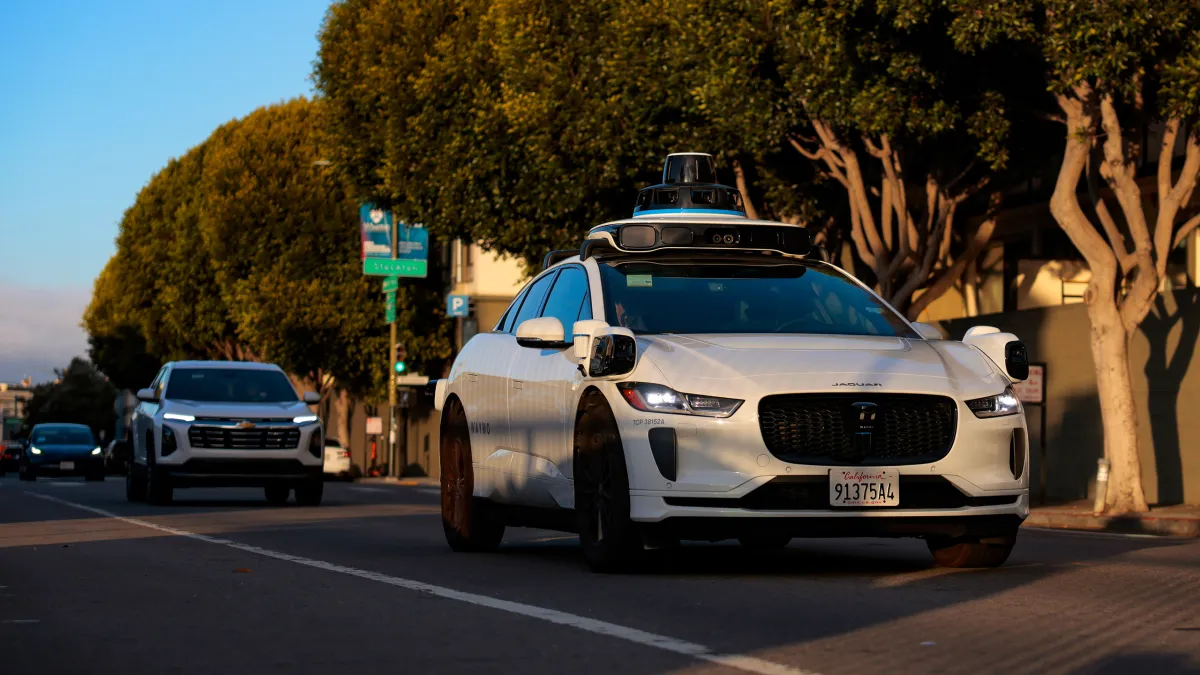
Since Waymo arrived on the public stage as Google’s self-titled autonomous-driving project almost 20 years ago, the promise that self-driving cars would dramatically curtail crashes has remained just that. A handful of companies operate autonomous ride-hailing services in some cities (San Francisco is downright lousy with autonomous cars), but high-profile mishaps show how elusive real progress is. Yet Waymo may be heading in the right direction, according to the Insurance Institute for Highway Safety.
The nonprofit organization backed by the insurance industry and known for very thorough crash tests recently took a look at Waymo’s safety record. In a study published this week, researchers found that Waymo vehicles are involved in fewer crashes than human drivers per vehicle mile traveled (VMT). That’s based on an analysis of crash rates in the cities where Waymo currently operates—San Francisco, Phoenix, Los Angeles, and Austin—using available data. And the limitations of those data are the real takeaway.
Waymo
Waymo vehicles traveled about 50 million miles autonomously during the period studied, compared to about 222 billion miles for human drivers in the same locations, over the same timespan. The overall rate of crashes for the Waymo vehicles was 68% lower per VMT than human drivers, and that mostly held up on a city-by-city basis. The crash rate for Waymo self-driving cars was 76% lower in Phoenix, 35% lower in San Francisco, and 71% lower in Los Angeles. The Waymo fleet had 4% higher crashes in Austin than human drivers, but the sample size was relatively small. And Waymo cars were involved in 85% fewer single-vehicle crashes and 81% fewer crashes resulting in injuries per VMT than human drivers overall.
But as the IIHS explains in an accompanying press release, getting any meaningful comparison between human and autonomous driving wasn’t easy. While companies are required to report crashes involving self-driving cars to the National Highway Traffic Safety Administration (NHTSA) and the State of California, they aren’t required to report the mileage these vehicles cover, or how much is actually done in autonomous mode. That makes it impossible to know how common self-driving car crashes really are.
Waymo publishes VMT information that other companies don’t, which is why it was the only one studied. And even with that information, researchers had to account for differences in the reporting standards for self-driving car crashes and those for crashes involving human drivers. Most states only require drivers to report crashes that cause an injury or result in at least $1,000 in property damage, and even then many drivers still don’t report them to the police. Around half of crashes and a third of injuries go unreported, the IIHS estimates.
Waymo
Meanwhile, until a 2025 amendment to its reporting requirements, the NHTSA did require companies to report minor fender-benders involving self-driving cars, and their costly and vulnerable sensors often exceed the $1,000 threshold when damaged anyway. Researchers also found redundant reports, and ones where a car might not have been operating in autonomous mode. Once they’d eliminated those extraneous reports, researchers also tried to gauge whether a crash would have been reported to the police had a person been at the wheel, in order to make for a true apples-to-apples comparison.
Researchers concluded that only 22% of the 736 autonomous-car crashes reported during the period studied were likely “police-reportable.” Of that total, 89 involved Waymo vehicles (the highest for a single operator), but only 64 of those were in autonomous mode. That’s not a very big dataset, and the complex process of getting to it shows how difficult it is to make any real conclusions about the safety of self-driving cars.
“Those are encouraging signs for the future of driverless vehicles,” Eric Teoh, lead author of the study, said in a statement about the results. “Now we need to get the data collection system right so that we can ensure that level of safety continues as these technologies become more prevalent.”
Stephen has always been passionate about cars, and managed to turn that passion into a career as a freelance automotive journalist. When he’s not handling weekend coverage for The Drive, you can find him looking for a new book to read.
