

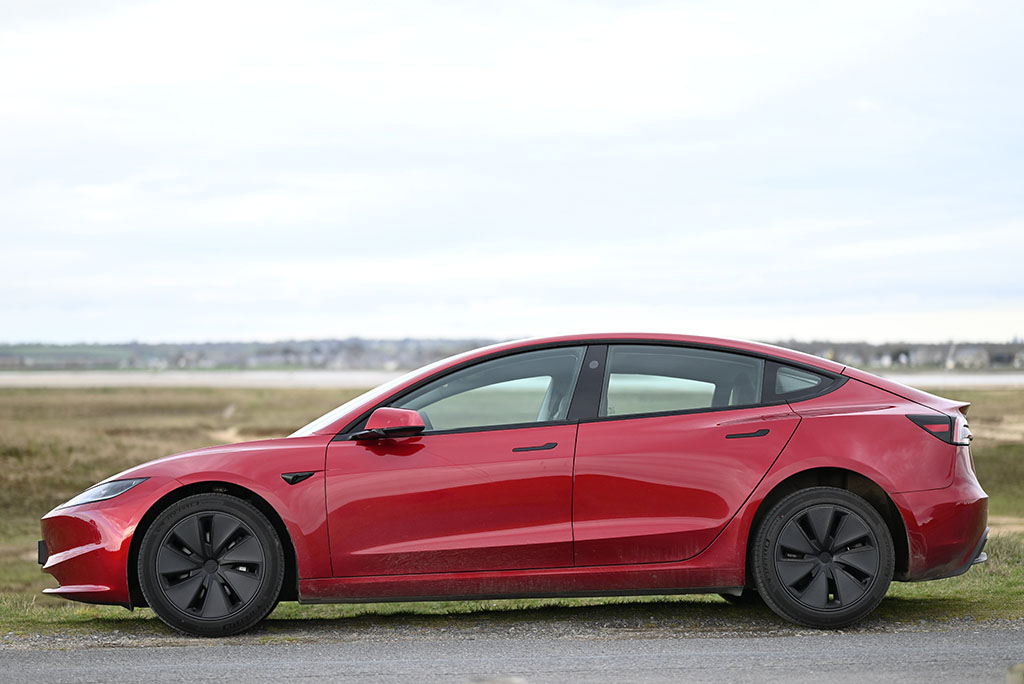
For a college student living on campus, an electric car can be one of the smartest — or most frustrating — vehicles to own. The answer usually comes down to one thing: where and how you can charge it. If your school has dependable campus charging and you drive mostly local miles, an EV can be genuinely practical. If you are relying entirely on scarce public chargers, the math gets much less forgiving.
The Campus EV Reality
College life is often busier than it looks from the outside. Between early classes, labs, club meetings, part-time jobs, internships, grocery runs, and weekend trips home, students frequently need reliable transportation — and having a car can provide real breathing room when schedules get tight. That is also why many students turn to academic support services when deadlines stack up; for example, when a student needs to write my essay while preparing for exams or managing a shift, a reputable essay writing service can help them stay organized and meet important deadlines. Just as a dependable vehicle helps students handle the practical demands of campus life, the right academic support can reduce stress and free up time for studying, work, and rest. For students who drive mostly short distances around campus, an EV’s range limitation is far less of a concern than it would be for a commuter facing a long daily highway drive.
Campus charging is also expanding. ChargePoint reported 1,134 charging spots at colleges and universities on its network, an increase of roughly 35% from the prior year. Still, availability varies dramatically by school. A University of Illinois study found that fewer than 20% of public EV chargers were near college campuses, and only 5% were actually inside campus boundaries — a reminder that “college town” does not automatically mean “EV-friendly.”
Charging Is the Deal-Breaker
For an on-campus student, the first question is not range, horsepower, or brand loyalty. It is this: Can you reliably plug in overnight or between classes?
The ideal setup
The best scenario is a campus parking garage or residence-hall lot with Level 2 charging. These 240-volt chargers can add roughly 20 to 30 miles of range per hour, meaning an overnight session can easily replenish the modest mileage most students.
Some universities already operate serious infrastructure. The University of Illinois, for example, lists 32 Level 2 chargers with 60 charging ports, plus designated Level 1 locations, intended for students, faculty, and staff. UCLA has reported hundreds of Level 1 charging locations alongside Level 2 and DC fast-charging equipment.
The problem scenario
If your campus has only a handful of chargers, or if they are located across campus from your dorm, an EV can become a scheduling burden. Students may need to move their car after charging, wait for an open port, or compete with faculty, staff, visitors, and local EV owners.
At Northwestern, the university limits free charging to three hours before requiring drivers to move, a policy designed to prevent charger hogging. That approach keeps access fair, but it also means students cannot simply treat a public charger as a personal overnight parking spot.
What It Costs
This is where the campus-living advantage becomes clear — or disappears.
Home charging is generally the cheapest way to run an EV, but most dorm residents do not have a garage, driveway, or 240-volt outlet. That pushes them toward campus or public charging, which costs more. AAA’s national average for public charging is about 42 cents per kilowatt-hour. By comparison, residential electricity averaged about 18.56 cents per kWh nationally in March 2026.
Charging situation
Practicality for an on-campus student
Campus Level 2 charger, overnight
Excellent — low-cost, predictable, fits student schedules
Campus Level 2 charger, limited ports
Workable, but requires planning and flexibility
Public Level 2 near campus
Possible, but more expensive and less convenient
Public DC fast charging only
Least practical for routine use — costly and time-consuming
No reliable charging access
Poor fit; a hybrid or efficient gas car makes more sense
Public Level 2 charging typically costs around 20 to 40 cents per kWh, while DC fast charging can run roughly 35 to 70 cents per kWh depending on network and location. For a student already managing tuition, rent, food, and textbooks, repeatedly paying premium fast-charging prices can erase much of the fuel-savings advantage.
AAA also found that cold weather raises EV operating costs, especially when relying on public charging. At 20°F, EV operating costs increased by $76.93 per 1,000 miles when charged publicly, compared with $32.11 per 1,000 miles when charged at home electricity rates. Students at northern schools should factor winter range loss and higher charging costs into the decision.
The Hidden Advantage: Low Maintenance
Even if charging is less convenient than plugging in at home, EVs offer benefits that appeal to students:
- No oil changes, spark plugs, exhaust repairs, or traditional transmission service.
- Fewer moving parts than a gasoline vehicle.
- Quiet, smooth driving for short campus trips.
- Strong low-end torque, which makes merging and city driving effortless.
- Potential savings on fuel if affordable campus charging is available.
For a student who drives 5,000 to 8,000 miles a year rather than 15,000, those maintenance savings matter — but they do not automatically offset a high purchase price, insurance, parking fees, or expensive public charging.
When an EV Makes Sense
An electric car is a strong choice for an on-campus student if most of these apply:
- The university offers accessible, affordable Level 2 charging.
- You can charge overnight or during long classes.
- Your typical weekly driving is local and predictable.
- You have access to a reasonably priced used EV or an affordable new model.
- You rarely take long road trips, or you are comfortable planning charging stops.
- Your campus climate is moderate, or you accept winter range reduction.
A compact EV with around 200 to 250 miles of real-world range is more than enough for most campus lifestyles. The vehicle does not need to be a long-range luxury EV; it needs to be inexpensive to buy, insure, park, and charge.
When It Does Not
An EV may be the wrong call if:
- Your school has few or no charging stations.
- The nearest reliable charger is far from your residence hall.
- You depend on DC fast charging for everyday use.
- You take frequent long trips home with no convenient charging route.
- You live in a very cold climate and cannot charge affordably overnight.
- The purchase price, insurance, and parking costs outweigh fuel savings.
In those cases, a fuel-efficient hybrid is often the more practical “first college car.” It delivers excellent mileage, eliminates charging anxiety, and works well for spontaneous road trips, internships, and holiday travel.
The Bottom Line
Electric cars can absolutely be practical for college students living on campus — but only when charging access is convenient and affordable. Campus EV infrastructure is growing, yet it remains uneven from school to school. Before buying, students should treat charging like a housing requirement: inspect the actual chargers, ask about pricing and time limits, check nearby public options, and calculate the real monthly cost.
If the campus has reliable Level 2 charging, an EV can be a quiet, cheap-to-run, low-maintenance companion for four years of college. If it does not, the best vehicle may not be the most electric one — it may be the one that never leaves you hunting for an open plug before an 8 a.m. class.
Automotive Addicts Contributors are a collective of guest writers, industry professionals, and passionate enthusiasts who bring fresh perspectives to the Automotive Addicts platform. Focused on delivering timely news, in-depth reviews, and unique insights, these contributors help keep the site dynamic and engaging. Many use the platform to expand their reach and build credibility within the automotive media world, adding depth and variety to the content that drives the Automotive Addicts community.
