

Big and proud is the American way. And honestly, there’s nothing wrong with that – unless you happen to be on the receiving end of a collision with a full-size pickup built in the last 15 years or so. The same goes for the largest family SUVs, which can carry seven adult people in comfort. Sure, many people need these vehicles to carry people, or things, or bother. And some buy them just because they want the biggest vehicle in the neighborhood. The reason for the purchase doesn’t matter. People have a right to buy what they want.
2027 Ford Expedition 30th Anniversary Package from the front three-quarter angleFord
But, does the front of that big vehicle need to be that big? A recent report from The New York Times uncovered a curious connection while searching through gobs of vehicle crash data, and not from fringe sources, either. Information was pulled from the National Highway Traffic Safety Administration and S&P Global, then analyzed, tested, and evaluated.
The takeaway? Modern full-size trucks and SUVs could account for 3,000 more pedestrian deaths between 2016 and 2024, simply because of their ginormous hoods and grilles. Of course, there’s a bit more it than just that. Let’s take a look
Giving Buyers What They Want
2022 Toyota Tundra 1794 Edition Smoked Mesquite. Motion. On-road. Front, three-quartersToyota
You can’t blame car companies for giving customers what they want, and there’s no denying that big, rugged styling is popular in the US. But, it’s that popularity that gave researchers the extra bit of info they needed to draw some interesting conclusions. Per the report, pedestrian fatalities have been rising since 2009 despite the advent of more advanced safety systems.
Could that be attributable to driver distraction and the rise of texting-and-driving with smartphones? Certainly, but if that were the case, similar increases in pedestrian deaths would be seen in other parts of the world. But that’s not the case. This is an American problem.
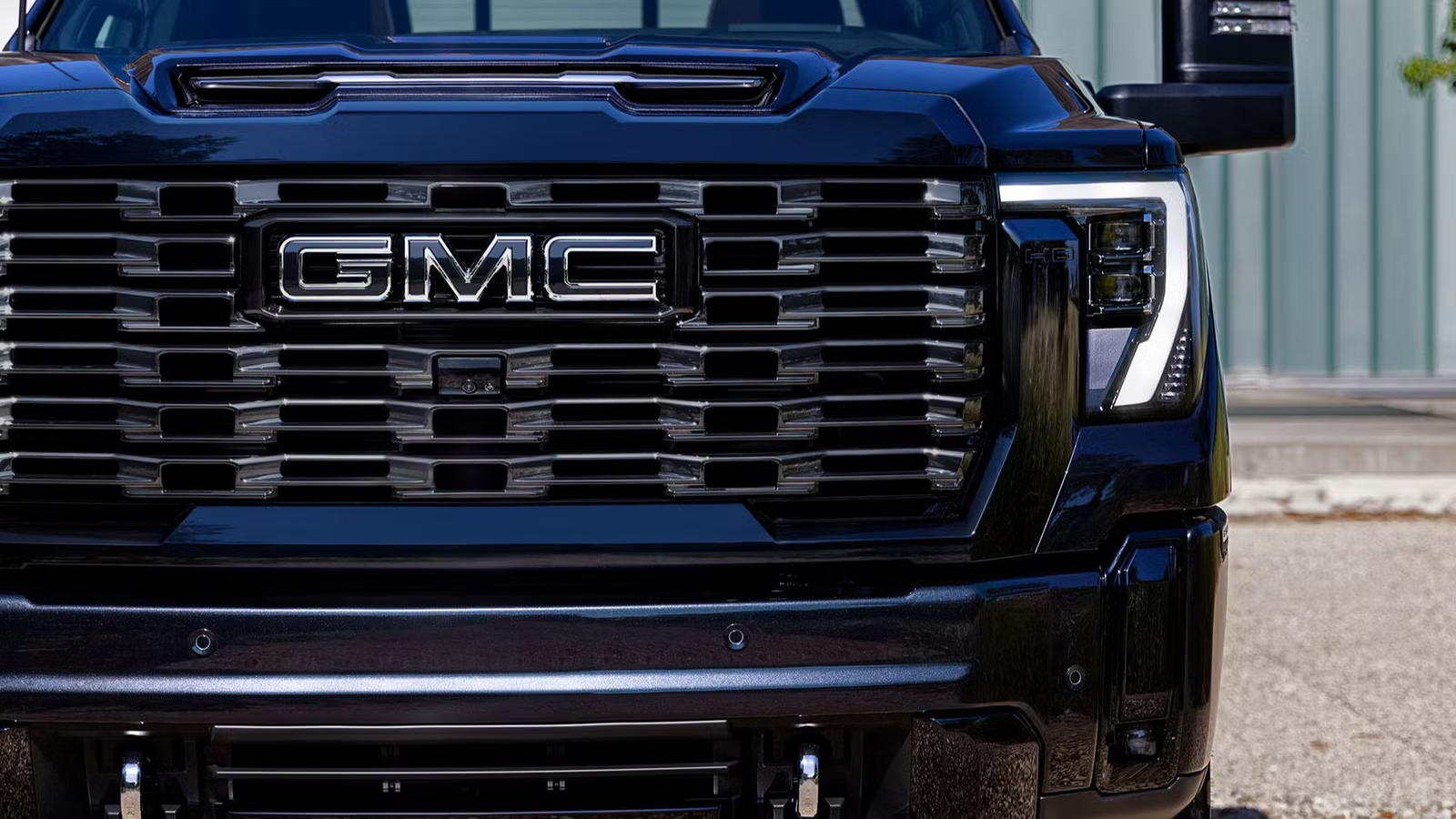
What has changed in America, then? The size of the vehicles Americans buy more than any other. Consider a 2001 Chevrolet Silverado 2500 parked next to its 2026 sibling. With average hood heights of around four feet, it’s considerably taller than it was 20 years ago, and the increase is decidedly not limited to team Chevy. Even the Toyota Tundra has a tall, intimidating face these days.
Unfortunately, that intimidating face means wayward pedestrians have nowhere to go. On a smaller vehicle, an impact could send them onto the hood, which wouldn’t be a good day, but the hood still absorbs some of the impact. With four feet of truck coming in, the Times demonstrates a likely scenario: the person is hit point-blank, tossed to the ground, and depending on the speed, ran over.
Unforgiving For Pedestrians, Blinding For Drivers
A shot of the 2022-2025 Toyota Tundra i-Force Max SteeringToyota
The other issue is visibility. Simply put, big, modern vehicles have far more blind spots than they used to. Anyone who’s driven a full-size truck or SUV from the last 10 years will, at some point, have craned their head trying to see something around the big A-pillars. Those pillars need to support three times the weight of the vehicle should a rollover occur, so they’ve grown by necessity along with the vehicles.
Related
Here’s Why More People Are Getting Run Over By Cars Than 10 Years Ago
A new study shows that we’re still at a ten-year high for pedestrian fatalities, despite improvements in ADAS technology. What gives!?
To make that live for you, the Times crunched more data. The Silverado’s blind spots have more than doubled in size in the last 25 or so years. The Ford F-150 is up 25%, not bad all things considered. But even smaller trucks are problematic – the midsize Tacoma’s blind spots are up 60% from the older days. If you can’t see something, obviously you can’t avoid it.
Technology To The Rescue… Maybe
Subaru’s Eyesight Driver Assist Technology incorporates one of the better Automatic High Beam systems in the game. But still, sometimes there is just that second or two delay, which would not have been there if the driver had worked the beams.Subaru
But what about modern safety systems? They can certainly make a difference, but the more advanced systems like automatic emergency braking have been slow to reach trucks. And the tech isn’t always foolproof, especially at night.
The study includes a comment from a Ford spokesperson who suggested road design, not vehicle size, could be a factor in pedestrian safety. And NHTSA officials are optimistic that more widespread use of driver assist systems will help reduce pedestrian fatalities. But that’s of little consequence to the 3,000 people estimated to have died in recent years from being struck by a vehicle that, some would argue, is needlessly large.
Related
The Big Vehicles That Desperately Need Safety Ratings Are Finally Getting Some
The IIHS is about to get its hands on heavy-duty trucks and vans.
CarBuzz Insight – Why This Matters:
Obviously, some things just can’t be avoided. That’s why accidents are called accidents, and ultimately, the safety of a pedestrian is largely the responsibility of the pedestrian. But that’s a very cold way to look at this issue. All it takes is one excited child slipping out of their parents’ grasp, running through a parking lot, to understand that, with more large vehicles on the road than ever, automakers could do more to literally look out for the little guy.
Some people need big trucks. Many of those people are responsible with them. But even the most responsible still have accidents. This study provides some compelling data that, just maybe, automakers should be more diligent with safety considerations for their mainstream vehicles that they sell in the millions – and earn them billions in revenue – each year.
Source: The New York Times
