

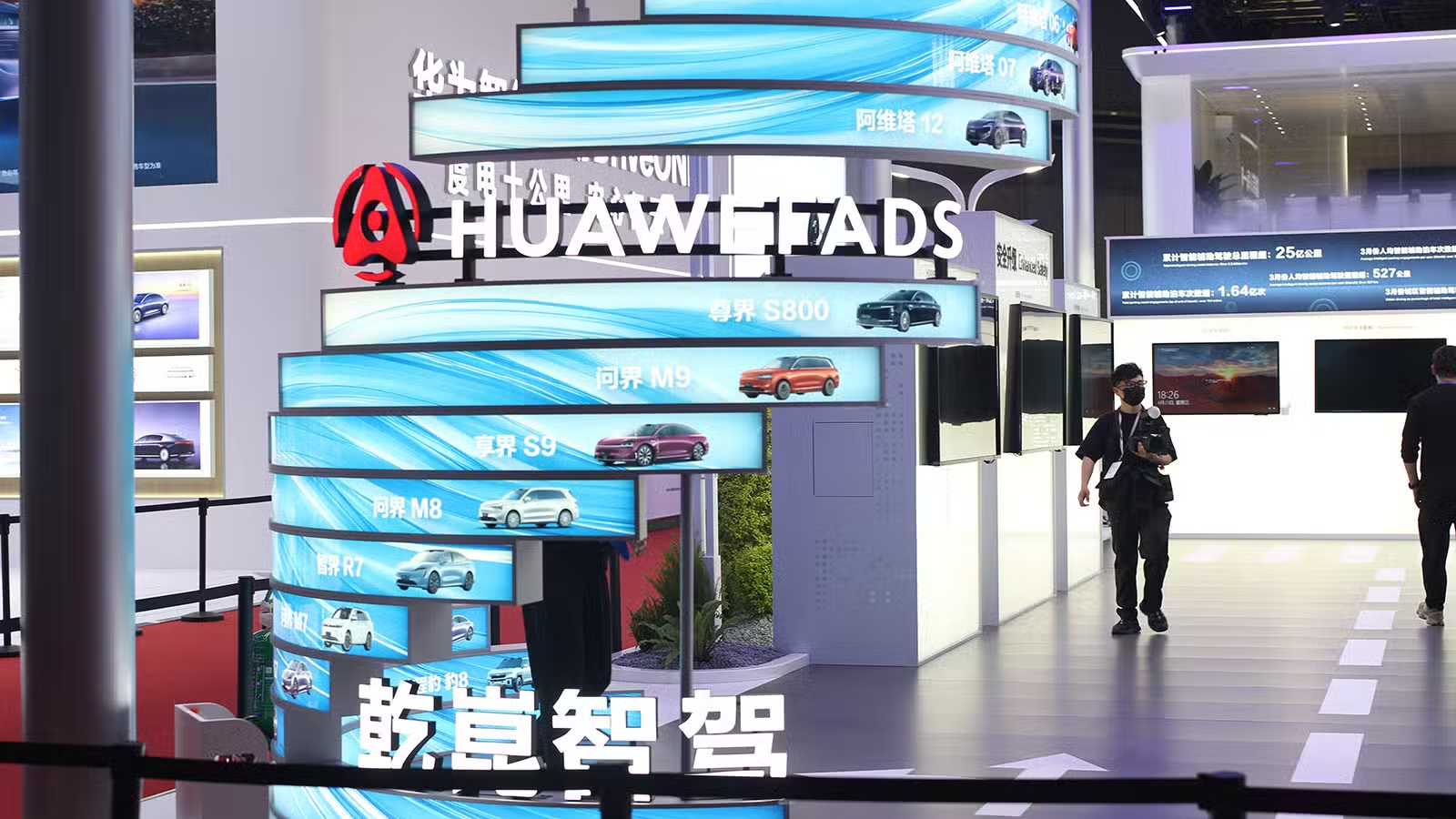
The Huawei ADS system showcased at the Shanghai Auto Show in April 2025. Credit: CnEVPost
- The actual purchase cost of Huawei’s Qiankun ADS advanced feature package will rise by 3,000 yuan ($440).
- Surging memory chip prices are pushing more than 10 automakers to raise prices related to driver-assistance systems.
The actual cost of buying Huawei’s advanced smart driving feature package in China will increase, making it the latest technology and auto supplier to raise prices amid rising global chip costs.
Starting July 1, discounts on Huawei’s Qiankun ADS advanced feature package will narrow, and after factoring in automakers’ purchase subsidies, the one-time buyout price is expected to rise by 3,000 yuan ($440), local media outlet Lanjinger reported Thursday.
The official standard price for the Qiankun ADS Max and Ultra feature packages has consistently been 36,000 yuan, while Huawei has long used limited-time promotions to lower the price to 32,000 yuan.
Partner automakers, such as Aito and Avatr, offer an additional subsidy of about 20,000 yuan. Combining the two, the actual cost to users for buying the feature is 12,000 yuan, the report said, citing dealers.
Dealers revealed that, starting in July, the discounted price for the feature package will return to 35,000 yuan. After adding automakers’ subsidies, the price users actually pay will climb to 15,000 yuan.
However, users who have placed deposits but not yet taken delivery will not be affected by the adjustment. These customers can still buy the feature package at the post-subsidy price of 12,000 yuan.
The core reason for the price increase points to a supply-demand imbalance in the global chip industry chain.
The rapid expansion of the AI industry has driven up demand for core components, leading to rapid price increases for driver-assistance-related components since the second half of 2025, the report noted.
A sharp increase in capital expenditure by global AI giants is the main driver. Surging demand for servers from companies such as Google and Microsoft has fueled a substantial rise in orders for high-bandwidth memory.
This has severely squeezed the supply of chips for consumer electronics and automobiles. TrendForce data show that the contract price for conventional DRAM chips globally rose 90% to 95% sequentially in the first quarter of 2026. Server DRAM rose about 90%, while NAND Flash contract prices also rose 55% to 60%.
So far, more than 10 automakers have chosen to raise prices or tighten discounts, all involving models or optional packages equipped with advanced driver-assistance systems, according to Lanjinger.
BYD is among them. Affected by rising global automotive-grade memory hardware costs, the prices of advanced driver-assistance option packages for some models across several of its brands were raised at the end of April.
The Xuanji A3 chip supports L3 and L4 autonomous driving, marking BYD’s full-chain control over assisted driving.
($1 = 6.7582 yuan)
