

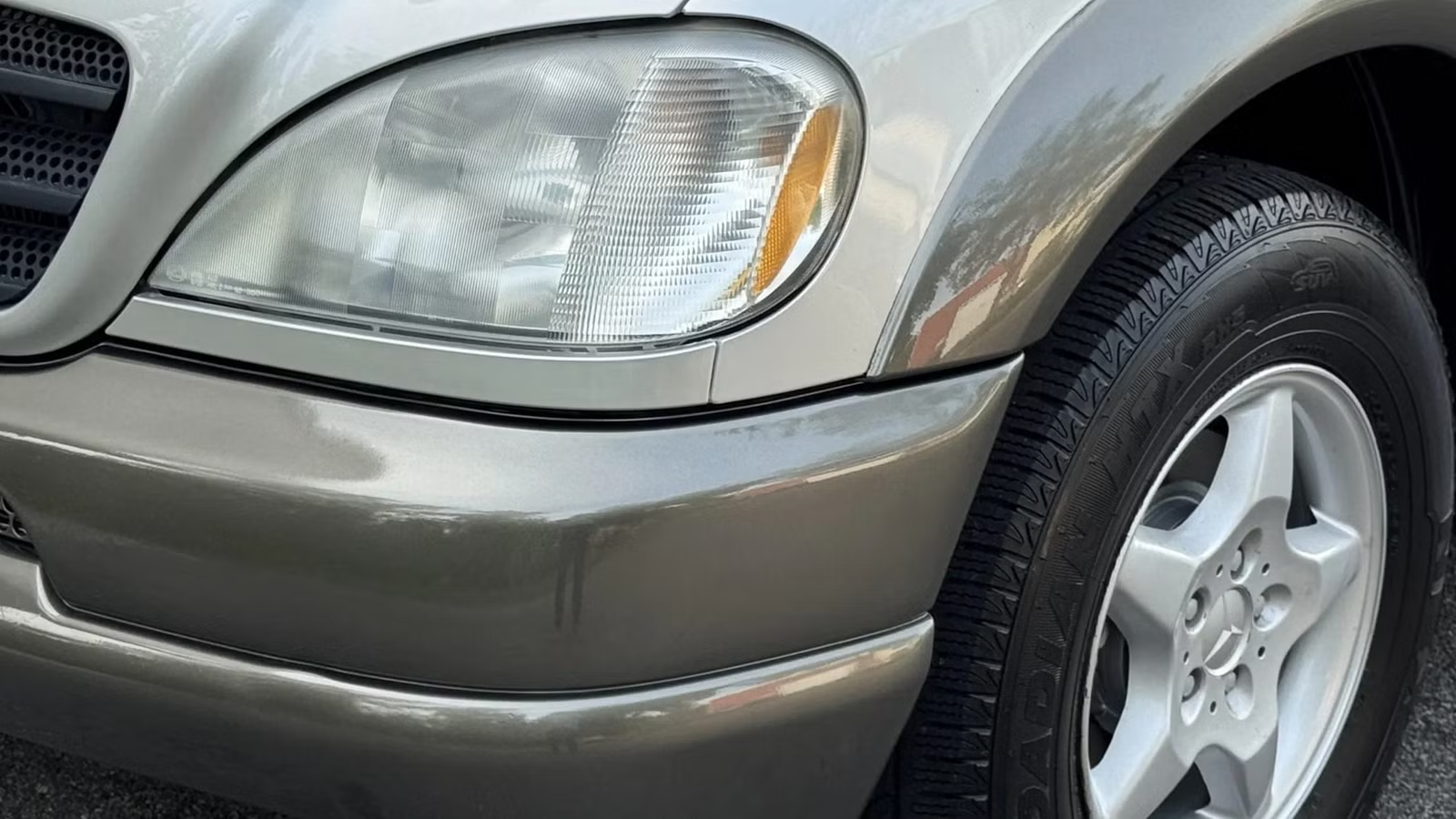
It took a fair while for SUVs to start prioritizing plushness over ruggedness. That might be hard to imagine now, because the SUV has become a global phenomenon over the last few decades, going from a relatively niche way of standing out on the road to a fashion icon that has thrown traditionally popular sedan and wagon machinery firmly into the shade.
These days they come in all shapes and sizes, and can cut it in a performance arena, as a family bus, and as a luxury cruiser that can take the fight to a Rolls-Royce if you’ve got enough money. Even the legendary British brand produces one, so you could simply buy the real deal.
Before Mercedes Changed Everything, Every SUV Prioritized Dirt Over Comfort
1990 Jeep Grand Wagoneer finished in maroon with tan interiorBring A Trailer
The SUV first arrived in its modern form way back in 1962, when Jeep brought the Wagoneer to market. It was built to be a more versatile family mover than its station wagon predecessor, which was effective at getting across rough ground but a little too utilitarian to function as a full-time on-roader. Land Rover built upon this recipe with the Range Rover in the 1970s, though it still used a body-on-frame chassis. While this platform provided impressive long-term durability, it meant the car was less refined than the unibody design philosophy that passenger cars used.
Jeep experimented with such a design on its 1985 Cherokee XJ, though its cabin and mechanical setup were still geared primarily toward the rough-and-ready side. As the SUV sector started to gather steam throughout the 1990s, more models like the Oldsmobile Bravada started to reach the market, but these again lacked the outright luxury touches that set high-end sedans like the Mercedes-Benz S-Class apart from normal cars.
Mercedes saw a gap nobody else had noticed – and the vehicle it built to fill it would embarrass its predecessors in ways nobody expected.
The ML-Class Was The First SUV Built To Coddle Passengers Without Sacrificing The Dirt Credentials
Red 2000 Mercedes ML 55 AMG side on roadBring a Trailer
Merc’s new challenger was called the ML-Class, and it was made available in the US for the 1998 model year. It was its second crack at building an SUV, since it had produced the G-Class since the 1970s, but that was a more rugged offering like many other pre-21st-century SUVs.
Feeling that it could make an impact in the largely untapped luxury SUV market – which was dominated by the Range Rover – Merc designed the ML-Class from the ground up to be a softer and more compliant vehicle. It would continue to use a body-on-frame chassis to ensure long-term durability, but it would be designed to be a little more forgiving than usual. The cabin would be designed to be as refined as possible, and be decorated in high-end leather and wood to afford the kind of luxury experience that Mercedes machines were renowned for.
To help offset the inherent lack of refinement brought by a ladder-frame chassis, the new model was also fitted with a more advanced independent front and rear suspension setup, which allowed for a smoother ride when cruising. The ML was also designed with a body angular enough to look like the off-roader that Mercedes worked diligently to ensure it still was, yet refined enough to make an impression when pulling up to a formal dinner party.
And we’re not joking about the off-roading thing, either. Despite being much classier inside and out compared to a traditional SUV, the ML-Class was able to succeed over trickier terrain thanks to a permanent four-wheel drive system, which worked in conjunction with a two-speed transfer box that allowed for effective control over a range of inclines.
The underside was also beefed up to deal with any hard hits from hidden dangers, an end further assisted by a solid 8.4 inches of ground clearance. That was an identical figure to a Range Rover of the same vintage.But matching the Range Rover on ground clearance was the easy part – where Mercedes truly separated itself was the moment you opened the door.
The ML-Class Felt Like A True Mercedes Once You Stepped Inside
2000 – 2001 Mercedes-AMG ML 55 interiorMercedes
What really set the ML-Class apart from most other SUVs on the road was its cabin. Even the entry-level cars came with posh wood trim decorating the dash, while features like power windows and air conditioning were bundled in as standard. Spend a little more cash, and you could add extras like powered leather seats, a wood-trimmed steering wheel, and an electric sunroof. Of course, rivals like the 1997 Range Rover also presented upmarket cabins at the time, but there is more to luxury than simply an abundance of premium materials throughout the cabin.
A good luxury car should also make you feel safe, and this was where the ML-Class really secured its title as the first true luxury SUV. It came as standard with Electronic Stability Control to help prevent rollovers in emergency changes of direction, making it the first SUV ever to feature the technology. Beyond that, the ML was also shipped with not only front, but side impact airbags to help take care of its occupants in the event of the worst happening.
Its 4Matic 4WD setup was also more advanced than the more rudimentary mechanical setups used by many other SUVs, with the ML’s electronic traction system working constantly to redirect power to the wheels with the most grip to help enhance traction. This did away with heavier differential locks, which helped save weight and make the vehicle drive more like a conventional car.
The ML-Class Kicked Off A Trend
2004 Volvo XC90 V8 driving rear 3/4Volvo
Thanks to being well-priced given the level of luxury it offered, and its starring role in the second Jurassic Park film, the ML-Class proved to be a commercial success for Merc. The brand sold 1.1 million examples across its 1997–2005 production run, and this strong performance did not go unnoticed. Land Rover went a step further with its 2001 L322 Range Rover, building upon the air suspension and upmarket cabin it had introduced with the previous model by adopting a more refined unibody design.
This had become a trend in the SUV market, with BMW bringing its own unibody SUV, the X5, to market a couple of years earlier in 1999. Mercedes ended up joining the party in 2006, as the second-generation ML traded the body-on-frame chassis for a unibody philosophy instead. Thanks to other such vehicles that arrived in the early 2000s – like the Porsche Cayenne and Volvo XC90 – the luxury SUV market truly boomed in the half-decade or so following the release of the first-gen ML-Class.
As of 2026, the world of luxury SUVs remains a very lucrative portion of the market, and it doesn’t look to be going anywhere anytime soon. Prioritizing luxury over off-road ruggedness was something of a risk for Mercedes as it developed the ML, but as history shows, that gamble paid off.
Sources: Mercedes-Benz.
