

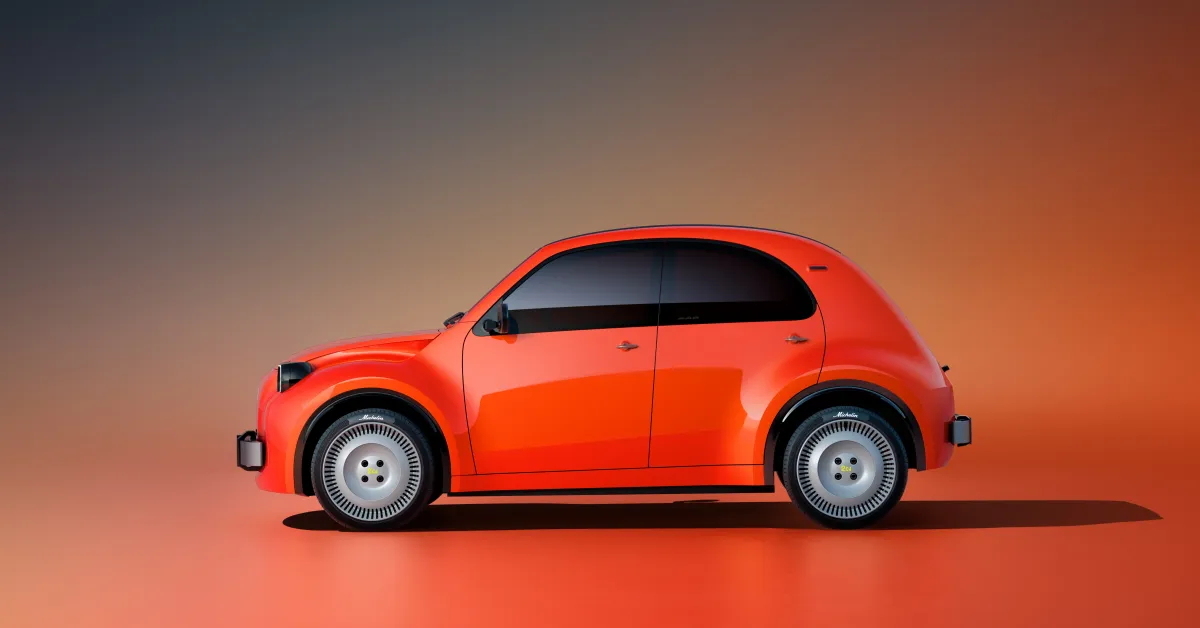
Citroën has unveiled a concept electric version of its classic 2CV, aiming to bring the vehicle to market in 2028 for just €15,000.
For the entire second half of the 20th century, the Citroën 2CV (“Deux Chevaux,” French for “two horses”) held a special place in Europe’s automotive landscape.
The affordable, comfortable, yet underpowered vehicle had enormous popularity, selling millions of units over its production run.
Its cute, quirky look was unique and eye-catching, with its tall, rounded, cartoon-like passenger cabin, jaunty circular headlights, and pop-up windows.
It was a small vehicle, yet still designed to be comfortable for a family of four, with a unique and soft suspension design intended to allow drivers to cross a field in rural France with a basket of eggs without breaking them.
One of the old gas-powered Citroën 2CVs. Photo: Alexander Migl
The car ended production in 1990, but well-loved versions of it can still be seen driving in many parts of the world (I’ve even seen a DIY electric conversion here in California).
And now, it’s back with an official electric concept, and one which Citroën says it intends to have for sale and on the road in 2028.
The model was shown in advance of the Paris Motor Show, starting this week.
it retains the general shape of the original Deux Chevaux, though with a less jaunty cockpit, a taller and boxier front hood, much lower wheel arches, roll-down windows, and no rear fender skirts.
So, it’s basically the new, electric-y, modern-y, tech-y concept version of the 2CV. There’s definitely a lot that has changed, and it’s not nearly as unique as the old car was. But the call of nostalgia is still there in spades.
Notably, it does retain several key features: the giant fabric roof which can roll all the way open, the 2CV’s tiny size (the new 2CV concept is in fact four inches shorter than the old 2CV), and an affordable price: Citroën is targeting a starting price of “around €15,000” (just under $17k).
Being small helps keep the price down, and the new 2CV is not just short, it’s also light. Citroën is aiming to keep weight around 1,000kg (2,205lbs), which isn’t just light for an EV, but light for any car (lighter than the current Mazda MX-5, for example).
We don’t know anything about specs yet, but given the badge on the back of the car, we can expect it to be light on power.
The original Deux Chevaux did have more than two horses of power, but not by much – it ranged from 9 to 29hp over the course of its 42-year production run (the name came from France’s vehicle tax system, which had a strange formula for calculating “tax horsepower”).
So expect the EV version to be more powerful than any 2CV ever, but still no speed demon. It will sit between the 8hp Ami and 113hp C3 in terms of vehicle sizes, so that seems like a good upper and lower bound for where we can expect the 2CV to slot in.
While the 2CV concept doesn’t have pop-out windows, it does have a pop-up vent to allow air into the cabin
Battery size is another open question. The original 2CV was meant as a rural vehicle, allowing four people to drive across the French countryside, including room for their luggage. That would suggest a battery big enough to get you from charger to charger for trips.
But today, a tiny car like this is thought of more as a city car. And those typically need smaller ranges, since they’re not driven on long trips, and chargers aren’t as spread out.
We don’t know which direction Citroën has gone here, but the low wheel arches suggest a vehicle designed for pavement rather than off-roading. Maybe that’s a hint at a more city-focused design, or simply a commentary on how much improvement French roads have seen since 1948.
Or maybe we should look at the competition – similar small urban EVs tend to have ~30kWh batteries and ~250km (~150mi) of range, so perhaps expect something around that.
The interior is cute but spartan, though the vibrant colors of the concept will surely not be brought entirely over to the production version (nor the hanging lights).
But interior photos give us an idea of the direction Citroën is going – a sparse, open interior, seeming to make the most of its small space to allow room for people, instead of additional tech flourishes.
The only tech visible is a small tablet-like screen attached to the steering column, and what looks like a wide driver display across the dash. There’s a removable radio/speaker module on the passenger side.
The basket in the middle may or may not make it to production, potentially in a more sedate form as a covered interior storage space. But in the concept, its design is meant to harken back to the original 2CV’s “basket of eggs” design brief.
That’s not the only reference to eggs – the concept’s door pockets even have cutouts for a half-dozen eggs, keeping them safe in a way that the new 2CV’s much shorter suspension travel is perhaps less suited for than the original’s was.
Those wheel arches are much lower than the original… or maybe the concept’s 19″ wheels are just too large. Could we see a smaller wheel on the production car?
We don’t know what will happen for the production version yet, but given that Citroën wants to get this car out in 2028, we can’t imagine it will change all that much. As usual, expect some of the more out-there design touches to be moderated before production.
Which might not be a bad thing after all. The fewer custom parts Citroën needs for this car, the more it can keep cost down, which is the true essence of what the Deux Chevaux always was: it was the French answer to the Volkswagen Beetle, the everyman’s workhorse vehicle that just did what it needed to do to get you around at a reasonable price.
If Citroën can do that, while still maintaining any amount of the cuteness and quirkiness of the original, it could have an instant classic on its hand.
What do you think of the new Deux Chevaux? Let us know in the comments.
Charge your electric vehicle at home using rooftop solar panels. Find a reliable and competitively priced solar installer near you on EnergySage, for free. They have pre-vetted installers competing for your business, ensuring high-quality solutions and 20-30% savings. It’s free, with no sales calls until you choose an installer. Compare personalized solar quotes online and receive guidance from unbiased Energy Advisers. Get started here. – ad*
FTC: We use income earning auto affiliate links. More.
