

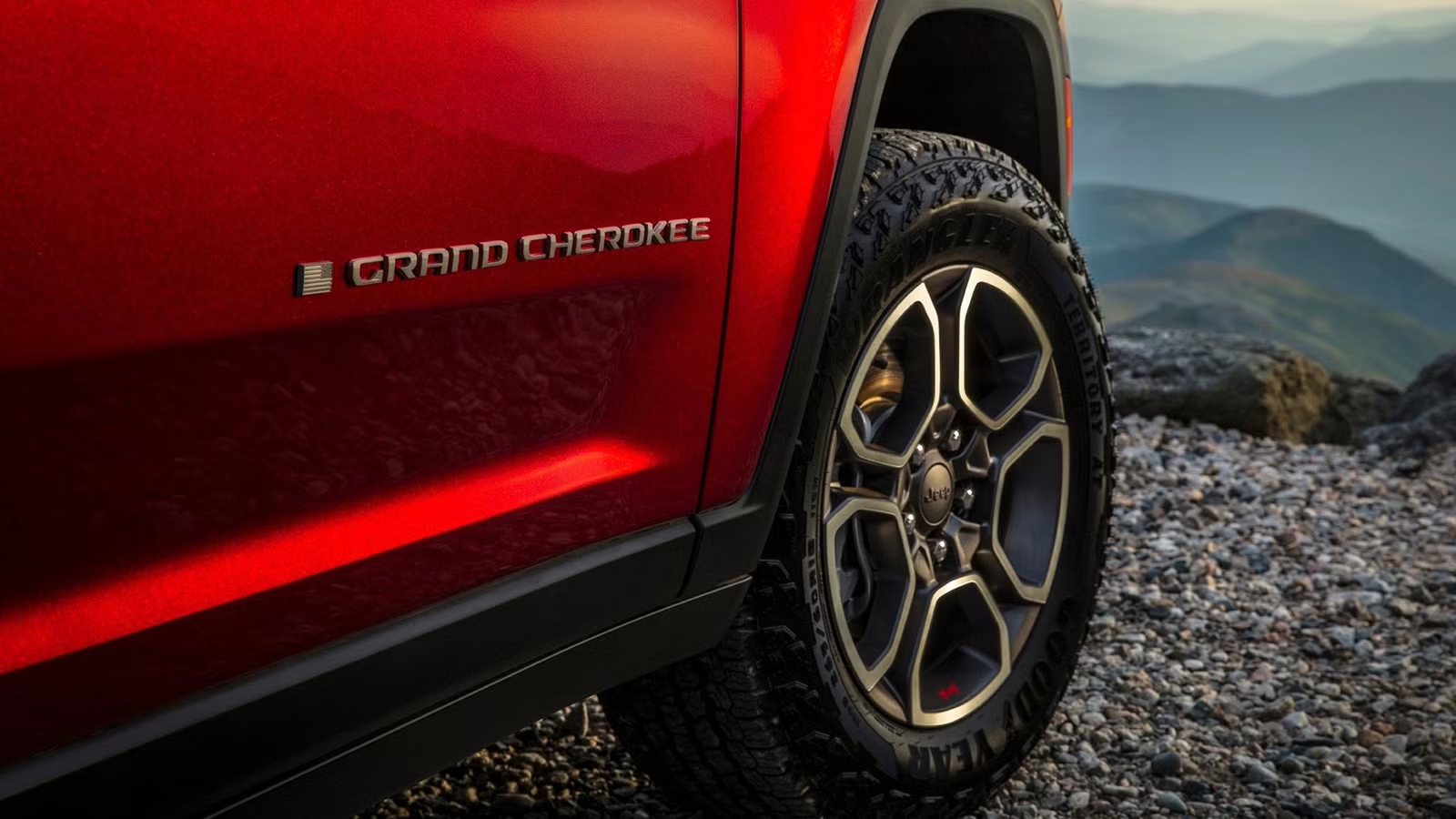
Jeep is recalling 328,381 Grand Cherokees spanning the 2021-2023 model years, with the midsize SUVs at risk of losing their rear coil springs while driving. If that sounds familiar, it’s because this year, Jeep recalled just over 80,000 of the same SUV for the same fault, making this a recurring issue. And it goes without saying that a coil spring failing while driving is a dangerous thing. The question is why weren’t these recalled to begin with, and was the first fix simply not enough?
Copy, Paste, Enlarge By 400%
2022 Jeep Grand Cherokee Summit Reserve 4xe driving front 3/4Stellantis
Looking at the two recall notices, they read as near-carbon copies of one another. In both cases, Jeep cites that a rear coil spring may have been incorrectly installed, resulting in it becoming potentially dislodged. The investigation timelines are identical, too, with initial investigations by Stellantis starting on June 1, 2023, after first detecting the possible fault. That led to the initial recall (26V051). But subsequent complaints and investigations forced Jeep to expand its search, leading to a four-fold increase in the number of cars being recalled, and adding the Grand Cherokee 4xe to the roster of recalled models.
But the one number that has shrunk is the estimated percentage of cars with the fault. The original recall estimated 0.5% of recalled vehicles were affected, with the new recall estimating only 0.1% of vehicles being affected. That’s a decrease from approximately 403 vehicles to 328.
Affected vehicles include 97,477 2022-2023 Jeep Grand Cherokees, 215,433 long-wheelbase Grand Cherokee Ls from 2021-2023 model years, and 15,471 Grand Cherokee 4xe PHEVs from the 2022 and 2023 model years. Notably, models after a certain production date are exempt, with many of them receiving air suspension instead. If you’re shopping for one, we’d look for a late 2023 or early 2024 model.
Who’s To Blame For The Issue?
In the recall documentation, Jeep names supplier Airboss as the manufacturer of the faulty component, with the specific component in question being the lower spring isolator on the rear suspension. The part itself is not faulty, however, and Jeep specifies that the issue has arisen from an assembly or repair in which the coil spring assembly was not positioned properly. The fix is simple – Jeep will inspect the rear suspension, and if needed, replace both coil spring lower isolators free of charge.
2022 Jeep Grand CherokeeJeep
Dealers will be notified this week, with owners expected to be notified from September 29 to October 7. However, owners can preempt the notification by checking their VINs from September 9 on the NHTSA recall hub.
What Happens If You Don’t Get The Recall Fix?
With such a small percentage of vehicles potentially affected, there’s a high likelihood your vehicle won’t be impacted. However, that doesn’t mean you shouldn’t check anyway. Your suspension is a vital part of your car, supporting its weight and controlling it. If a coil spring moves into the wrong place, it can place strain on other components, and a sudden suspension failure can cause a loss of control resulting in a serious accident.
CarBuzz Insights — Why It Matters
It’s important to remember that recalls are, in most cases, preemptive procedures to repair faults before injuries occur. In this case, the expanded recall is a precaution, and Jeep reports no accidents or injuries as a result of the fault. But the scale is still significant, and any recall for hundreds of thousands of vehicles is a big one, even if it falls well short of the million-plus Wranglers and Gladiators recalled earlier in the year.
Stellantis, Jeep’s parent company,is currently in second place for the overall number of recalls issued in 2026, with 32 recalls to Ford’s 67. General Motors is third on 22 recalls. Unlike Ford, for which recalls apply to one of two brands (Ford and Lincoln), Stellantis has half a dozen under its US umbrella. That’s an average of just over five recalls per brand under its ownership. Still, large recalls never boost confidence in a brand, and a second recall for something already identified over six months ago suggests the initial recall should have been investigated more thoroughly.
Base Trim Engine
3.6L V6 Gas
Base Trim Transmission
8-Speed Automatic
Base Trim Drivetrain
Rear-Wheel Drive
Base Trim Horsepower
293 hp
Base Trim Torque
257 lb-ft @ 4000 rpm
Fuel Economy
19/26 MPG
Infotainment & Features
10 /10
Source: NHTSA
