

Once all-in on electrics, Swedish automaker Volvo has moved with most of the rest of the industry to bend back to combustion power. Its interim plan is to add more plug-in hybrids to its lineup as a stepping stone for buyers between gas and EVs.
But the new models will be long-range PHEVs, hoping to make that step a little easier.
Volvo Thinks Longer-Range Hybrids Could Be Long-Term Solution
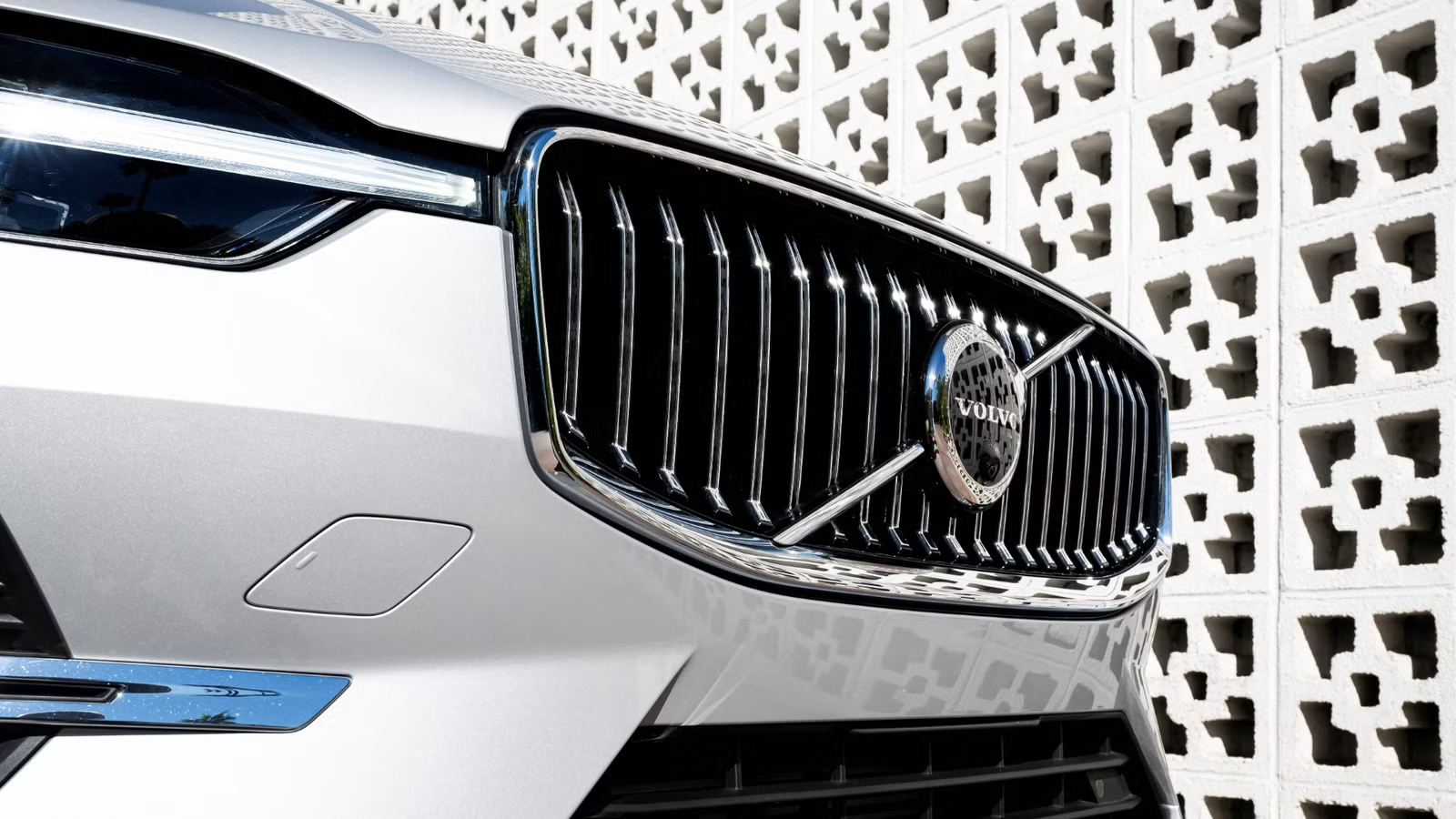
2026 Volvo XC70 PHEV ExteriorVolvo
Volvo UK boss Nicole Melillo Shaw told Autocar that how people use plug-in hybrids matters to EV adoption. “In the past, when plug-in ranges were very low, drivers rarely charged them,” she said. A PHEV without charging can still deliver some fuel savings and tax credits, but it doesn’t justify the expense and resources that went into the vehicle.
To fix that, “Volvo has invested heavily in making sure our hybrids offer a long range,” she said. “So that people can use them as intended. So then it becomes a true stepping stone, and we’ll make sure we have that range available to our customers.”
Last year, Volvo sold 710,042 vehicles around the world. Of those, 151,830 were electric and 171,464 were plug-in hybrids. The company has just launched its first long-range PHEV, the XC70, in China. It will come to Europe soon. Instead of a 50-mile range, it has a claimed 124 miles on the (very generous) CLTC test. That sounds more like an EV range.
That long range, Melillo Shaw said, especially when the vehicle is being charged nightly, can show buyers how much of their driving can be on electricity instead of gasoline. This can convince them that an EV would work, with less risk. Reports suggest that Volvo is planning other long-range PHEV models, including an XC60 with a larger battery.
Has The PHEV Era Already Come And Gone?
2026 Volvo Ex90Volvo
Melillo Shaw told Autocar that the industry needed a “reality check” on zero-emissions vehicle targets. Adoption has become highly political in many countries and has fallen below expectations.
“If consumer adoption isn’t moving at the expected speed, then how can we work together, industry and government, so the outcome isn’t just punitive? We need to step back, assess the reality, and partner to keep moving forward,” she told the website.
Should consumers jump back on board, Volvo is ready for that, too. “If everyone decided to drive an electric car tomorrow, we are set up to support that, so there are no concerns from an innovation standpoint,” said Shaw.
The problem with adoption, at least in Europe, may be resolving itself. Volvo’s 2025 sales report showed EV sales in Europe dropping by 14% year-over-year. In the first half of 2026, the company’s fully-electric sales are up 25% while PHEVs fell 9% and ICE 8%. Across the industry, data from Europe shows EV sales up 35%, capturing a 25% share in Europe in July.
CarBuzz Insight – Why This Matters:
A detail shot of the 2026 Volvo XC60 Plug-in Hybrid’s chargerVolvo
Shuffling between ICE, EV, and PHEV is expensive for automakers. That Volvo is willing to push harder for PHEV shows that it thinks that’s the industry’s direction for the next few years. But with fuel prices sky-high thanks to the US attacking Iran, Volvo could end up swinging back the other way in a hurry.
In any case, sales show PHEVs largely declining around the world. And with studies showing just how inefficient PHEVs are unless they’re charged at home like they’re meant to be used, Volvo could be trying to push a product nobody really wants anymore.
Source: Autocar
