

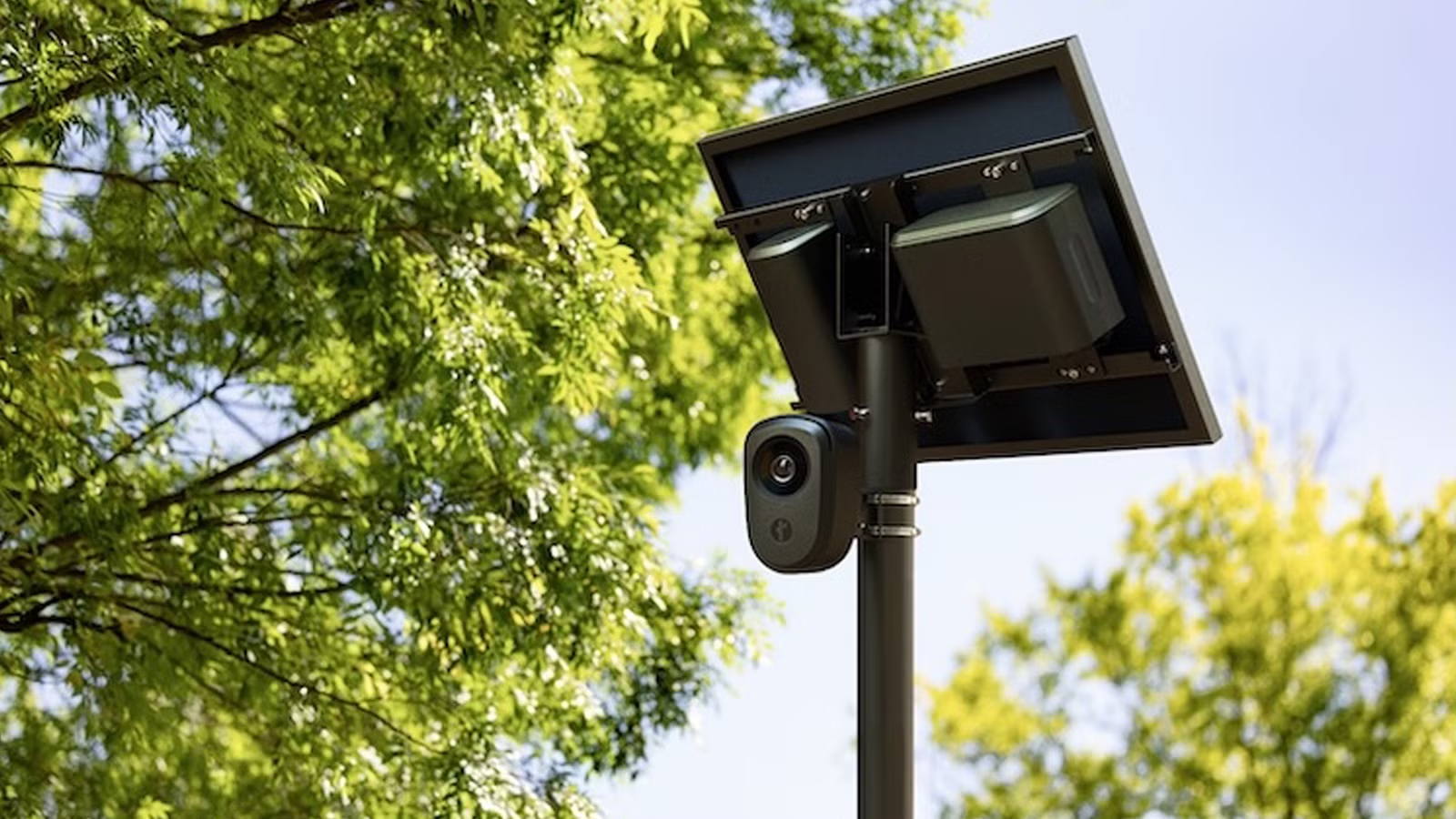
Flock’s AI-powered automatic license plate reader (ALPR) mass surveillance system is getting huge pushback from the public, and now the feds are involved. Across the country, concerned citizens and activists have demanded local legislators get rid of Flock cameras being used in their areas, resulting in over 100 cities canceling their Flock contracts. But it seems the next stage of this battle is shifting from cameras to social media.
A report states government surveillance centers are monitoring viral anti-Flock social media posts and trying to link people who politically oppose mass surveillance to vigilantes who destroy Flock cameras.
A National Security Threat?
Flock NovaFlock
Via reporting from 404 Media and investigative journalist Dan Boguslaw, state fusion centers and the FBI and DHS are circulating memos warning that protesters organizing to stop AI-powered surveillance cameras in their cities are a national security threat. Fusion centers are, essentially, designed to promote information sharing between federal agencies and state, local, and tribal law enforcement.
At the center of all this is Deflock, a crowdsourced map of Flock camera locations that was created to show how widespread ALPR cameras are in the United States. According to documents obtained, a warning from the Colorado Information Analysis Center says that “people have begun utilizing the [DeFlock] app to locate and then destroy or disable the ALPRs. Multiple public accounts are posting videos of individuals vandalizing these cameras, adding momentum to the online discourse and influencing others to do the same.”
The Vandalism Issue
Flock cameraFlock
According to a law enforcement bulletin, “In addition to DeFlock’s call to action, other online groups and individuals are encouraging the destruction of ALPRs and are sharing tactics and techniques through social media by providing detailed instructions on how to damage or disable ALPR cameras, poles, and solar panels.”
Will Freeman, creator of DeFlock, told 404 Media, “DeFlock has never called for disabling cameras or covering license plates, contrary to what recent law enforcement bulletins claim. DeFlock is a grassroots project that started in 2024, focused on maintaining a public map of surveillance infrastructure and encouraging civic engagement, such as contacting local representatives, hosting public awareness events like scavenger hunts, and educational outreach. This has worked for nearly two years, with over 100 contracts canceled through legitimate public engagement.”
A Flock Safety spokesperson told 404 Media that “Overall, we have seen few reports of vandalism against Flock equipment. When it does happen, we work directly with law enforcement to investigate damaged or stolen cameras.”
The Streisand Effect
DeFlock Wekk Of Action bulletin.DeFlock
All of this is coming out and making news due to DeFlock’s impending National Week of Action Against Automated License Plate Readers. According to DeFlock, the week is based around “a variety of public meetings, town halls, and other events intended to raise awareness about the use of ALPRs in their communities, the harms of these cameras, and how we can work together to end their use.”
The irony here is that the federal government is using mass surveillance to focus on people that aren’t happy with how mass surveillance is being foisted on them in the first place, and are pushing back. On top of that, bulletins obtained using public records requests are recommending local law enforcement “increase patrols around ALPR.”
CarBuzz Insight – Why This Matters:
While Flock cameras are labeled as ALPRs, Flock is much more than that and capable of tracking cars across cities and even states. It builds “fingerprints” of vehicles and stores data for law enforcement to access or use to alert on the location of vehicles. Not only is it a staggering amount of surveillance data that they can pull and store, but there have already been instances of it being used by people with access to databases for stalking. There have also been incidents of the Flock system flagging innocent people as criminals and aggressive traffic stops being initiated.
The larger concern shown by citizens, though, is that a detailed mass surveillance and tracking system is a substantial erosion of privacy with serious civil rights implications. Currently, Flock scans over 20 billion cars per month, and the pushback from citizens is turning into big rejections by cities.
Sources: 404 Media / Dan Boguslaw (Substack)
