

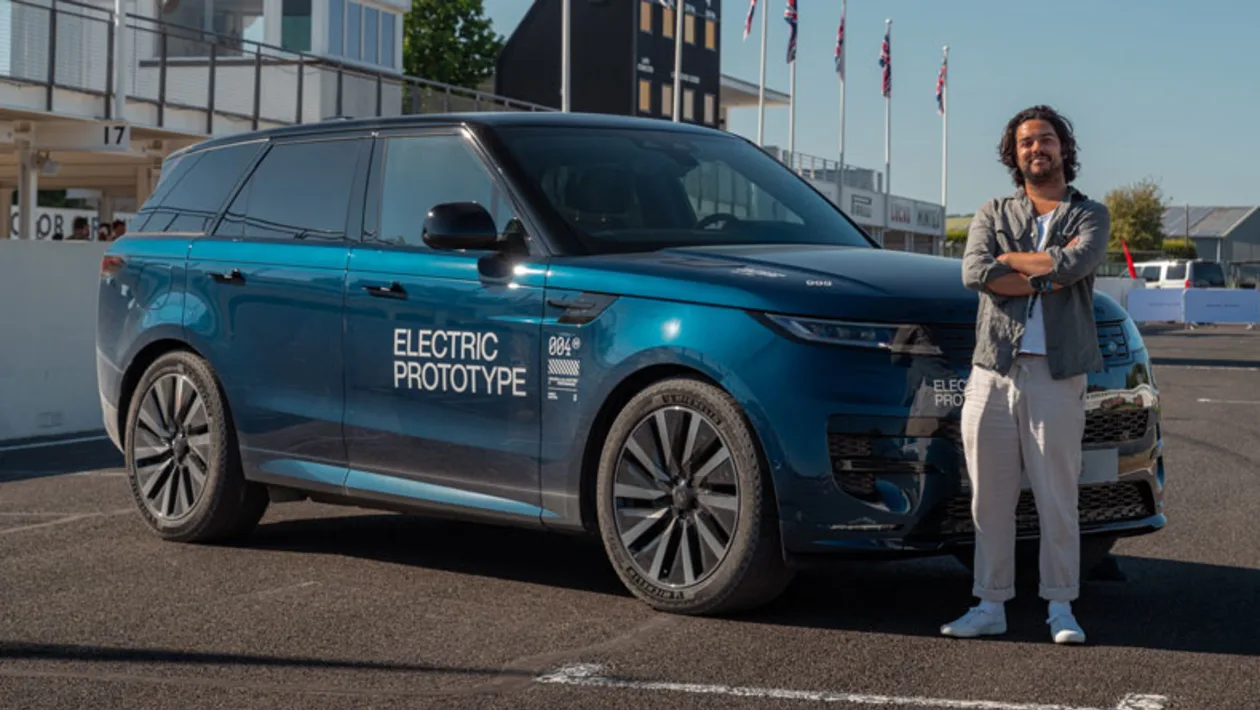
We then reach our first off-road test, a quick fiddle with the existing drive modes puts us into the rock-crawl setting. Here, rather than a low-range transfer case and locking differential, the RRS is capable of using its software to change the car’s throttle mapping, in effect mimicking the action of the traditional hardware, gently using its prodigious torque to climb what feels like a 45-degree slope while barely breaking a sweat. Coming back down the hill, regen is capable of absorbing a majority of the momentum, but we still need to hold the brakes so as not to repel too quickly.
It’s an impressive capability, even more so when you realise there’s no clunky, efficiency-sapping hardware that needs to snap into place in order to achieve it. It feels like electric motors, with their instant torque and fine control, were made for the job.
Further down our testing route we switch over to a more road-focused mode and experience the car’s on-road dynamics. It’s obvious this is a heavy car, but it feels even more composed and controlled than the plug-in hybrid version. Beyond the fact it has a lower centre of gravity, it’s also hinted that it doesn’t weigh much, if anything, more than the existing PHEV.
Advertisement – Article continues below
