

If you’ve spent any time in a city with shared micromobility, you’ve probably seen fleets of rental e-bikes and e-scooters waiting on street corners. But one company is betting that the next evolution of shared transportation isn’t just another bike or scooter – it’s an electric trike.
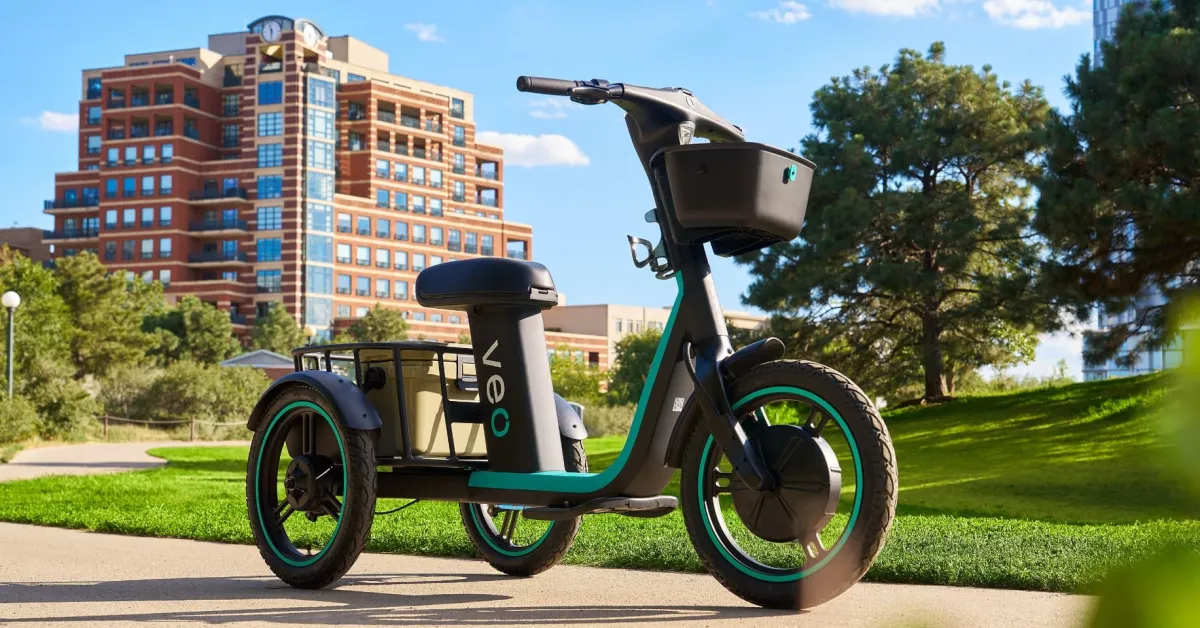
Veo has unveiled what it says is North America’s first shared electric trike, known as the Rover, with an initial launch in downtown Denver. The new three-wheeled electric vehicle joins the company’s growing fleet of shared mobility options, offering a more stable and accessible ride for users who may not feel comfortable balancing on a conventional bicycle or scooter.
The Rover wasn’t simply designed in a vacuum. According to Veo, development began in early 2024 and involved collaboration with hundreds of riders and more than 20 organizations representing disability advocates, older adults, and other community groups. Those partners included the Disability Mobility Initiative, Parkinson’s Foundation, New Disabled South, and Capitol Hill Village.
The result is a seated electric trike built around stability and ease of use. The Rover features three wheels for improved balance, throttle-based electric propulsion to reduce physical effort, and both front and rear cargo baskets capable of carrying up to 100 lb (45 kg) of groceries, luggage, or mobility aids. The trike is limited to a top speed of 10 mph (16 km/h), emphasizing neighborhood transportation over higher-speed commuting.
Veo says feedback from its annual rider survey also played a significant role in the design process. The company noted that nearly one-quarter of respondents identified as having a disability, reinforcing the need for more inclusive shared transportation options.
Denver was selected as the launch city, where the first fleet of 50 Rover trikes is now operating in the downtown area. The company says it will closely monitor rider feedback before deciding whether to expand the program across the city.
The Rover joins an already diverse lineup of Veo shared vehicles in Denver, including seated scooters, cargo e-bikes, two-person e-bikes, and standing e-scooters. Altogether, Veo operates approximately 9,000 shared vehicles in the city, making it one of the largest micromobility deployments in North America.
Veo CEO Candice Xie described the Rover as the company’s “most community-informed vehicle to date,” saying the goal is to give more people the confidence to choose micromobility for everyday transportation.im
Electrek’s Take
This is one of those ideas that makes you wonder why it took so long.
For many people, balancing on two wheels is the biggest barrier to trying shared micromobility. Whether it’s an older rider, someone with a balance impairment, or simply a person who has never felt comfortable on a bicycle, the leap from “I don’t ride bikes” to “I’ll hop on a shared e-bike” can be a big one.
A low-speed electric trike removes much of that intimidation factor. It also adds real utility thanks to the large cargo capacity, making grocery runs or errands much more practical than trying to hang bags from a scooter handlebar.
Of course, trikes take up more room than bicycles or scooters, so they’ll need thoughtful parking and fleet management to avoid becoming obstacles on already crowded sidewalks. But if Veo can make the operational side work, this sounds like a genuinely meaningful expansion of who shared micromobility can serve.
For an industry that’s often focused on making vehicles faster or flashier, making them more accessible may ultimately prove to be an important innovation.
FTC: We use income earning auto affiliate links. More.
