

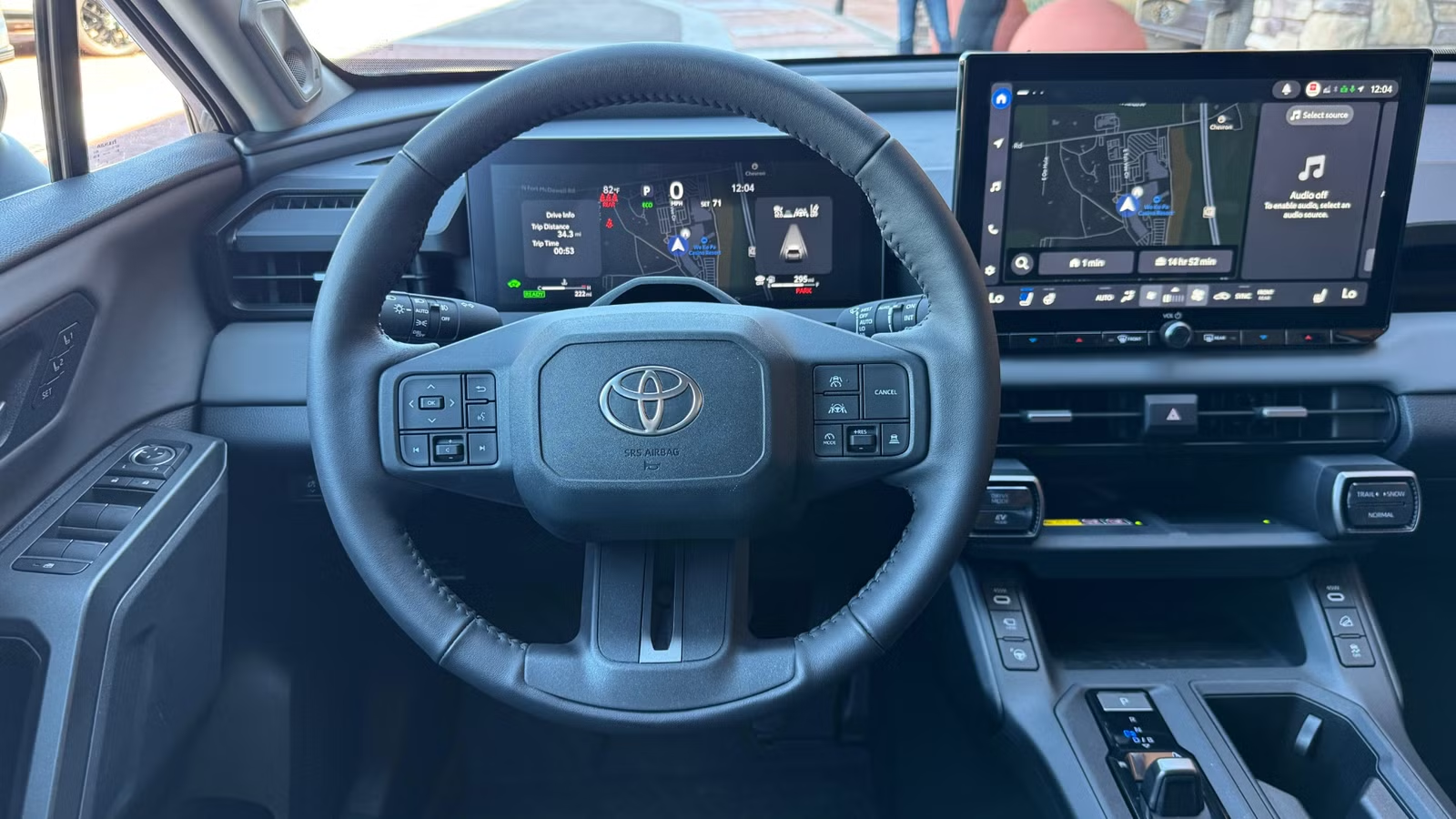
One of the automotive world’s hot button issues is literally that: all about buttons. Technically, it’s also about knobs and touchscreens. Since the days when Tesla first put tablet-size screens in the Model S for many of its controls, car companies have been trying to do the same. Years after the novelty is wearing off, the world is re-evaluating them, and physical controls are gaining a bit of traction. Toyota wants to know how much.
2026 Toyota RAV4 front 3/4 angle in silver while parkedJared Rosenholtz/CarBuzz/Valnet
Toyota Engineers Tried To Find Balance With The RAV4, And Are Watching The Response
Australian automotive news outlet Drive, spoke with the chief engineer for the redesigned RAV4, Yoshinori Futonagane, about the interior design process, especially regarding controls. Futonagane revealed that the team had considered going to even more touch controls for the new generation, but evidently received some pushback, including from the Chinese market. He said of the number of physical controls in the final product, “What you’re looking at is what we thought was the minimum.” He further added that the team is watching customer reactions extremely closely, and that if the demand is there to go back to more physical controls like on the previous generation, that they will do so.
2026 Toyota RAV4 Limited Interior Front CabinToyota
It’s understandable that Toyota’s engineers and designers would be highly concerned about customer reactions to the RAV4. In the last few years, the RAV4 has become the company’s best-selling vehicle in the US, overtaking other perennial favorites such as the Camry and Corolla. In fact, the RAV4 was the best-selling vehicle in the US overall, short of the combined sales of the Ford F-Series truck line. Although sales of the new model have been sluggish this year due to production constraints that are only just now being sorted.
In our experience with the new RAV4, we didn’t have any real complaints about the control layout. The infotainment system has been dramatically improved over previous models, so touchscreen use is much more pleasant. It does retain some key physical controls, too, such as a volume knob, temperature adjustment buttons, and drive mode and camera buttons. We’re always fans of physical controls, so we would rarely be opposed to more, but we think the Toyota layout is solid and better than some competitors.
Toyota Would Only Be Able To Respond To Customers So Fast
If Toyota does end up with dissatisfied customers that want more physical controls, we wouldn’t expect a change for a little while. The new model literally launched within the past year. Major refreshes with any kind of revised styling or interior components usually don’t show up until a few years into a generation’s life cycle. That’s not to say automakers haven’t managed to fast-track refreshes when feedback has been especially bad. One of the most notable was with the ninth-generation Honda Civic. The 2012 model was panned for a particularly cheap-feeling interior, and Honda made major changes to it for 2013 to address the issue.
Toyota
CarBuzz Insights – Why This Matters:
It’s good to hear that Toyota is taking the opinions of buyers seriously when designing its cars and that it’s willing to adapt to suit them. Of course, as we’ve discussed, the RAV4 is an important enough vehicle to the company that it literally can’t afford to disappoint customers.
The comments from Toyota also add to a growing body of evidence that customers have grown tired of screen-heavy interiors. VW’s new generation of EVs is bringing back more physical controls after packing the first-generation vehicles with touch-sensitive panels and screens. Some Ferrari dealers have been retrofitting real buttons to recent models because of customer demands, and Polestar has admitted to customer complaints. Some countries are even demanding more physical controls, so there’s regulatory demand, beyond that of customers.
Source: Drive
