

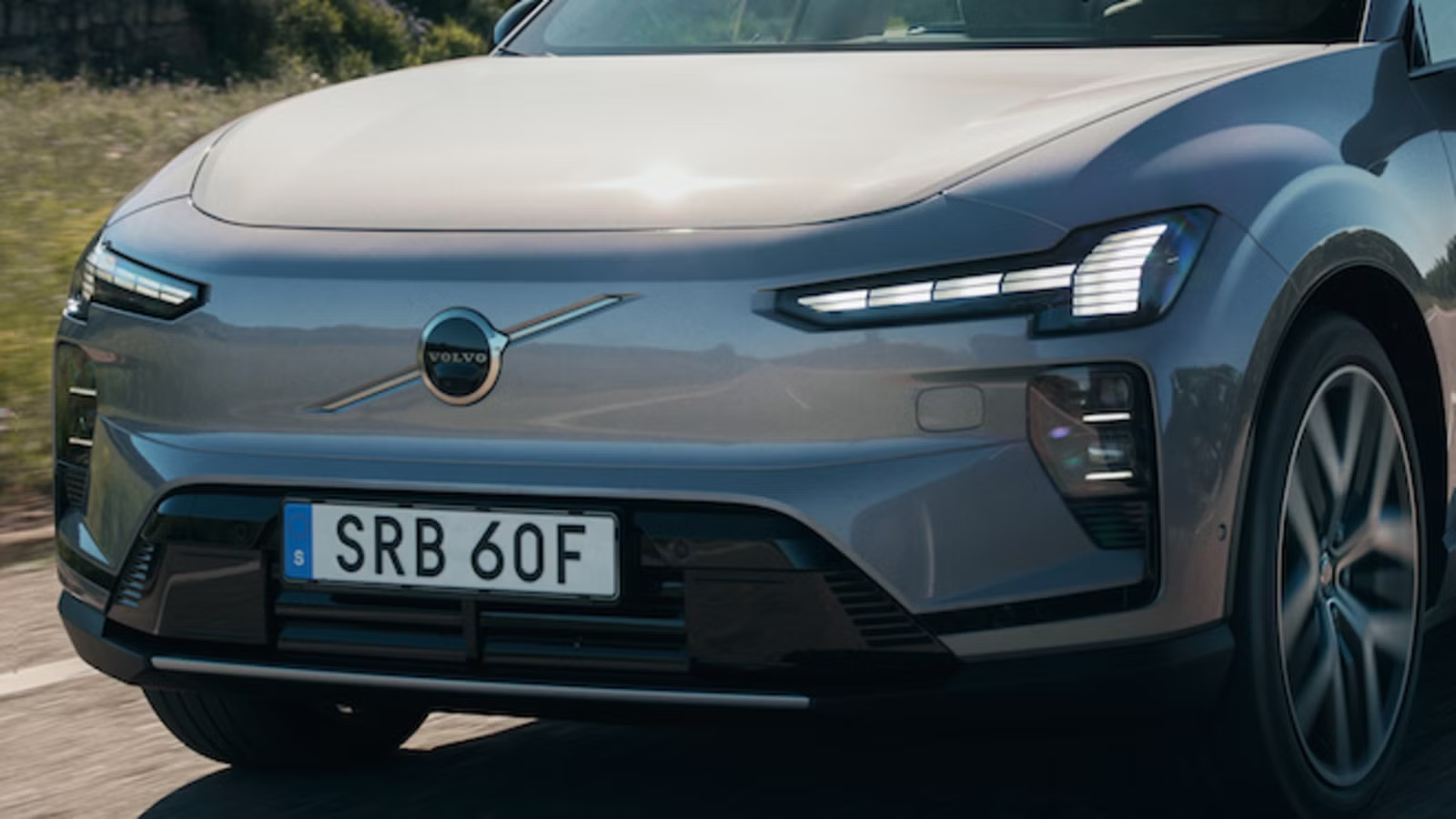
It’s been 16 years since China’s Zhejiang Geely Holding Group acquired Volvo Cars from Ford, and in all that time Volvo executives have insisted that the Swedish automaker stands independently, operating as a distinct corporate entity with its own board and product-development operations in Gothenburg. But that wall of separation from Geely appears to be crumbling.
Today, Volvo discussed its Q2 2026 financial results, reflecting plummeting sales in China, the elimination of 3,000 white-collar jobs this year, tariff impacts from the US, decreases in retail sales (to 172,000 vehicles) and revenue (to $8 billion), and an operating profit margin of a mere 1.1%. Hakan Samuelsson, Volvo Cars president and CEO, confirmed the two companies, which have been collaborating so far in some key areas, will be “developing a regional product offering for China” and “building cars together.” Apparently, the brand isn’t concerned its China ties will get it kicked out of the US like Polestar, which has the same ties and was spun off from Volvo several years ago.
Volvo
Geely Cars Built At Volvo Plant?
Speculation about this development started on Wednesday of this week when Volvo announced its manufacturing plant in Ghent, Belgium, would receive $136 million in financial support or incentives from the Belgian federal government and Flanders regional government to improve the plant for future vehicle programs. While Ghent currently builds plug-in hybrids and battery-electric vehicles such as the EX30 crossover, Volvo said the plant renovations would allow for potential contract assembly of cars from other brands.
Geely Radar RD6 Front Fascia Close Up Geely/Riddara
During today’s earnings call, CEO Samuelsson confirmed Geely brand cars could be assembled in Ghent while also complying with strict European regulations governing information and communication technology in cars. In the US, similar regulations led the federal government recently to bar Polestar (also owned by Geely) from selling cars in 2027 over concerns about Chinese technology in connected vehicles.
Asked whether the Ghent plant would build vehicles for other automakers beyond Geely, Samuelsson said Volvo is open to it if there is excess capacity, but he sounded cool to the idea.
“We will feel very comfortable building the cars we want to build there, and we don’t need to think about alternative scenarios.”
–Hakan Samuelsson, Volvo Cars president and CEO
But the manufacturing collaboration between Volvo and Geely appears to be heading well beyond Ghent. While saying that Volvo cars will continue to be built mainly in Volvo factories going forward, Samuelsson said in answer to an analyst question that “some of them might be built with the platform technology from Geely, especially in China. And that is what’s going to happen.” Asked whether Geely will use Volvo’s SPA3 architecture to develop new vehicles, Samuelsson said there are no plans at this point, but he did not rule it out.
“We would like to promote common platforms in the group, and we will use some of their platforms for cars now we will build in China,” he said. “And then, of course, we would discuss if they would use this platform in the future. We’ll be open for that.”
On other fronts, Volvo reports the all-new EX60 midsize electric crossover is sprinting out of the gate based on early sales in Europe, with ambitions to produce up to 40,000 units this year. And when asked if Volvo will localize any additional vehicles at its plant in South Carolina, beyond adding assembly of the XC60 this year, Samuelsson said the US plant will continue producing “multi-fuel cars,” including internal-combustion and EV powertrains.
2027 Volvo EX60Tom Murphy / CarBuzz / Valnet
“And after that, we have also said that there will be more investments in Charleston into a very attractive bigger car for the US market,” he said. This likely refers to a hybrid SUV soon to be announced.
CarBuzz Insight – Why This Matters:
Times are tough in the Chinese market, where automakers have only been accustomed to unbridled growth for years. Lagging sales suggest demand has waned and that there’s way too much capacity to build more vehicles for the domestic market there. So we’ll continue hearing about automakers in China juggling their manufacturing assets and looking for ways to cut costs and collaborate on cost-effective manufacturing.
What does that mean for the evolving relationship between Volvo and its Geely owner? Perhaps design and engineering will be the next front for improving productivity, which will rufflle feathers in Sweden. The bigger question might be: Are the latest changes permanent, with regard to the manufacturing footprint, or will the wall go back up if the Chinese market rebounds? And then there’s the elephant in the room – how a closer relationship and shared technology with a Chinese company will impact Volvo’s ability to sell cars in the US.
