

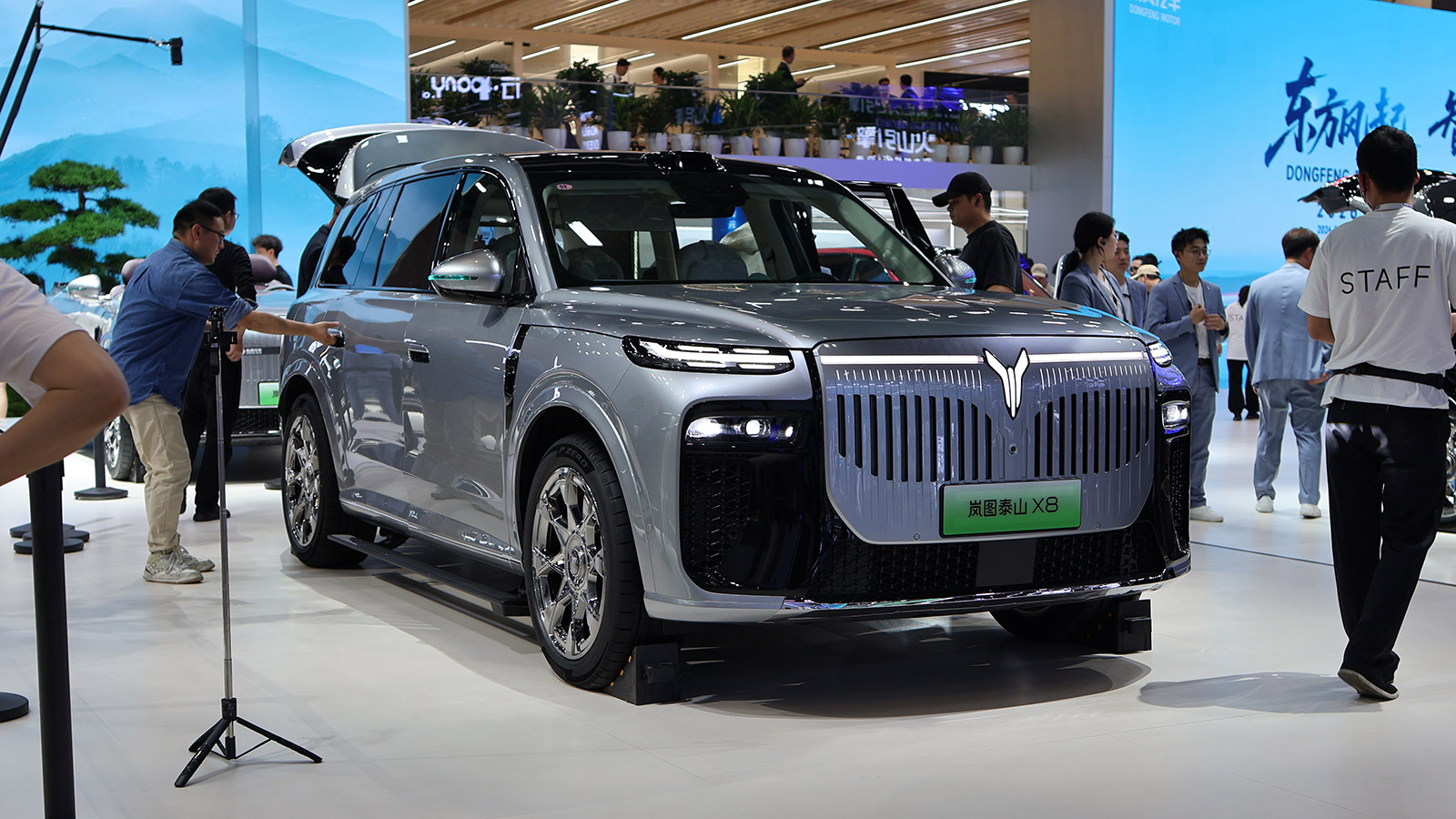
A Voyah Taishan X8 is displayed at the Beijing Auto Show in April 2026. Credit: CnEVPost
- Voyah posted a net loss of 389 million yuan in the first half, compared with a profit a year earlier, as prices of raw materials rose.
- Deliveries rose 35.9%, driving scale expansion, but gross margin fell to 17.7%, underscoring mounting cost pressure.
Voyah (HKEX: 7489), a subsidiary of Dongfeng Motor, posted double-digit growth in revenue and deliveries in the first half of 2026, but rising raw-material prices eroded profitability and pushed the company into the red.
The company said Thursday that total revenue in the first half rose 42.4% year-on-year to 18.16 billion yuan ($2.68 billion). Its net loss attributable to shareholders was 389 million yuan, compared with a net profit of 460 million yuan a year earlier.
Gross profit rose 17.7% to 3.22 billion yuan, significantly lagging revenue growth. Gross margin was 17.7%, down about 3.7 percentage points from about 21.4% a year earlier.
Voyah attributed the loss to rising prices of raw materials including lithium carbonate and memory chips. Intensifying industry competition and a softening end-market also made it more difficult for the company to improve its cost structure.
Higher sales continued to provide Voyah with greater scale. The company delivered 76,264 vehicles in the first half, up 35.9% year-on-year, though that growth has yet to fully translate into higher profits.
Voyah Monthly Deliveries 2024-2026
Month
2024
2025
2026
January
7,041
8,009
10,515
February
3,182
8,013
8,358
March
6,122
10,012
15,019
April
4,003
10,019
15,146
May
4,521
10,022
13,003
June
5,507
10,053
14,223
July
6,015
12,135
August
6,156
13,505
September
10,001
15,224
October
10,157
17,218
November
10,856
20,005
December
12,136
15,954
Voyah monthly deliveries
2024
2025
2026
Net cash generated from operating activities rose 15.29% to 208 million yuan. Basic and diluted losses per share were both 0.11 yuan, compared with earnings a year earlier.
Voyah continued to expand its premium product lineup in the first half, launching the Voyah Dream Champion Edition and Voyah Taishan X8 and beginning deliveries of the Voyah Taishan Ultra.
The models mainly target the 300,000-yuan to 500,000-yuan market, reflecting Voyah’s efforts to improve its sales mix through higher-value vehicles. However, rising raw-material costs weakened the earnings contribution from its product upgrades.
Voyah also expanded its sales and service networks. As of the end of June, the company had 509 sales outlets across 170 Chinese cities and 138 branded ultra-fast-charging stations in 32 cities.
Overseas markets represent another area of growth. As of the end of June, Voyah had entered 40 countries and regions and established more than 240 overseas sales outlets.
Dongfeng signed a non-binding memorandum of understanding with Stellantis NV in May to explore setting up a European joint venture to sell Voyah EVs.
Voyah also entered Saudi Arabia in June and opened showrooms in Riyadh and Jeddah.
Voyah plans to continue improving product sales, operational efficiency and profitability in the second half. The Voyah Passion S was launched on August 15, while the Voyah Dream 9, targeting the 500,000-yuan segment, is scheduled to debut in the second half.
The company did not provide specific earnings guidance for the second half. Whether its new models can help restore gross margin will depend on whether higher sales can offset rising raw-material prices and mounting competitive pressure.
Controlling shareholders’ combined stake in Voyah reaches 70.02% following the purchase.
($1 = 6.7840 yuan)
