

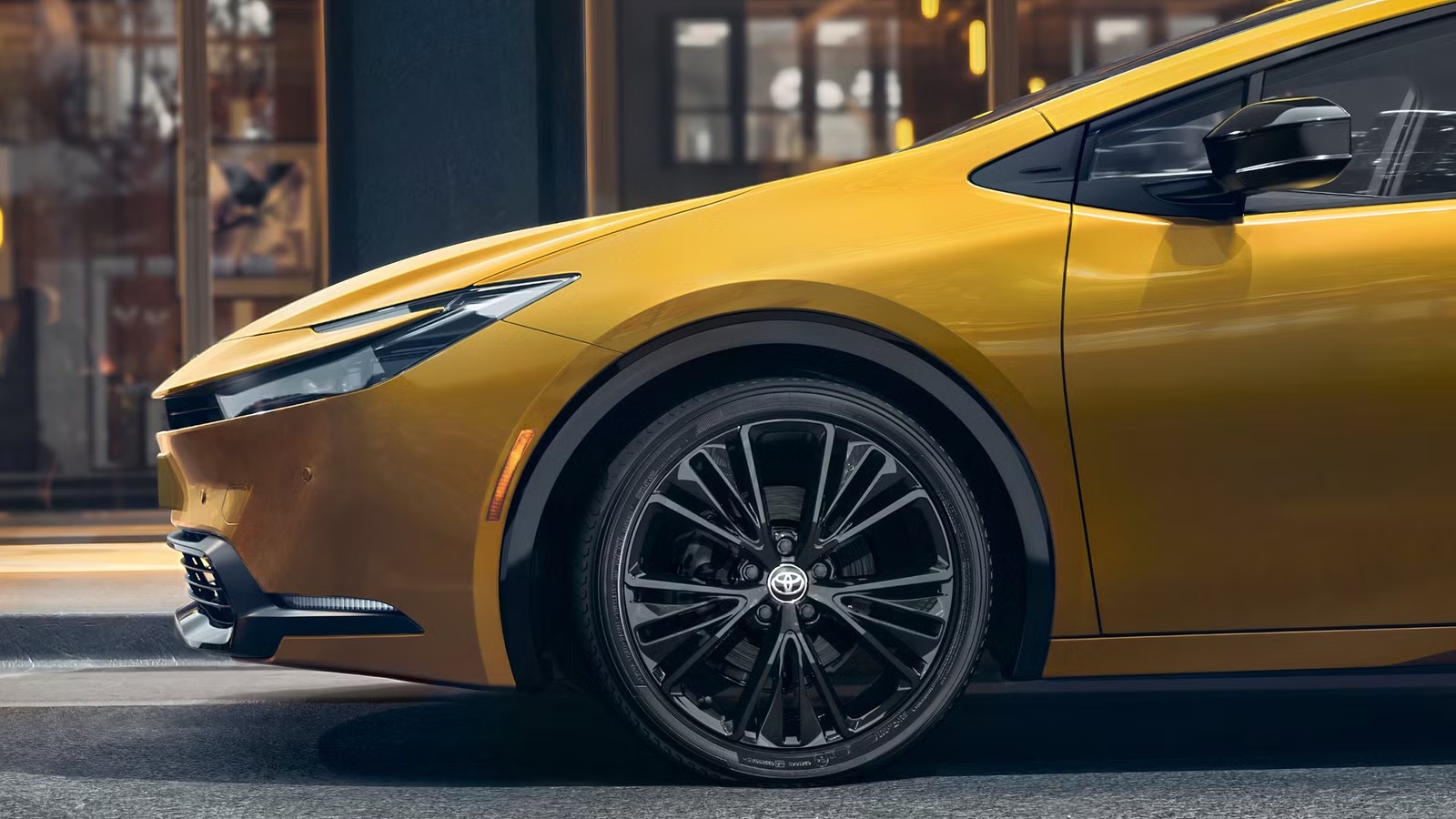
The Toyota Camry going hybrid-only was already a landmark moment — we called it the most important car in the world when it happened, and the argument holds up. Affordable, clean energy still isn’t a solved problem, and fully electric vehicles remain a work in progress for most buyers. Too many automakers tried to leap straight from gasoline to battery-electric, skipping the hybrid middle ground that could actually move the needle on fuel consumption today. Toyota read the room differently — and now it has gone even further by making the RAV4 a hybrid-only model.
It’s easy to underestimate what a monumental step this is for Toyota. Toyota is the best-selling automaker in the world, and the RAV4 is currently its biggest-selling model in the US. By taking the RAV4 hybrid-only, it’s a show of confidence and a signal to all other automakers that hybrid drivetrains are the mainstream reality for the foreseeable future. However, the hybrid rollout Toyota is getting into could spell doom for the car that started the hybrid revolution — the Toyota Prius.
Toyota Has Been Protecting The Prius Name
We noted some time ago that the Corolla going hybrid could easily make the Prius redundant, and the fact that Toyota initially offered only a single, base trim level suggested the company was deliberately protecting the Prius’s existence. That single-trim Corolla Hybrid was just as fuel-efficient, more practical, and far more conventionally styled than the Prius. But why would Toyota shield the Prius when its hybrid technology was clearly ready to spread across the lineup?
We believe there are two reasons. The first is that the Corolla needs to remain affordable as an initial cost. The second is that the Prius is being kept in production so it can evolve and become a spearhead for the next evolution of drivetrains. That’s what the Prius was for hybrid technology, and it makes sense to keep the name for future technology. After all, the name Prius means “prior” and it was billed from the start as a pioneering environmentally friendly vehicle.
Toyota Likes To Slow Roll Into The Future
Close
Toyota is one of the few major automakers that didn’t rush headlong into an all-electric commitment, instead paving the way with the Prius. The central challenge for battery-electric vehicles — beyond charging infrastructure — remains battery size and energy density. While Toyota has explored current-generation battery technology through its partnership with Subaru and the resulting Toyota bZ4X, it has been working steadily on solid-state battery technology with plans to commercialize it in vehicles in the coming years.
The Next Prius Could Start The Solid State Revolution
Toyota
Solid-state batteries for automotive applications have been notoriously difficult to develop, but the technology promises to be lighter, longer-lasting, and capable of storing far more energy than current lithium-ion packs. In theory, a solid-state battery pack could deliver around 750 miles of range on a single charge, last 30 years, and recharge fully in under 10 minutes. Those figures may be aspirational for now, but even half those numbers would represent a genuine leap forward. Here’s the thing, though: it doesn’t appear to be a coincidence that Toyota’s concept for a solid-state battery-powered car bears a striking resemblance to the current Prius.
The Toyota Prius Could Have A Foreseeable End Game
Toyota is among the automakers investing in hydrogen power, though it remains a long-term goal. Hydrogen is the most abundant element on Earth and, in its green form, the cleanest fuel source we have — but producing green hydrogen without significant carbon emissions is still costly and inefficient. It’s still early days for hydrogen infrastructure, yet Toyota has already experimented with limited-production hydrogen fuel-cell vehicles through the Mirai. Even so, passenger cars won’t be the catalyst for a hydrogen fueling network — that role will fall to commercial trucking, and building out that infrastructure will take time.
Following solid-state batteries, the Prius would be the ideal vehicle for Toyota to begin pushing hydrogen into the mainstream. Traditionally, the Prius is engineered to be as light and aerodynamic as possible for its price point in order to maximize efficiency — and when hydrogen technology first reaches consumers, it will be expensive. Just as with early electric vehicles, hydrogen will need first adopters to get the ball rolling, and the Prius has a proven track record of bringing new powertrain technology to a wider audience.
It’s All Informed Speculation
2025 Toyota Mirai XLE detail shot of the hydrogen fuel cellToyota
Toyota isn’t about to reveal its long-range plans for the Prius, but based on the brand’s history and the way it has consistently used the Prius as a technology showcase, it’s entirely reasonable to believe the nameplate will remain Toyota’s forward-thinking flagship. The idea of a solid-state electric Prius leads naturally into the hydrogen theory, since hydrogen fuel-cell vehicles still rely on batteries — primarily to capture, store, and release energy from regenerative braking. A hydrogen drivetrain backed by solid-state batteries would represent the most efficient powertrain combination theoretically available today. And then the cycle could begin again, because no one yet knows what energy sources will power the cars of the distant future.
