

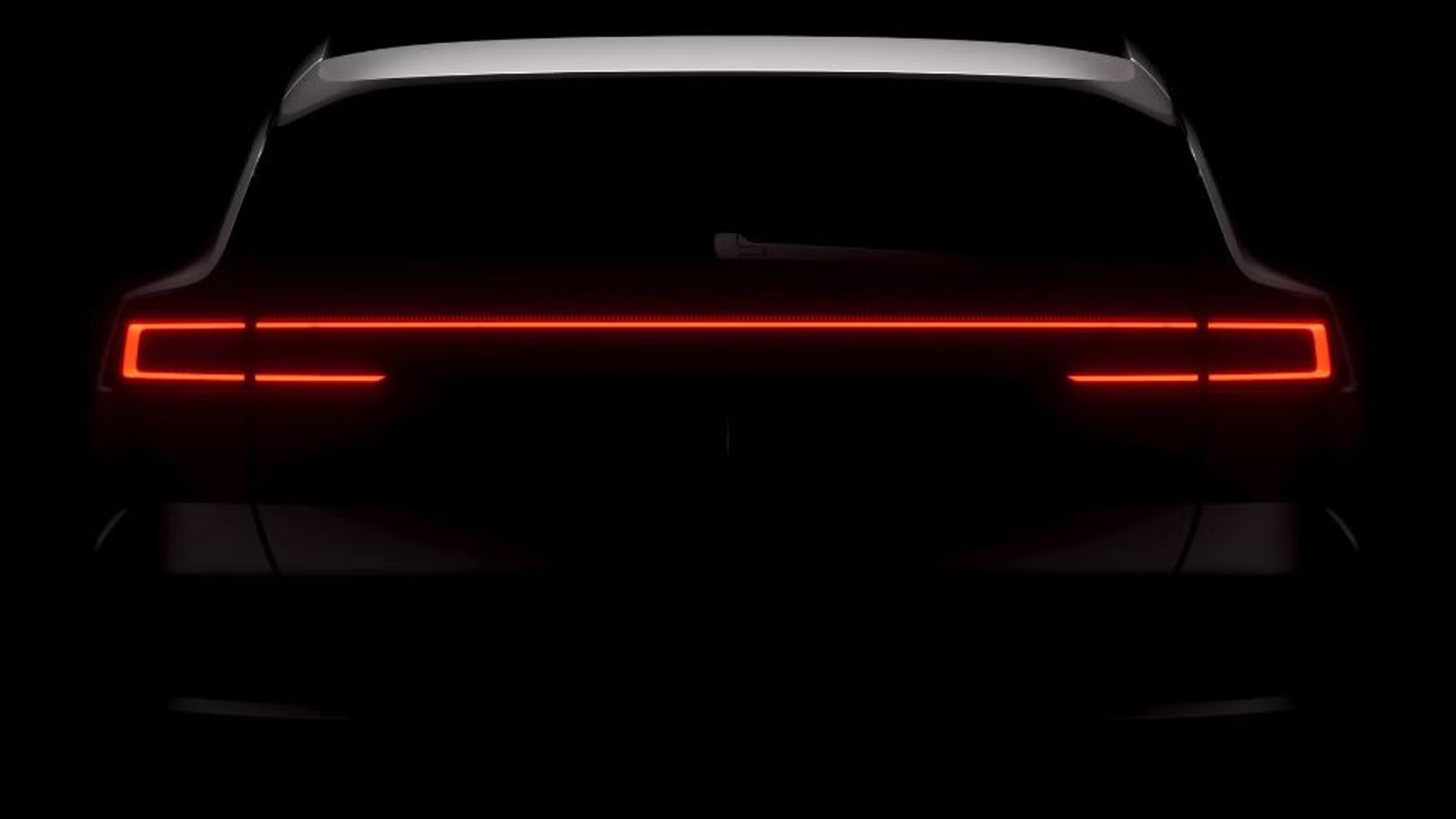
For decades, the most lucrative used-car bargains have been driven by dramatic, brand-altering structural shifts. Think of the brutal, steep depreciation curves that turned the ultra-complex, tech-heavy Mercedes-Benz S-Class into a tempting secondary-market roll of the dice for the brave. Think of the fire-sale pricing that followed the sudden, tragic demise of Saab, or the residual-value free-fall that turned pristine Jaguar sports cars into pennies-on-the-dollar performance steals.
Electric vehicles have already completely rewritten the depreciation playbook, accelerating the drop with rapid battery tech cycles and volatile consumer demand. But a sudden regulatory hammer from Washington is about to create an unprecedented anomaly on the used market. A highly regarded premium EV brand is suddenly on an official countdown clock in America, paving the way for what could be one of the cheapest ways to acquire a genuinely luxury EV experience—provided you can navigate the unique software and support caveats that come with it.
The Coming Secondary-Market Anomaly
Rear 3/4 shot of 2026 Polestar 5Polestar
The secondary automotive market thrives on mainstream panic. When a luxury automaker announces it is pulling up stakes, mainstream consumers run for the hills. Dealerships grow anxious, trade-in values soften, and regular buyers become terrified of being stuck with an orphan product.
This exact consumer flight is what triggers a used-market anomaly. For the enthusiast and the value-focused buyer, this panic is a massive opportunity. When retail demand for a premium product plunges overnight while the underlying hardware remains thoroughly excellent, prices collapse far below what the vehicle’s actual build quality, performance, and material luxury warrant. We saw it with the finest European grand tourers of the past, and we are about to see it hit a lineup of avant-garde electric vehicles.
The Scandi-Minimalist Product Lineup
2025 Polestar 4 front cabinPolestar
The vehicles poised to slide down this unique depreciation curve are none other than Polestar’s core entries: the crisp Polestar 2 fastback, the imposing Polestar 3 luxury performance SUV, and the sleek, roofline-defying Polestar 4 SUV coupé.
These aren’t half-baked compliance cars or fragile startups. Born from Gothenburg-engineered roots and built on Volvo’s robust safety architectures, the Polestar lineup represents some of the most cohesive design language and driver-focused dynamics in the modern EV space. With gold-accented Brembo brakes, adjustable Öhlins dampers, and stunning, minimalist cabins, they have carved out a reputation as genuinely premium alternatives to generic electric commuter boxes.
The Hammer Drop: Why Polestar Is Leaving The U.S.
Studio shot of a silver 2027 Polestar 5 shown in rear 3/4 viewPOLESTAR
The mechanism forcing this sudden exit isn’t a lack of engineering talent or poor vehicle reviews. It is a swift, final regulatory wall. The U.S. Department of Commerce’s Bureau of Industry and Security has officially denied Polestar authorization to sell new vehicles in the United States starting with the 2027 model year.
The regulatory blow comes courtesy of the newly enforced Connected Vehicle Rule. This federal framework strictly restricts Chinese or Russian-linked hardware and software in vehicles operating on American roads that utilize modern digital architectures—which, in 2026, include virtually everything with a Bluetooth chip, a Wi-Fi module, or an integrated cellular connectivity modem.
The Geopolitical Corporate Paradox
2024 Polestar 2 front 3/4 shotPolestar
The problem isn’t about the physical geographical location of the headquarters or factories. Polestar is operationally headquartered in Gothenburg, Sweden. It designs its cars in Europe and builds its premium fleet globally, including actively rolling the Polestar 3 off production lines in Ridgeville, South Carolina, alongside manufacturing hubs in South Korea. The problem is that despite its heavy Western footprint, the brand’s corporate DNA includes a majority stake held by China’s Geely Holding Group. Under the strict terms of the Connected Vehicle Rule, that majority ownership structure served as an automatic tripwire for the authorization denial.
It is important to note that this is a case-by-case technology stack issue rather than a blanket corporate exile. For example, fellow Geely-owned premium stablemate Volvo successfully secured its regulatory authorizations to continue selling its connected vehicles in the United States. But for Polestar, the clock has officially run out on new model sales, sending its stock tumbling 6.2 percent in premarket trading immediately following the announcement—a clear signal that investors recognize a definitive U.S. wind-down is underway.
Driving A Discontinued Brand: The Support Net Vs. The Digital Catch
Polestar 4 revealPolestar
The immediate question for the tens of thousands of current Polestar owners and the wave of incoming secondary-market shoppers is simple: What happens when you drive a car from a brand that can no longer sell its new models next door?
Bricks And Mortar: Why Wrenching On A Polestar Won’t Be An Issue
The engine bay of a 2016 Volvo S60 Polestar.CarBuzz
For those worried about the physical realities of maintenance, there is plenty of comforting news. Polestar CEO Michael Lohscheller has moved quickly to reassure the North American market that the brand is not abandoning its existing owners. Polestar contractually guarantees that all existing vehicle warranties remain fully in effect, and physical access to parts, service, and safety recalls will continue unabated. The heavy lifting will be handled by Polestar’s established footprint of 32 physical retail and service spaces across the country.
Furthermore, because these vehicles share extensive structural elements, suspension components, and high-voltage platform engineering with the global Volvo lineup, sourcing a physical replacement part or finding a qualified technician to turn a wrench won’t require a miracle.
The Software Longevity Question
2025 Polestar 2 screenPolestar
The real asterisk, however, lies in the intangible code that keeps a modern EV functional. While physical servicing is settled, the future of over-the-air (OTA) software updates remains an albatross around the brand’s U.S. operations.
Polestar has not explicitly confirmed how long or to what extent OTA software updates, infotainment feature enhancements, and digital glitch fixes will continue for U.S.-market vehicles post-2027. Because the federal ban specifically targets connected vehicle software architecture, pushing continuous code from a restricted entity into American territory becomes a legal nightmare.
2025 Polestar 4 front seatsPolestar
Compounding this challenge is a cold, hard look at Polestar’s global balance sheet. In Q1 2026, a staggering 94 percent of Polestar’s global retail sales volume came from markets completely outside the United States. Europe alone anchors roughly 80 percent of the brand’s total business. With the U.S. door effectively closed to new revenue, engineering capital and software development resources will naturally flow to Europe, Canada, Latin America, and Southeast Asia. For an American buyer, this raises the distinct, unresolved possibility that the car’s digital ecosystem, application suite, and mapping interfaces may eventually become frozen in time.
The Verdict: A Premium Gamble With High Stakes
Rear three-quarters shot of the 2025 Polestar 4Polestar
For the used-car shopper tracking the market, a pre-owned Polestar 2 or an early-production Polestar 3 is about to present an extraordinary dollars-to-performance ratio. As the mainstream public reacts to the “ban” headlines, secondary-market values are highly likely to take an aggressive, immediate hit, dropping these luxury Swedish performance machines far into bargain territory.
If your priority is scoring a beautifully styled, sharp-handling, genuinely premium luxury EV for pennies on the dollar, the mechanical foundation is rock solid, and the physical maintenance network is locked in. It is a magnificent piece of automotive hardware. But you must sign the title with clear eyes, knowing that you are buying into a digital ecosystem whose long-term American lifecycle remains entirely unresolved.
If you are ready to take the plunge, keep a close eye on wholesale auction data over the next 90 days, monitor the pricing on residual-value lease buyouts as current lessees exit their terms, and watch how smoothly the 32 remaining dealers transition into their dedicated role as a long-term service and support network. The hardware bargain of the year is coming—just make sure you read the fine print.
Sources: Polestar, Autoweek, MotorTrend, Car and Driver, Fox Business, Top Gear, Stock Titan, Dealership Guy, InsideEVs
