

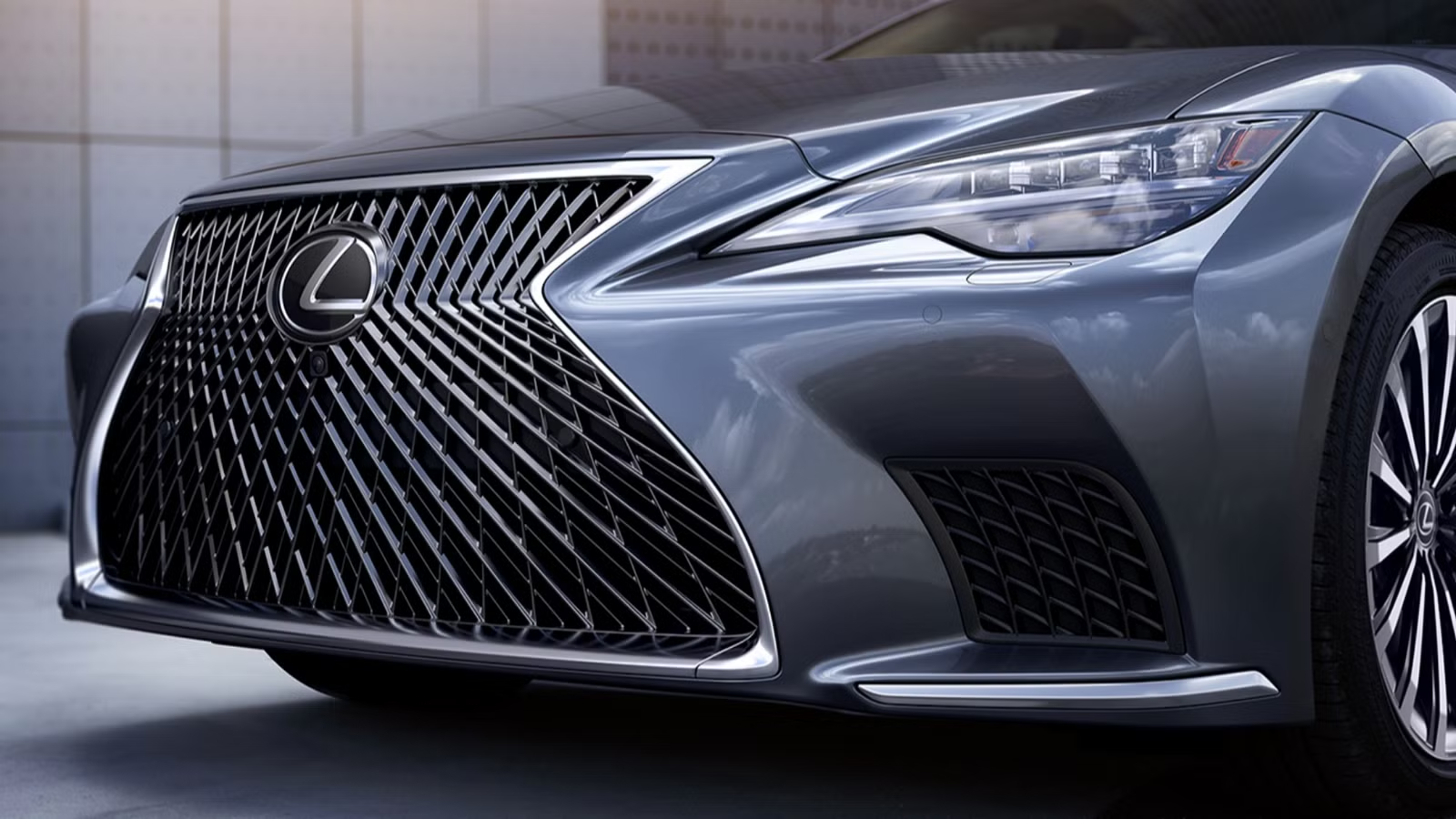
When it comes to high-end luxury automotive manufacturers, having some form of flagship is crucial. Acting as the halo offering within a luxury range, it serves as an aspirational model that buyers can aim to reach, as well as showing exactly what it’s capable of. The result is that it makes the manufacturer’s cheaper vehicles look more appealing, since they’ll share the same sort of parts and engineering as the flagship, at least in the eyes of consumers.
These cars usually come in the shape of a full-size sedan, though Lexus has now rethought this approach. In the US, at least.
The LS Was The King Of Lexus’ Range For Over 30 Years
1998 Lexus LS finished in green with tan interiorCars & Bids
Lexus’ range-topping royalty was named the LS, and it remains arguably the most successful vehicle the brand has ever produced. Its origins can be traced right back to the inception of Lexus in 1989. Wanting to conquer the American luxury market, Toyota knew it needed its new brand to hit the ground running, and that meant taking the fight to the big boys. Using a colossal $1 billion budget, and 2,300 hand-picked engineers, Toyota went all-in to allow Lexus to develop a full-size sedan that would leave the BMW 7-Series and Mercedes-Benz S-Class red-faced.
It was a bold strategy, but Toyota’s confidence and beefy bank balance paid off in spades. The LS400 proved more dependable, more refined, and better-built than its German rivals, allowing Lexus a seat at the big-boy table from the moment it arrived in the US. In fact, it managed to out-sell both the BMW and Merc in 1990 – its first year on sale in the US. The LS’ success acted as a springboard for Lexus to introduce many new models over the subsequent decades, and it remains one of the most successful luxury brands in terms of sales to this day.
The LS remained a staple of Lexus’ range for the duration of this period, though the marque made the shocking decision to axe the model from the US market at the end of the 2026 model year. This brought its interrupted run since 1989 to an end, and just six years after Lexus killed off the mid-size GS sedan.
The Sedan Slump Led To The LS’ American Tenure Being Cut Short
2025 Lexus LS SedanLexus
A bit like the legendary S-Class, it seemed unthinkable that Lexus would send the LS off into retirement, given how it acted as the masthead for the brand for so long. The thing is, things change, and the LS was, quite frankly, just not cutting it anymore. Whereas Lexus was easily selling north of 20,000 examples in the US per year in the mid-2000s, with over 35,000 being delivered Stateside in 2007, that number dropped considerably in more recent years. The last time more than 10,000 units were sold in the US was in 2013, and this had slumped to a miserable 1,082 cars by 2025.
By contrast, Lexus’ flagship LX SUV found 7,464 new owners, nearly seven times what the LS could manage. This level of sustained performance simply wasn’t tenable for Lexus, so it took the tough decision to wave goodbye to arguably its most important nameplate at the conclusion of the 2026 model year. That said, the LS wasn’t killed off for good, as it remains in production in other markets away from the States.
The LS Is Hanging On To Life In The Other Markets
2025 Lexus LS rear 3/4 angle, driving, silverLexus
You won’t find one unless you move to Australia or Japan, though, since these are the only nations where the LS continues, having also been discontinued from the European market. The current fifth-generation model is nearly a decade old, so Lexus needs to keep it fresh somehow, with its previous mid-cycle refresh coming in 2021. While 2027 versions available in the remaining markets will look the same inside and out, Lexus has made some small changes to improve the driving experience and overall refinement.
The car’s transmission tunnel was reinforced to help reduce the amount of noise and vibration entering the cabin, while extra noise-deadening material was packed into the cargo area and suspension braces to the same end. These changes resulted in a smoother cabin atmosphere at all speeds, while revised adaptive suspension settings were also incorporated to make the car feel more confidence-inspiring on the road.
The setup was stiffened up slightly, which reduces body roll and enhances responsiveness, which is ideal if you suddenly get chased by bad guys. Another handy change is that every trim can now be ordered with a panoramic sunroof, as that feature used to be reserved for the highest-end variants only.
All in all, these upgrades aren’t exactly game-changing, so you won’t notice much difference by having to settle for one for the final US-spec vehicles. Besides, there’s another huge advantage to buying a used American example.
Steep Depreciation Means You Can Get A Juicy Discount
2025 Lexus LS 500 interior view of all seats from the sideLexus
By having to opt for a used, one-year-old car, CarEdge reports that you save a hefty $10,000 over the cost of a brand-new one, which isn’t bad for a car that’ll have minimal mileage. Go even further and pick up an example that’s three years old, and you could save 28% of the car’s total MSRP, which ranged from $77,385 for the base LS 500 RWD variant, to $84,235 for the range-topping F-Sport AWD model when they left the showroom.
That translates to a discount of comfortably over $20k, which is pretty appealing given you’ll be taking delivery of a thoroughly modern flagship luxury sedan that’s just a few years old. Fancy saving even more cash? Then get a five-year-old LS 500, since these can be had for less than half of their original value. In real terms, securing a luxury Lexus of this vintage will set you back around $40k.
This outlay treats you to plenty of standard creature comforts, too. Even if you opt for the base LS 500 variant, you’ll be treated to a plush cabin that includes heated and ventilated front seats made from the best-quality leather, a powered moonroof and rear sunshade, adaptive variable suspension, as well as a twin-turbocharged V6 engine that provides you with 416 horsepower to play with. Shop around, and you could find yourself a car equipped with the optional Luxury or Executive packages.
This turns the LS into a real S-Class rival, since you’ll have cloud-like adaptive air suspension on your hands, more upper-market wood trim than the base car gets, four-zone Climate Control, as well as a massaging function for the sumptuous seats. And the best part? The LS isn’t even that expensive to run, at least compared to other flagship luxury sedans.
Lexus’ Commanding Reliability Record Runs Upstream To The LS
Toyota V35 TT 3.5 V6 engineLexus
While you may feel opting for a vehicle sporting a BMW or Merc badge comes with more prestige, the Lexus fights back by being much cheaper to run on a longer-term basis. According to CarEdge, an LS 500 should only cost you around $2,300 to maintain over a five-year stretch, which is impressively low for a car boasting the level of advanced tech the LS does. By contrast, a Mercedes S580 will rob your bank account of closer to $4,300 during the same tenure. That’ll make justifying spending extra cash on a higher-specced LS that little bit easier.
Aside from the pure financial gains, there’s also the element of not having to waste more of your precious time visiting the repair shop to have more stuff replaced. You can spend more time doing the things you love, such as enjoying the LS’ massage seats. That said, if you’re lucky enough to get one with the Executive package, you’ll need to watch out for the air suspension. While opting for a newer car means you won’t have to worry about it for a while, that’ll be one of the most expensive elements to sort, should it start throwing up problems.
The complicated airbags and powerful compressor needed to run the system will cost thousands to source and replace, with a full system replacement robbing you of well over $5,000. Still, given how much you’ll save by buying a used example, you can easily leave a load of cash to the side just in case your new pride and joy needs any remedial work.
The LS was the car that made Lexus a viable proposition for Toyota, and it’ll be forever remembered as the most important nameplate in the brand’s history. Perhaps one day, should the luxury sedan fight back against the SUV, it’ll make a glorious return. Until then, opting for a used fifth-gen machine is the closest you’ll get to a brand-new one.
Sources: CarEdge, Lexus.
