

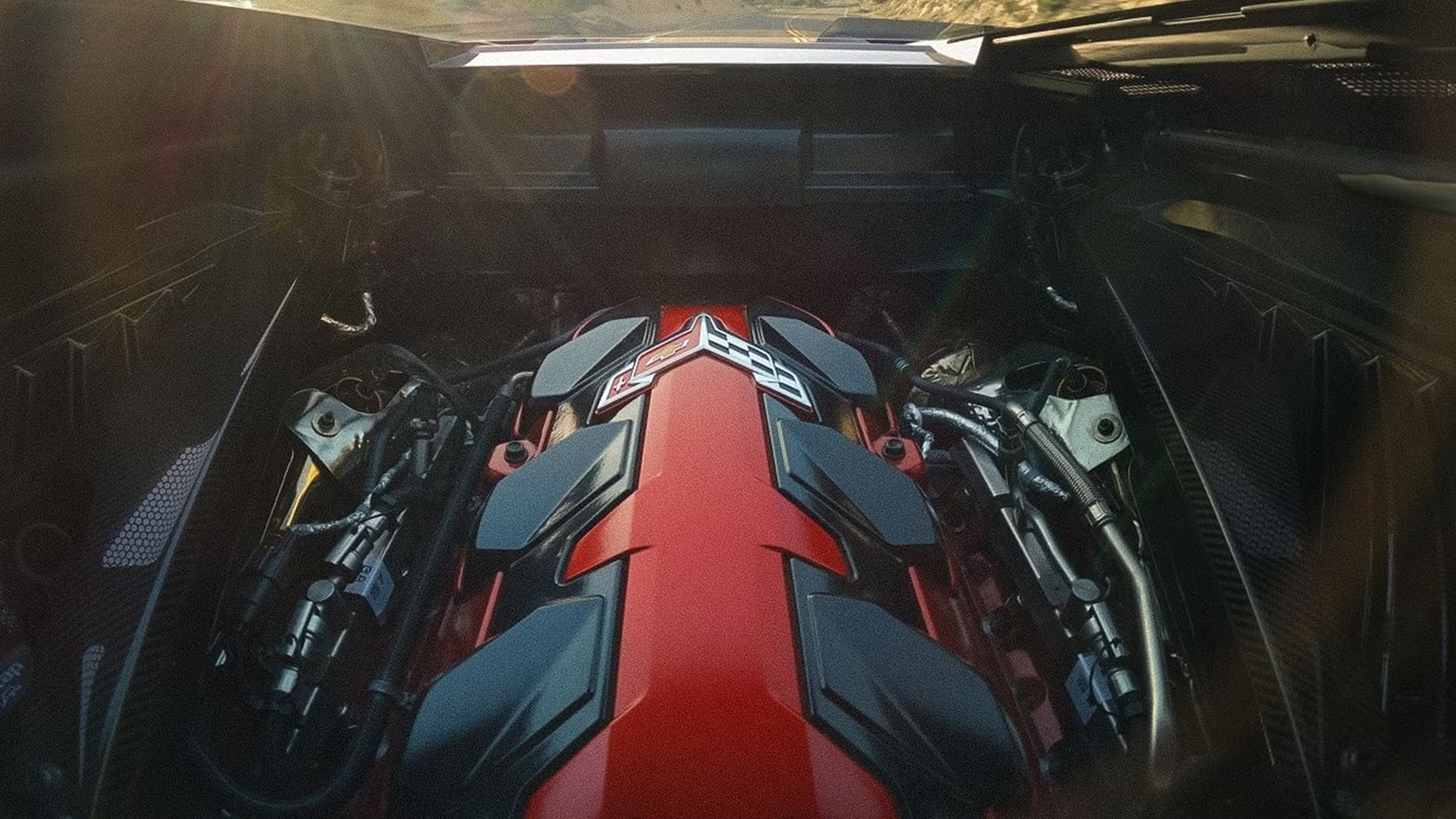
Grab your spoon, it’s time for some alphabet soup. If you’ve been following the latest Chevrolet Corvette news, you know the latest Grand Sport lineup debuts with the first application of the sixth-generation small-block V8 by way of the new 6.7‑liter LS6. The engine is also standard on the 2027 Stingray. It replaces the outgoing 6.2‑liter LT2 from the previous iteration of the small-block family. The change ends the LT2 era after seven model years and brings the LS-series nameplate back for the first time in well over a decade.
Below, we’re tracing today’s trio of 2027 Chevrolet Corvette V8 engine offerings back through their lineage to see why some of the latest V8 identifiers, like the LS6, the LT6, and the LT7, might sound a little familiar. Today, the 2027 Chevrolet Corvette model features a three-level small-block V8 lineup, giving shoppers a compact, power-dense V8 for accessible high-performance thrills, another with race-proven tech designed to dominate circuits, and a third technological halo V8 built to deliver the ultimate Corvette experiences of the day.
The LS6
The 535-HP Everyday Apex Predator
2027 Chevrolet Corvette Grand SportChevrolet
The LS6 is GM’s all-new V8. It’s still a small-block offering, using the same core architecture, layout, and compact, lightweight pushrod valvetrain philosophy as Chevy’s V8 from the 1950s. However, the new LS6 is a clean-sheet sixth-generation design rather than a literal continuation of earlier small blocks. Today, the latest enhancements bump displacement to 6.7 liters, bringing output to 535 horsepower and 520 pound-feet of torque. That’s enough to make the Corvette Stingray a 200‑mile‑per‑hour car from the 2027 model year onward.
2027 LS6 6.7L V8 Specifications
Configuration
naturally aspirated pushrod V8
Peak Power
535 hp @ 6,100 rpm
Peak Torque
520 lb-ft @ 4,600 rpm
Compression Ratio
13.0:1
Max Engine Speed
6,600 rpm
Induction
Natural aspiration with variable intake geometry
Fuel System
Dual Injection (Direct + Port)
Lubrication
High‑capacity wet‑sump with performance baffling
0–60 mph
2.75 seconds (GM)
Quarter Mile
10.95 seconds @ 124 mph (GM)
The LS6 is the accessible, high-performance option, replacing the 6.2‑liter LT2 V8 that served as its direct predecessor in the previous mid-engine C8 Corvette Stingray models through the end of 2026. In terms of lineage, the LS6 follows from classic small-block engines that powered the C5- and C6-generation ‘Vettes, like the LS1 and the LS2. Today, the LS6 follows its predecessors’ performance philosophy and fills the same role in the engine range.
Later Corvette generations moved to the LT1 for power in the C7-generation Corvette, marking a shift to a new-generation small block engine with direct injection, variable valve timing, and other modern enhancements. The evolved 6.2‑liter LT2 V8 launched with the C8-generation Corvette Stingray.
Some Corvettes ran LS-series engines, and others ran LT-series engines instead. This back-and-forth came from changes in the small block V8 program over time. The LS designated the third- and fourth‑generation engines, and LT identified the fifth‑generation units. The 2027 LS6 marks the start of the sixth‑generation small block program. The latest 6.7‑liter LS6 follows the earlier engines on this timeline because each was intended to offer the most accessible path to the highest performance levels possible.
The latest LS6 builds on a long line of performance innovations for the base-tier Corvette engine. Specifically, in the C4‑generation Corvette (1984–1996), the 5.7‑liter LT1 V8 made 300 hp with reverse‑flow cooling, which pumped the coolest engine coolant into the cylinder heads first, reducing combustion chamber temperatures and enabling higher output within emissions targets. Next came the LT4 for 1996, closing the C4 generation with 330 hp, after setting earlier benchmarks for handling as the first production car to hit 1.0 g on the skidpad, along with major advances in electronic engine management that would benefit later engines.
The C5 Corvette had serious capability thanks to its LS1 5.7‑liter V8 base engine with 345 hp, and the era’s LS6 configuration pushed output past 400 hp from the same displacement. The model featured the first rear‑mounted transaxle in the Corvette, and the LS‑series V8s helped the C5 earn serious capability credentials. The base engines for the C6 Corvette were the LS2 and LS3, namely 6.0‑ and 6.2‑liter V8s pushing well into the 400‑hp arena.
When the C7 arrived in 2014, it switched back to the LT designation with the new LT1, forming a clean break from the LS engines before it. The new LT1 was now making up to 460 hp, using advanced tech like direct fuel injection, variable cylinder management, and variable valve timing. It became the only small block engine ever paired with a 7‑speed manual. This clean break into the next‑generation V8 evolved from the LT1 in the C7 Corvette to the LT2 in the mid‑engine C8, now pushing to the better part of 500 hp. That’s the 6.2‑liter V8 that powered every C8 Corvette Stingray until the 2027 model‑year switch back to the LS designation with the new 6.7‑liter LS6, and another clean break as a new small block era begins.
The LT6
Chasing The Redline
With 670 hp in the game, the naturally aspirated Chevrolet Corvette Z06 is fast.Chevrolet
The LT6 comes from a line of higher‑output, racing‑validated Corvette V8s that incorporate plenty of lessons learned from the world of motorsports. In the 2027 Corvette, the LT6 is the ultimate expression of naturally aspirated and unassisted power: an exotic, free‑breathing V8 built for extreme revs and high output per liter.
Building on high‑revving, airflow‑optimized V8s before it, this lineage has evolved under the hoods of some of the most advanced Corvettes of their eras, representing a technological flex that kept the small block on the world stage for output per liter.
2027 LT6 5.5L V8 Specifications
Configuration
DOHC flat‑plane crank V8
Compression Ratio
12.5:1
Max Engine Speed
8,600 rpm
Induction
Natural aspiration with dual‑throttle plenums
Fuel Delivery
Exhaust‑side direct injection (5,076 psi max)
Valvetrain
DOHC, mechanical finger followers, dual‑coil springs
Valve Size
1.654″ titanium intake / 1.378″ sodium‑filled exhaust
Throttle Body
Twin 87 mm electronic single‑bore
Lubrication
Six‑stage dry‑sump with piston oil‑spray cooling
0–60 mph
2.6 seconds
Quarter Mile
10.6 seconds @ 130 mph
Before the current LT6, there were engines like the LT5, the quad‑cam 5.7‑liter V8 from the C4‑generation Corvette ZR‑1. Later came the LS7, the 7.0‑liter, 505‑hp V8 from the C6 Z06, good for 500 hp, 7,000 revs, and supported by titanium connecting rods for a lightweight rotating assembly that keeps the power output exploding across the rev range. The remarkable LS7 of this era remains an icon for displacement and RPM.
For the C7 Corvette, the mission changed. Now, high‑performance variants used supercharged engines, not high‑revving ones, to satisfy changing customer preferences. This new approach required a new engine family, and another clean break. After the C6 Z06 with its fast‑revving LS7 V8, the C7 Z06 used a supercharged V8 instead: the LT4, a 6.2‑liter supercharged unit with 650 hp.
For the mid‑engine C8 Corvette Z06, a return to revs was the order of the day, and the new (and current) LT6 was the powerplant for the job. This is the first flat‑plane‑crank V8 in Corvette history.
The LT7
Growing Into A Four-Figure Boost Monster
2026 Chevrolet Corvette ZR1X convertible top-viewChevrolet
In 2027, the LT7 engine sits atop the Corvette’s halo engine tier in the Corvette ZR1, delivering the most extreme performances Corvette owners have ever had access to. Designed to rival some of the world’s most renowned performance engines, its lineage traces back to a long line of boosted Corvette flagship engines, beginning with the LS9 in the Chevrolet Corvette C6 ZR1 and evolving through the LT4 and LT5 in the C7 generation. Today, that lineage has advanced to twin‑turbocharged and hybrid‑assisted units that deliver output well into four‑figure territory and give shoppers all-wheel drive for the first time.
2027 LT7 5.5L Twin‑Turbo V8 Specifications
Configuration
5.5L DOHC twin‑turbo V8
Peak Power
1,064 hp @ 7,000 rpm
Peak Torque
828 lb-ft @ 6,000 rpm
Compression Ratio
9.8:1
Max Engine Speed
8,000 rpm
Induction
Twin turbos with air‑to‑water charge cooling
Fuel Delivery
Direct + Port Injection (5,076 psi max DI)
Valvetrain
Dual-coil springs, dual‑independent cam phasing
Valve Size
1.77″ titanium intake / 1.37″ sodium‑filled Nimonic exhaust
Throttle Body
Twin 65 mm electronic single‑bore
Lubrication
Seven‑stage dry‑sump with piston oil‑spray cooling
0–60 mph
2.1 seconds
Quarter Mile
9.9 seconds @ 150+ mph
The current 5.5‑liter twin‑turbo LT7 with 1,064 hp for starters builds on milestones that pushed the top Corvettes into supercar and hypercar territory in more recent years. These include the 6.2‑liter LS9 supercharged V8 in the C6 Corvette ZR1, making 638 hp — the first factory‑supercharged Corvette to run LS power. The C7 generation followed with LT‑series power, with LT4 and LT5 representing supercharged 6.2‑liter V8s for the C7 Corvette with 650 hp or 755 hp, respectively.
2026 Chevrolet Corvette ZR1X new hybrid engineChevrolet
That makes the LT5 engine the most powerful Small Block ever fitted to a front‑engine Corvette. That brings us to today, when the LT7 engine is a 5.5‑liter twin‑turbo affair and the first Corvette engine to exceed 1,000 hp, pushing to 1,250 hp with the hybrid‑assisted Corvette ZR1X.
Sources: MotorTrend, Chevrolet, LSX Mag
