

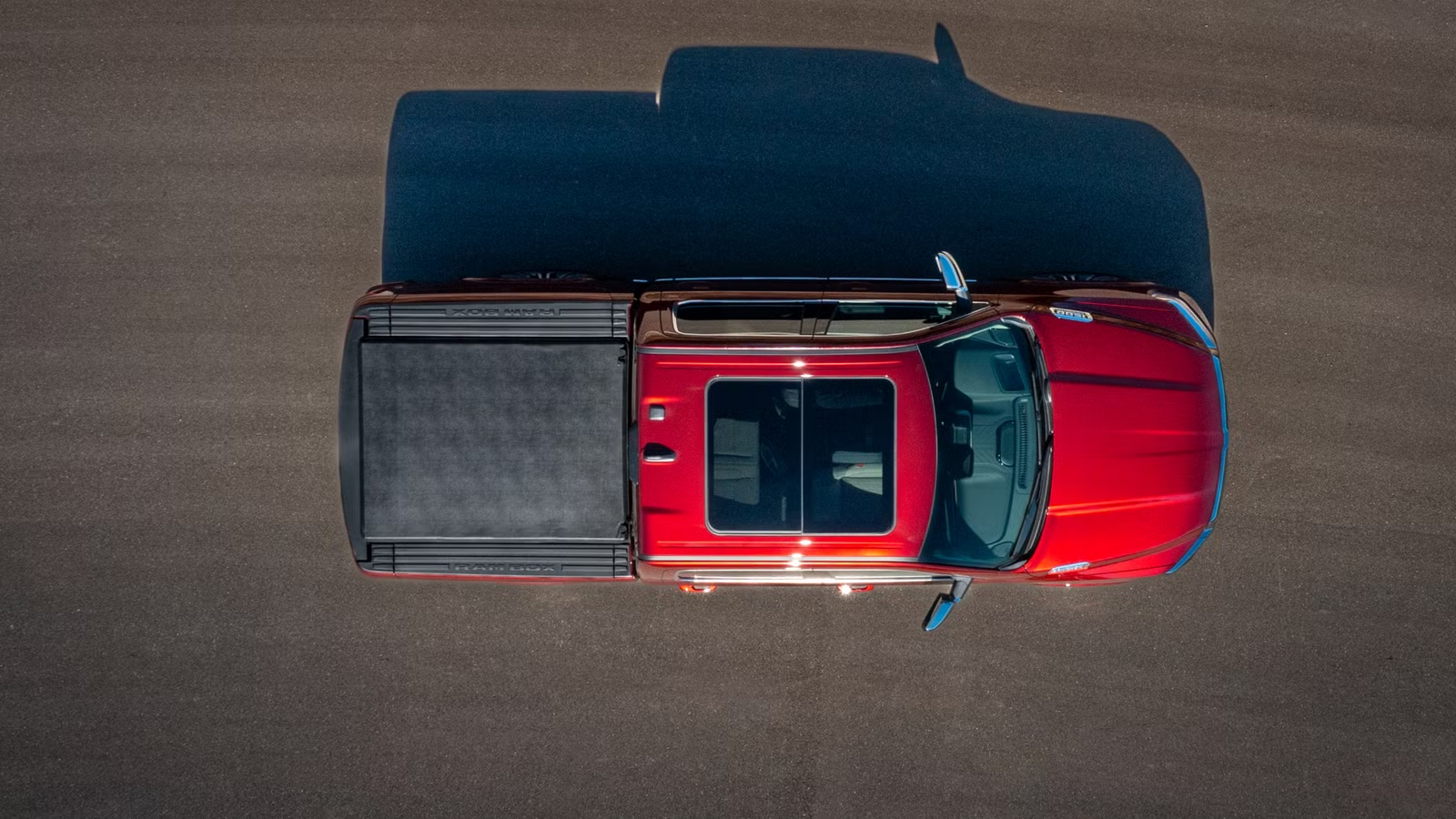
The engineers at Ram just keep trying to make the fastback pickup truck happen. CarBuzz has already covered multiple patents that show different ways to make a normal pickup into something that looks more like the back of a Cybertruck, and now the CarBuzz research team has found two more – two takes on a transforming cover that can fold flat when you actually want to do truck things.
Sport Bar With A Roll-Up Aero Cover
Ram Tonneau Cover PatentStellantis
One of the two designs is familiar if you’ve seen the previous patents. It shows a tonneau cover that begins with a frame that’s attached to the front of the truck bed, near the cab.
This design uses that frame to raise and lower the front of the tonneau cover. If you want to use it in fastback mode, the leading edge is raised to the top of the cab height. If you want your bed covered but not your view, it lowers down to the height of the box sides.
It’s all quite simple, though there are a lot of moving parts. Flexible accordion panels drop from the side of the cover to fill in the triangular gap between the raised main cover and the bed. They then fold away when the cover is lowered. The cover can move up and down to create the fastback shape. It can also retract like a typical slatted cover, so you have access to the entire bed. Stellantis engineers suggest some other fun accessories that could use the sport bar, like lights or an accessory rack.
Related
The Humble Dodge Ram 1500 Introduced A Feature We Now Take For Granted
Every full-size pickup is available with a roomy cab these days, but that wasn’t always the case.
Hard Cover Solves Some Hard Problems
Ram Tonneau Cover PatentStellantis
The second design is even simpler, though that comes at the expense of flexibility. Instead of the slat design, it’s one large flat and rigid panel. That means you can’t fold it away for full bed access; you have to remove it completely.
There are advantages, though. The design doesn’t need a sports bar sticking up at the front of the truck bed. Instead, the front of the cap is raised on a pair of struts and locks into place. The back of the cover gets the same struts, so a user can raise the rear as well to create a cap-like topper. There are wedges that drop into place to fill in the sides in either instance.
This cover idea is also self-adjusting. If you open the tailgate, it will “naturally return” to the wedge position because of the orientation of the struts at each end. That part of the design is likely intended to meet a certain government requirement, and we’ll come back to it in a bit.
Related
How A Butt Scrubber Helps Make Ram Truck Interiors The Best They Can Be
A heavy-duty truck needs to be capable, but it also has to have an interior designed to handle work and fun.
The only thing not clear in the patent is how this cover will address the issue of length. Specifically, how the cover will span the gap when it’s in both the raised and lowered positions. The cover needs to be 76 inches to enclose the six-foot, four-inch standard bed truck, but that’s 80.5 inches when it’s wedged. Extending over the tailgate trim could be enough to account for it, though.
CarBuzz Insight – Why This Matters:
Ram Tonneau Cover PatentStellantis
Why does Ram want a Cybertruck-style wedge bed? The hard cover is pitched at user-friendliness, but the real reason (and the one given for the more elaborate cover) is fuel economy. One of the many reasons a pickup truck is less aerodynamically efficient than a car or SUV is the sudden drop at the back of the cab and again at the end of the bed. Adding this wedge shape fixes much of that, though it can’t solve the end-of-box drop-off.
Neither patent hints at how much of a difference it might make at the pumps, but it could be significant. That’s why the one version returns to the wedge position automatically: If the automaker uses it for the window sticker number, it has to default back to the economy position. Just like start-stop and Sport mode.
Patent filings do not guarantee the use of such technology in future vehicles and are often used exclusively as a means of protecting intellectual property. Such a filing cannot be construed as confirmation of production intent.
Source: US Patent and Trademark Office
